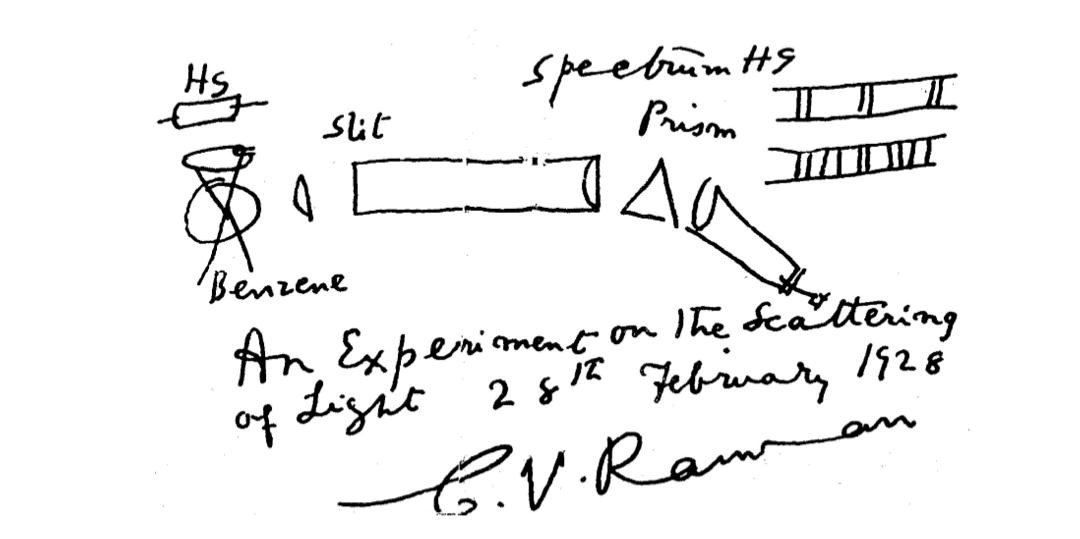
In 1930, Sir C.V. Raman, one of India’s most eminent physicists was awarded the Nobel Prize in Physics for his outstanding discovery on the scattering of light, which is commonly known as the “Raman Effect”. However, the significance of the 28th of February is that it was on this day in 1928 that he presented his findings before the press so that people as a way to communicate his work with the common people. This day is now celebrated as National Science Day.
In 1986, the Government of India declared 28 February as National Science Day. The purpose of this was to honour Prof. C.V. Raman’s Contributions, promote scientific temper among citizens, encourage young students towards scientific research and highlight the importance of science in national development. Each year the Department of Science and Technology (DST), Government of India, announces a specific theme, spotlighting priority areas of science, technology and innovation. Thus the day celebrates not only a historic scientific discovery, but also India’s commitment to scientific advancement and innovation. Throughout the nation, theme-based programmes, public lectures, exhibitions, and educational activities across schools, universities, and research institutions are organized.
Therefore, the theme for this year, “Women in Science: Catalyzing Viksit Bharat” is not simply symbolically important. It is an indication that women will be equal participants in fulfilling the Indian vision of a fully developed, technologically advanced, inclusive and globally competitive nation by 2047.
Empirical evidences reveal that women already constitute a large and expanding share of this pipeline but remain under-represented in leadership and high-impact research roles. According to the All India Survey on Higher Education (AISHE 2021–22), women account for approximately 2.07 crore students, representing about 48% of total enrolment, with the female Gross Enrolment Ratio slightly exceeding that of men, marking a significant improvement in access to higher education. Women also account for approximately 42- 43 % of the higher-education teaching workforce, indicating substantial gains in both access and employment (Ministry of Education, Government of India, AISHE 2021–22). Parliamentary data further indicate that women comprise about 43% of enrolment in STEM disciplines, underscoring the scale of the scientific talent pool.
However, in spite of the impressive enrolment data, it is unfortunate that women continue to remain significantly under-represented in positions such as senior faculty, principal investigators, major grant holders, award recipients and editorial leadership. Low participation in higher scientific positions results in lower patent generation, lower technological innovations and high-impact publications (UNESCO Institute for Statistics, Women in Science reports). This disparity amounts to substantial loss of national capability. Therefore, the biggest challenge which the nation faces is in retaining trained scientific manpower and improve the transition rates from education to long-term research careers. It is important to have more women in positions of leadership and decision making because women possess inherent qualities of curiosity and observation, patience and perseverance, resilience and adaptability, holistic thinking and ethical sensitivity which are essential qualities in today’s consumerism-driven ecosystem.
India has had prolonged involvement with education of girls in the form of targeted interventions such as scholarships, institutional incentives, safe residential facilities, and supportive career policies, but the continuing trend of the number of women scientists being still much lower compared to the males, for example, it is 18.6%, in government R&D organization as per a parliamentary report. There is an urgent requirement for increasing women’s representation at senior levels, which would substantially impact India’s R&D workforce and innovation output, with downstream benefits for sectors critical to national priorities, including health, agriculture, energy and digital technology.
There can never be any doubt about women’s capability whenever placed in a position of responsibility and deliverance. Women scientists have played leading roles in national missions in space, biotechnology, health, and environmental science, demonstrating that when entrusted with responsibility they deliver outcomes of strategic importance. Outstanding examples include scientists such as Ritu Karidhal, the mission director of the Chandrayaan-2 mission, also known as the ‘Rocket Woman of India’; Kiran Mazumdar-Shaw, the billionaire entrepreneur, Founder of Biocon Limited and Biocon Biologics Limited; Tessy Thomas, also known as the ‘Missile Woman of India’; Dr. Sumathy K, who heads the Research and Development wing at Bharat Biotech, was a key woman scientist behind the development of Covaxin, India’s first indigenous COVID-19 vaccine. Dr. Indira Hinduja, first Indian doctor to successfully deliver an IVF baby. These are just a few names among all the women scientists who have done outstanding work whenever they had the opportunity and support.
Download Nagaland Tribune app on Google Play

In fact, these contemporary successes stand on foundations laid by earlier pioneers who advanced science despite formidable barriers. Kamala Sohonie, the first Indian woman to earn a PhD in a scientific discipline, transformed nutritional science through her research on vitamins, while Anna Mani developed indigenous meteorological instruments that remain fundamental to weather forecasting and renewable energy assessment. Similarly, Janaki Ammal in plant cytogenetics and Asima Chatterjee in medicinal chemistry demonstrated world-class scientific excellence decades before institutional support systems existed. Their achievements proved that capability was never the constraint; opportunity was.
It is very important to for everyone to understand that there is no dearth of support for those women desiring to pursue a career in science. The Government of India has an extensive ecosystem of scholarships, fellowships and institutional policies specifically designed to ensure that women do not have to choose between scientific ambition and life responsibilities. India has created a multi-tiered policy framework to support women in science across the career pipeline. At the entry level, the INSPIRE Scholarship for Higher Education (INSPIRE-SHE) provides financial support and research exposure to meritorious students pursuing science degrees. At the doctoral stage, the Department of Science and Technology’s WISE-PhD Fellowship under the WISE-KIRAN programme enables women who were unable to pursue research earlier to undertake full-time PhD work with stipend, research grant, and institutional support for up to five years. Re-entry and mid-career participation are addressed through the Women Scientist Scheme (WOS) for women with career breaks. Complementary initiatives such as WISE-SCOPE and leadership programmes including WIDUSHI aim to sustain long-term engagement with the scientific system. In the life sciences, the Department of Biotechnology’s BioCARe programme provides research grants to women in non-regular positions, helping retain trained expertise in strategically important sectors. Collectively, these interventions reflect a policy shift from one-time incentives to a lifecycle approach designed to improve retention, progression, and leadership of women in India’s scientific workforce. Portals such as https://www.indiascienceandtechnology.gov.in/ programme-schemes/women-schemes/women-scientist-scheme-wos and https://fellowships.gov.in/ provide details on the different provisions available for women and girls in science.
Equally important are institutional policies that address everyday barriers to career continuity and research productivity. Funding agencies increasingly allow extended tenure of fellowships for maternity, childcare or medical reasons, recognising that rigid timelines disproportionately affect women. Transfer of fellowships between institutions in cases of spousal relocation is often permitted, preventing abrupt termination of research work. Many universities and national laboratories now maintain on-campus childcare facilities or crèches, enabling researchers to continue laboratory work during early parenthood.
However, it is a fact that external government and institutional support will not automatically translate into sustained scientific careers for women scientists. Research productivity depends on continuity, long-term intellectual engagement and measurable outputs such as publications, patents, funded projects, and collaborations. Scientific careers are milestone-driven and even short interruptions can have disproportionate consequences. Therefore, it is of utmost importance for women scientists to boldly accept and prepare for the challenges that a career in scientific research entails.
The 2026 National Science Day theme, “Women in Science: Catalyzing Viksit Bharat,” is empirically grounded in India’s current scientific landscape. A substantial and expanding pool of scientifically educated women coexists with measurable attrition at advanced career stages, indicating untapped national capacity. Converting this human capital into sustained research participation and leadership is not only a matter of equity but a strategic economic imperative, as scientific productivity, innovation output, and technological self-reliance are strongly linked to the size and diversity of the research workforce.