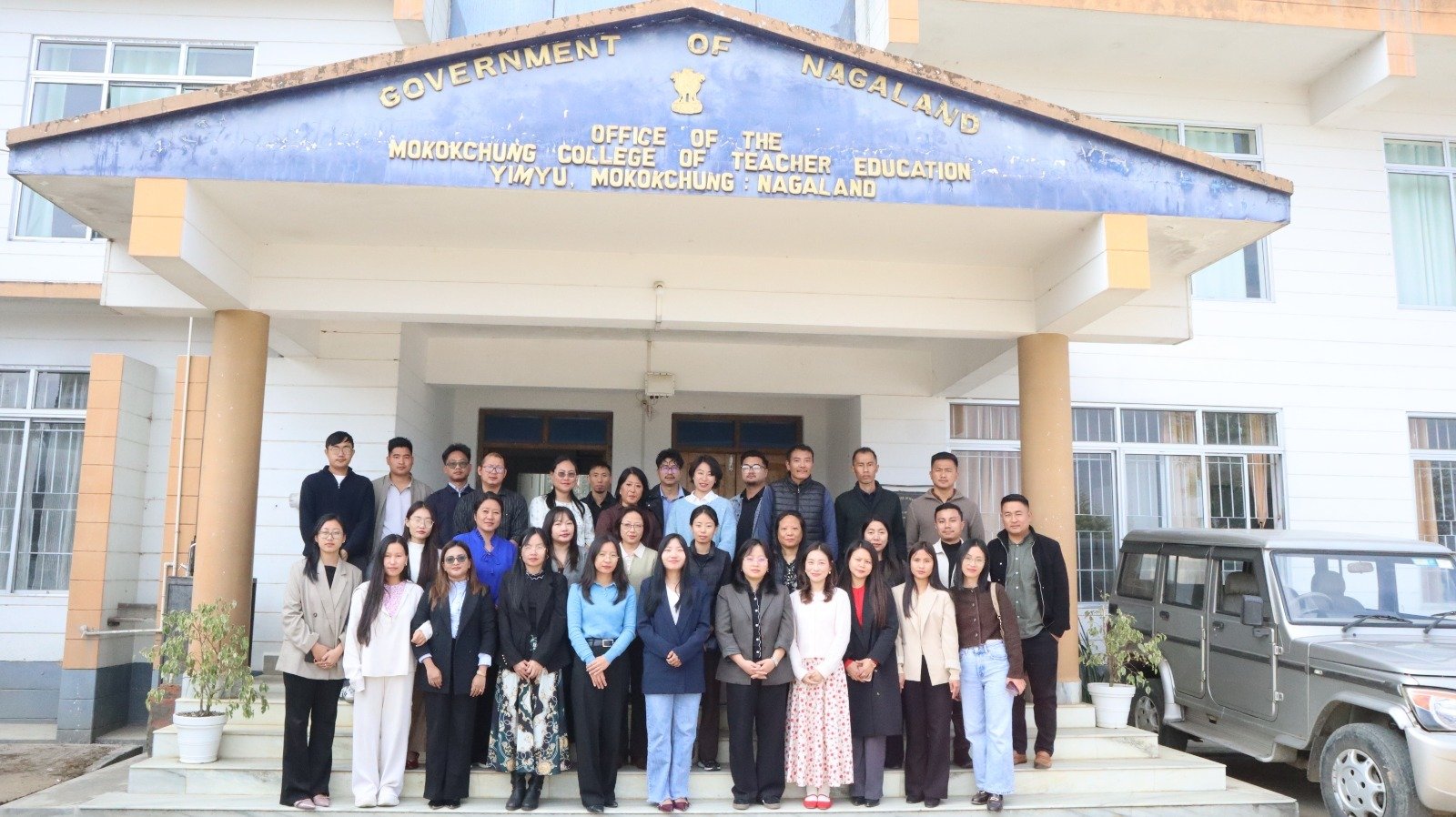
A three-day workshop on Educational Evaluation for Faculty of Higher Education concluded on February 27 at Mokokchung College of Teacher Education (MCTE), focusing on strengthening assessment practices and evaluation competencies among college faculty.
The workshop, held from February 25 to 27, brought together 27 faculty members from higher education institutions across the state, including 17 participants from Government colleges and 10 from Private colleges. The programme aimed to critically examine existing evaluation practices in higher education and encourage informed academic reflection on assessment systems.
Resource persons for the workshop were faculty members of the college, who facilitated sessions drawing on their academic and professional experience. Discussions centred on the purpose and scope of educational evaluation, the dominance of conventional assessment methods, and their influence on teaching–learning processes and student outcomes. Emphasis was placed on understanding evaluation as an integral part of learning rather than a process limited to certification.
Download Nagaland Tribune app on Google Play

Key themes addressed during the sessions included formulation of learning outcomes, alignment of assessment with curricular objectives, construction of valid and reliable evaluation tools, and interpretation of assessment results for academic decision-making. The sessions were interactive in nature and included hands-on practice to reinforce conceptual clarity and practical application.
Participants were encouraged to reflect on current evaluation systems and identify areas requiring improvement. The discussions also aimed to broaden academic perspectives on reforming assessment practices in higher education institutions.
Sharing their reflections, participants noted that the workshop helped them revisit foundational concepts of educational evaluation and enhanced their understanding of assessment frameworks. Some highlighted the relevance of concepts such as Bloom’s Taxonomy in higher education, observing that programmes conducted by teacher education institutions are equally applicable to college-level teaching and learning.
The workshop emphasized the growing importance of educational evaluation in the context of evolving educational goals and learner diversity. By raising critical questions on how and why students are assessed, the programme sought to sensitize educators to the need for more meaningful, transparent, and development-oriented evaluation practices in higher education.