A remarkable 39-hour endurance trek across the historic Naga Hills culminated in Kohima on April 3 to commemorate the 82nd historic Battle of Kohima.
The event retraced the arduous route taken by Naga soldiers and Allied forces during the fierce fighting of 1944. The trek, described as the first and only endurance walk of its kind in Northeast India.
Participants walked through challenging terrain, echoing the historic movement of troops who once navigated these very hills under extreme wartime conditions. The trail concluded at the iconic Kohima War Cemetery—the site of the former DC Bungalow and tennis court, where some of the fiercest fighting took place. Walkers were welcomed with a ceremonial reception upon completion.
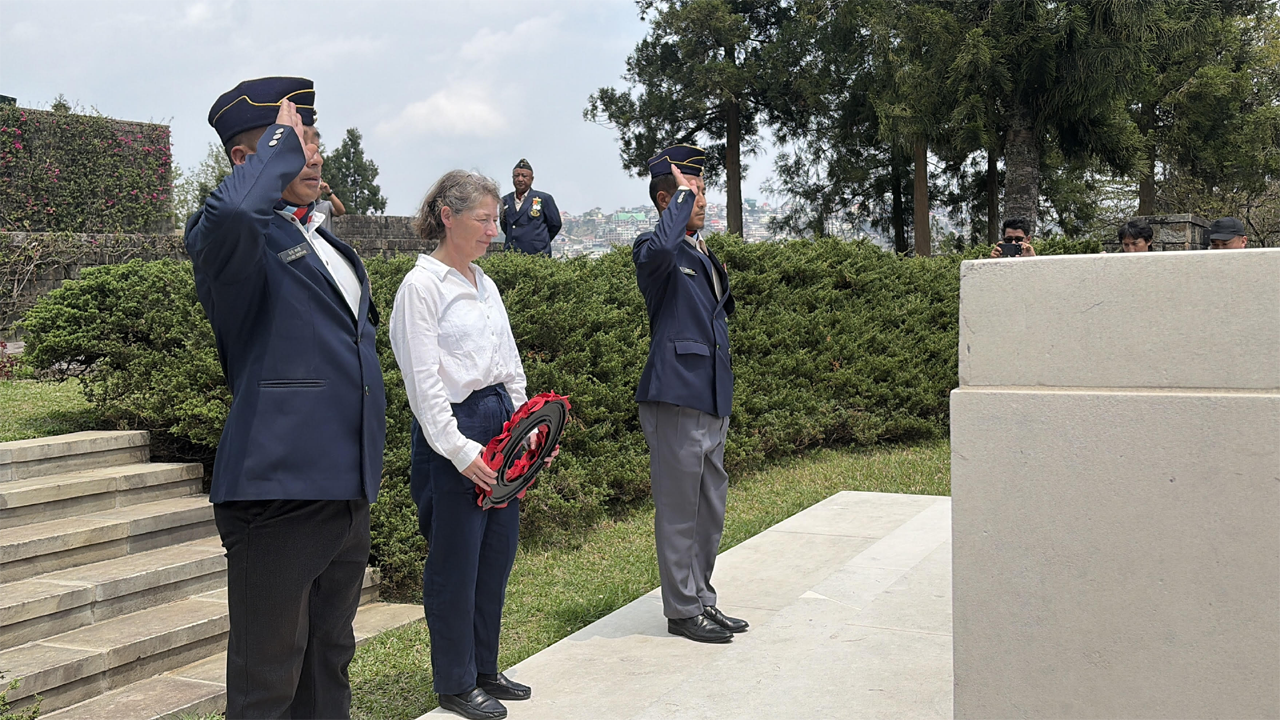
The commemoration programme and wreath-laying ceremony were held on April 4, marking the official start date of the Battle of Kohima in 1944. Dignitaries, historians, local leaders, and community members gathered to pay tribute to all those who fought and fell in what is widely regarded as one of the most pivotal battles of the Burma Campaign during World War II.
During a short program held at the Kohima War cemetery, Charlotte Carty, a WWII enthusiast, Battle of Jessami expert, and trustee of the Kohima Educational Trust said that despite its global significance awareness of the Battle of Kohima remains limited in the United Kingdom and elsewhere. Yet, the battle played a decisive role in halting the Japanese advance into India.
Carty highlighted that the rapid movement of Japanese forces from the Chindwin River across treacherous terrain to Kohima in just days remains a remarkable military feat, one that was initially underestimated by Delhi Headquarters at the time.
Carty also stated that a central theme of the commemoration was the indispensable support provided by the Naga people during the conflict. She emphasized that without the assistance, guidance, and resilience of the local community, the course of the battle could have been dramatically different.
Carty also described Nagas as a remarkable and supportive community whose contributions—both during the war and in preserving its memory—continue to be deeply appreciated. The maintenance of the Kohima War Cemetery by the Commonwealth War Graves Commission, along with the care extended by the local community, was also acknowledged with gratitude.
“The cemetery remains a place of deep reflection and solemn remembrance, offering visitors a profound sense of connection to history,” Carty cited.
Download Nagaland Tribune app on Google Play

Retracing the Footsteps of 1944
The endurance trek symbolically retraced the route taken by exhausted soldiers of the Assam Regiment, who arrived in Kohima on April 3, 1944, only to be immediately tasked with digging defensive positions as the scale of the impending Japanese assault became clear. With limited preparations in place, the battle that followed would become a turning point in the Second World War.
In 2026, the event offered bold “trailwalkers” the opportunity to attempt that historic journey. Fully supported and guided by experts, the programme included historical tours of the battles of Kohima and Jessami, treks to Mt. Puliebadze—the highest peak in Kohima—and Jessami Peak, visits to Mrs Hume’s Pheasant Reserve in Jessami, and welcome and celebratory dinners in Kohima.

Described as longer and more demanding than similar trailwalk events in the UK and Hong Kong, “39 Hours to Kohima” combined endurance, history, and remembrance—bringing participants face-to-face with a landscape that once shaped world history.
As wreaths were laid and silence observed on April 4, the message was clear: the Naga Hills remain not only a place of natural beauty, but sacred ground—where courage, sacrifice, and community changed the course of history 82 years ago.