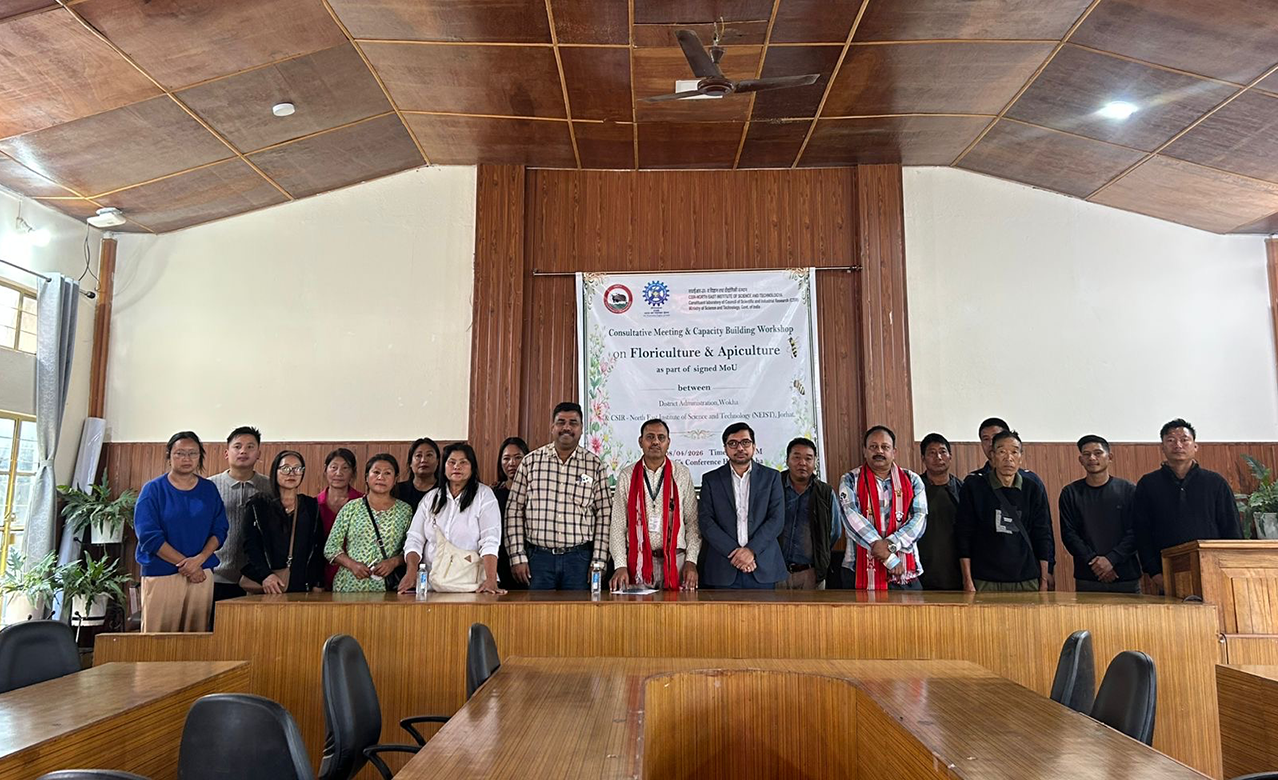
A consultative meeting along with a capacity-building workshop on floriculture and apiculture was conducted at the DC’s Conference Hall, Wokha, on April 8 through a joint initiative of the District Administration and CSIR–NEIST, Jorhat.
The programme brought together farmers and technical experts, creating a platform for knowledge exchange and practical learning. A key highlight of the workshop was the introduction of improved beekeeping practices, where participants were trained on the use of modern honeybee boxes designed to significantly increase honey production.
According to officials, the improved boxes can yield multiple harvests throughout the year, far surpassing the output of traditional methods commonly practised in the district. To make the transition easier, farmers were also taught how to construct cost-effective bee boxes, ensuring the technology remains accessible and sustainable.
Hands-on exposure formed a major part of the training, as experts visited field sites to guide farmers directly. During these visits, emphasis was placed on scientific flower harvesting, pest control measures, and proper seed conservation techniques to maintain crop cycles and improve overall yield.
Addressing the participants, Deputy Commissioner, Vineet Kumar called on farmers to embrace innovation and actively engage with technical institutions. He pointed out that Wokha’s collaboration with NEIST presents a unique opportunity for growth and urged farmers to take full advantage of the support being extended.
Download Nagaland Tribune app on Google Play

He also encouraged better land management practices, particularly advising chamomile growers to utilise their fields throughout the year instead of leaving them idle. Highlighting the importance of continuous learning and efficient resource use, he stressed that such initiatives could transform the district’s agricultural landscape.
As part of the programme, farmers were provided with bee boxes and necessary equipment, reinforcing the administration’s efforts to translate training into tangible outcomes on the ground.