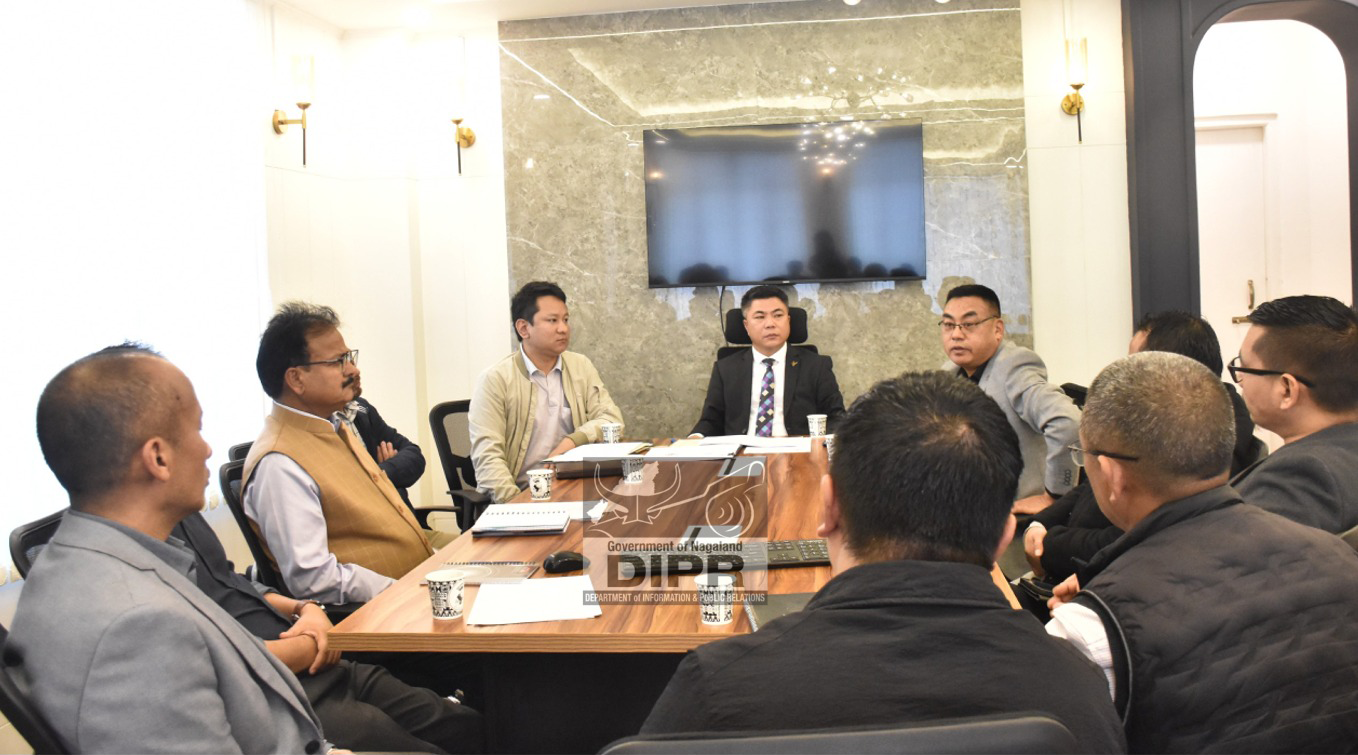
A monsoon preparedness meeting of Kohima district was convened at the Deputy Commissioner’s Chamber, Kohima on May 6, bringing together district officials, law enforcement agencies, line departments, contractors and technical representatives to review preparedness measures ahead of the upcoming monsoon season.
The meeting, chaired by Deputy Commissioner, Kohima, B Henok Buchem, NCS attended by Senior Superintendent of Police, Kohima, Krodi Rhetso, NPS along with officials from PWD, NHIDCL, DDMA, Health & Family Welfare, Food and Civil Supplies, Police, District Administration and among others.
Deliberations centered on the status of ongoing road maintenance and construction works, particularly along critical stretches such as Kezanu and Liezocha, which have been identified as highly vulnerable to landslides and traffic disruptions. The condition of alternative routes, was also reviewed in view of ensuring connectivity in the event of highway blockages.
Highlighting the district’s recurring vulnerability to seasonal disasters, the Deputy Commissioner noted that Kohima faces fire incidents during winter and multiple hazards such as landslides, road blockages, and infrastructure damage during the monsoon.
He emphasized the need for a non-blame approach, urging departments to focus on individual and collective responsibilities while learning from past experiences to ensure readiness.
Concerns were raised over frequent vehicle breakdowns, poor road conditions marked by potholes and sinking zones, and steep gradients along certain highway stretches, particularly between Liezocha and Kezanu. Police officials pointed out that stranded heavy vehicles often lead to severe traffic congestion and pose safety risks.
In response, the meeting directed that critical road stretches be repaired within a week, with continuous maintenance through stone filling and metalling. Deployment of excavators and towing vehicles on a full-time basis was also emphasized, along with the designation of nodal officers for better coordination during emergencies.
Download Nagaland Tribune app on Google Play


Traffic regulation emerged as another key issue, with reports of heavy vehicles entering the town before the designated time and unauthorized parking near entry points. Authorities discussed stricter enforcement and extension of no-entry timings for heavy vehicles and proposed shifting of holding zones closer to the Jotsoma bypass to ease congestion.
The meeting also reviewed landslide-prone areas along the National Highway, stressing the need for pre-positioning machinery, clearing debris, and strengthening vulnerable slopes ahead of the monsoon. Deliberation was made on all the important roads in the western, northern and southern region of Kohima.
Urban infrastructure challenges, particularly blocked drainage systems caused by waste dumping and pipeline obstructions, were highlighted as critical concerns. Immediate clearance of drains, including those near the War Cemetery, was directed, even if it required temporary disruption of pipelines, with restoration to follow.
On the preparedness front, officials from the Disaster Management Authority informed that the Incident Response System (IRS) is in place, supported by Quick Response Teams and trained community volunteers. Automatic Weather Stations installed at multiple locations, are operational, with coordination maintained through control rooms and the State Emergency Operations Centre. Deputy Commissioner urged the activation of IRS if need arises.
Concerns were also raised regarding the lack of buffer stock for essential supplies such as food and medicines during emergencies. Departments were advised to develop mechanisms for maintaining adequate reserves and coordinating with agencies such as the Food Corporation of India to ensure timely supply during crises.