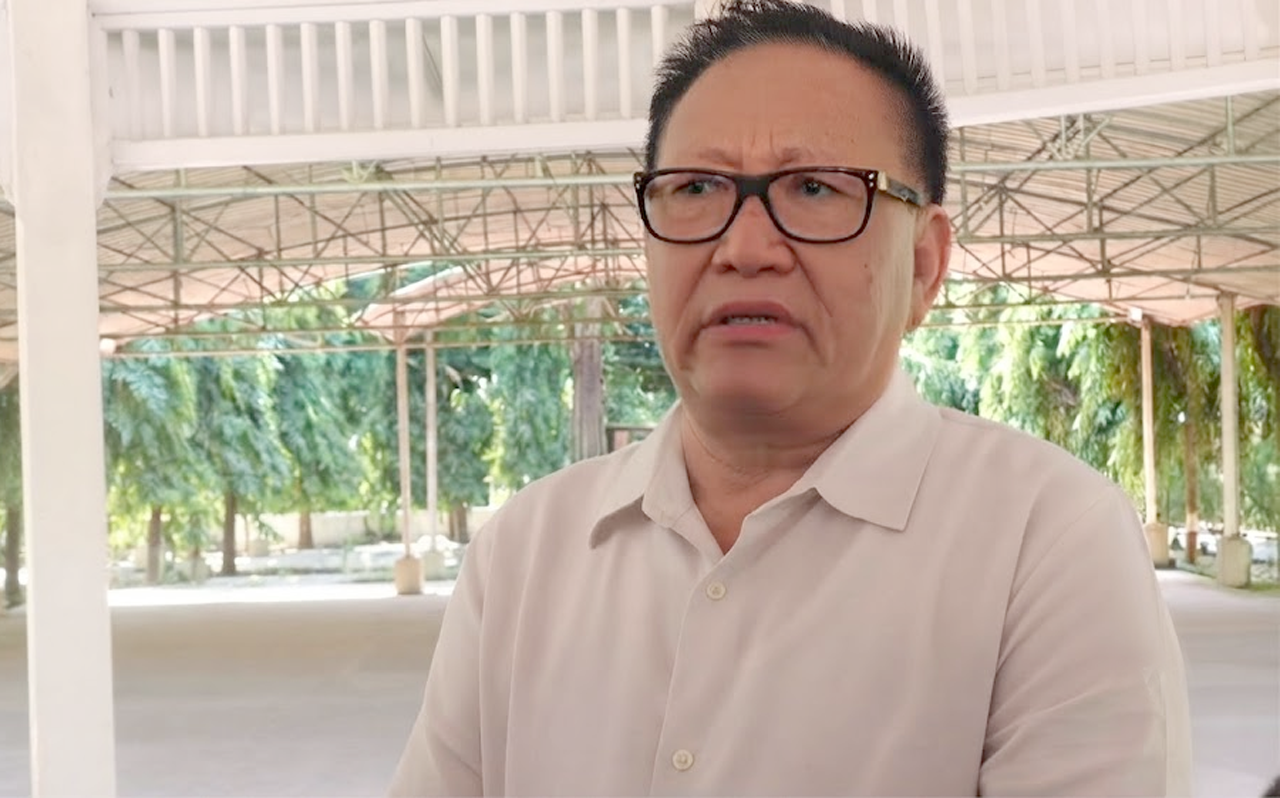
Deputy Chief Minister and Minister in-charge of National Highways, TR Zeliang, on Wednesday said that the State Government would take up the safety concerns and delayed works on NH-29 with the National Highways and Infrastructure Development Corporation Limited (NHIDCL) at a meeting next week.
Talking to a section of media on the sidelines of PAC meeting in Chumoukedima, Zeliang said the State Government had been holding quarterly coordination meetings with NHIDCL and the National Highways wing of the PWD since he took charge of the National Highways portfolio in 2023, during which both short-term maintenance and long-term safety measures were discussed.
He pointed to recurring river erosion near Patkai Junction, saying the State had advised NHIDCL to cut the hillock and divert the river so that the current would not hit the protection wall. However, he said NHIDCL had identified two mountains for cutting but had not even completed half of the work, leaving the river’s natural course unchanged. As a result, the protection wall was damaged again, reducing the four-lane highway to two lanes and at times making even the two-lane stretch difficult for traffic.
“We are calling a meeting with NHIDCL next week,” Zeliang said, adding that the meeting had been delayed because the new Executive Director of NHIDCL in Kohima had recently taken charge and needed time to understand the history of the issues.
Expressing concern over recent incidents in which people had died and vehicles were damaged, Zeliang said safety measures suggested for both valley and hill sides were often taken up only during the rainy season. He stressed that long-term safety works should be properly planned and executed during the working season, particularly in October and November, before the next monsoon.
On the status of Packages II and III of the Dimapur-Kohima four-lane project, Zeliang said Package I could not be considered for completion, while NHIDCL had submitted a completion report for Package II despite some works, including retaining walls and road dividers, remaining incomplete. “We have objected to that because some items of work like the retaining wall, road divider are not completed, but they have submitted a completion report,” he said.
Download Nagaland Tribune app on Google Play


Zeliang pointed out that even after submission of a completion report, the five-year Defect Liability Period (DLP) remained applicable and the contractor was therefore responsible for maintenance. He criticised the practice of undertaking maintenance during the rainy season instead of the dry season and said the State had repeatedly raised the issue of monsoon preparedness with NHIDCL.
Referring to the deteriorating road condition between Phema and Piphema, he said contractors were not coming forward to undertake maintenance despite repeated reminders. He said the State would insist that NHIDCL issue a notice of intention to terminate the contract if the contractor failed to comply with the agreement during the DLP.
“If the contractor failed to respond within the stipulated period,” he said, “the contract should be terminated and another agency appointed for maintenance”.
On the Nagaland State Students’ Federation’s demand for removal of NHIDCL from Nagaland, Zeliang said he had no comment on what he described as an “unofficial” demand. He, however, maintained that whether the work was executed by NHIDCL or the National Highways wing of PWD, contractual and highway norms had to be followed. He said the State Government had not discussed the issue of removing NHIDCL as the implementing agency.
On recurring rockfalls between Chathe Bridge and New Chümoukedima, particularly in the Chümoukedima range, Zeliang said NHIDCL could approach the State Government if it required additional Right of Way (RoW). The concerned Deputy Commissioner could then take up the matter with landowners and initiate land acquisition, he said.
Zeliang further stressed that hill cutting in such areas should follow a benching system, with slopes cut step-by-step from the top to prevent falling rocks from reaching the highway. He said this was the accepted practice for high hill cuts in places such as Shimla and Jammu and Kashmir.
“We have been telling them, but they don’t comply with the request of the State,” Zeliang said, adding that if NHIDCL claimed the State Government had not provided an alternative, it should submit a proposal for extension of the RoW. He said the State was prepared to take up such proposals and that land acquisition and compensation were provided for under the National Highways Act.
“If they don’t send the proposal to the State Government, how can they blame the State Government?” he asked.