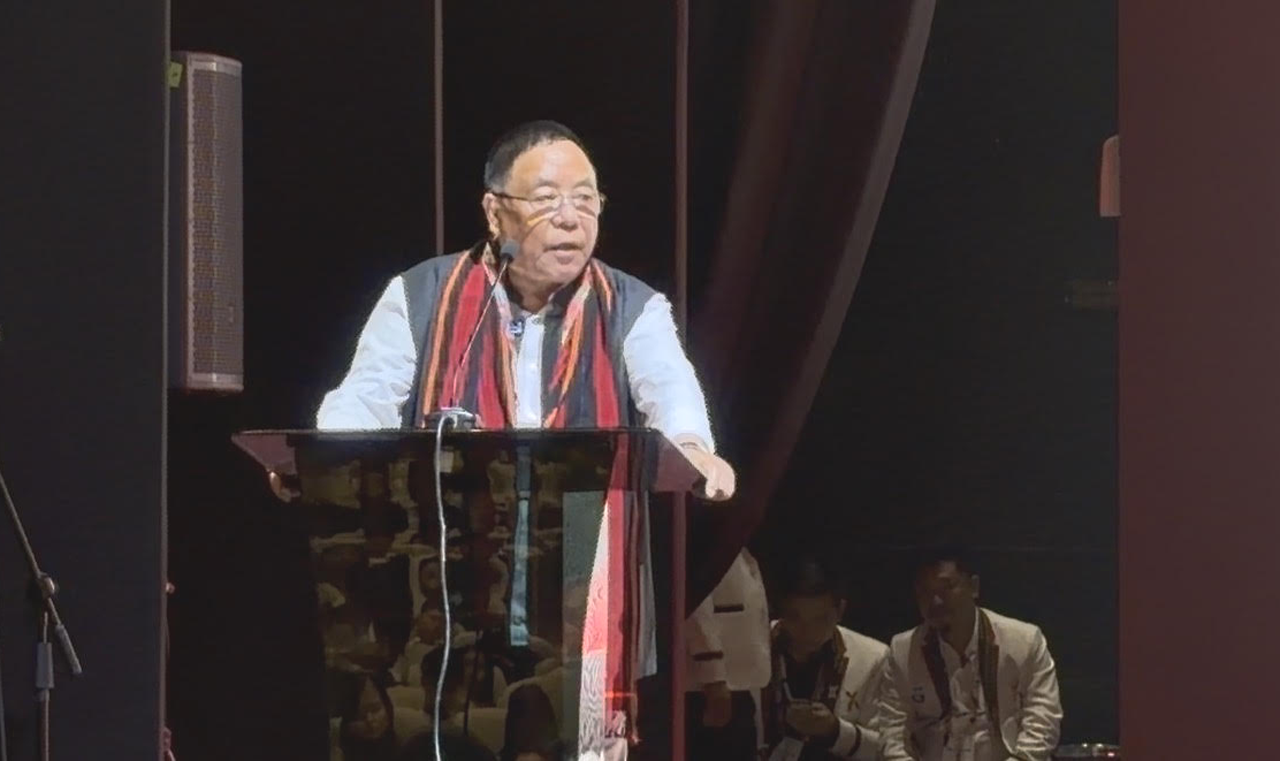
Minister for Roads and Bridges, G Kaito Aye has called upon Naga youth to preserve their cultural identity, strengthen unity and work together to address the challenges confronting society.
Addressing a cultural fiesta organised by the Angami Students’ Union (ASU) in collaboration with the Tribal Subordinate Students’ Bodies of Kohima at the Capital Cultural Hall, Kohima, on Monday, Kaito said culture is central to identity and urged the younger generation to “recultivate” and preserve Naga traditions.
“Culture is your identity, who you are,” he said, stressing that while Nagas belong to diverse tribes with different histories, their collective identity as Nagas should remain a unifying factor.
Appreciating the ASU initiative, Kaito said cultural exchange programmes could help bring communities together and promote mutual understanding. He encouraged other student organisations to carry the message of unity and harmony to different parts of the state.
Referring to the Naga political issue, the Minister said its resolution may or may not come, but Nagas would continue to live together in the state and must therefore focus on improving their living conditions and helping one another.
“Naga solution may come, may not come, but Nagas are going to live here, in this planet,” he said, adding that the younger generation should be prepared to live together in harmony irrespective of political developments.
Kaito also urged students to work within the existing system and law while raising issues concerning governance and development. He asked the student community to specifically identify areas where the government was falling short and bring them to its attention.
“Let us clean our house first. Let us bring our house in order. Then only we will venture forward,” he said.
Emphasising the importance of education, Kaito described academic excellence as the “first weapon” of young people and encouraged students to become competitors and contributors to society.
He also cautioned the youth against alcoholism, drug abuse and other harmful substances, stating that these issues were affecting families across Nagaland. He urged young people to protect themselves and their families from such threats.
On technology, the minister said while it could be a useful tool, young people should remain cautious of addiction and misuse. He called on students to become “shining stars” and contribute positively to society.
Kaito further highlighted the importance of harmony alongside togetherness, saying unity should involve peaceful coexistence, mutual support and sharing of difficulties.
He noted that Nagas live not only in Nagaland but also in parts of Manipur, Arunachal Pradesh, Assam and Myanmar, and stressed the need to strengthen unity within Nagaland while recognising the diversity of Naga communities.
Calling for greater understanding of the different living conditions and developmental gaps among Naga communities, Kaito urged the younger generation to learn from one another and identify practices that could contribute to social development.
He said Kohima could serve as a starting point for Naga communities to live together, share their cultures and strengthen a sense of collective identity.
Download Nagaland Tribune app on Google Play


Speaking at the cultural fiesta Thejao Vihienuo, President of the Angami Public Organisation (APO) said culture and traditions were gifts passed down by ancestors and refined through generations.
He said the diverse cultures of the Naga tribes tell the stories of their ancestors, reflect their values and provide a sense of belonging and identity.
“Celebration of culture, therefore, would imply celebrating our identity,” Vihienuo said, encouraging young people to celebrate their traditions with joy, pride and respect for one another.
He urged the younger generation to use cultural platforms to understand one another better and expand their circle of friendship, stressing that such interactions could strengthen the oneness of the Nagas.
Vihienuo said the gathering was an opportunity for different Naga cultures to come together and appreciate each other’s traditions.
“All such beautiful culture come here to meet one another,” he said, describing the occasion as one where “beauty meets beauty.”
He encouraged the participants to enjoy the festival while maintaining mutual respect and using the occasion to deepen understanding and friendship among different communities.
Delivering a solidarity message at the cultural fiesta , ENSF president Nuheymomg Yimkhiung likened the diversity of Naga tribes to the different colours woven together to form a traditional attire.
He said the combination of different colours creates a beautiful attire that showcases Naga culture to the world, adding that the diversity of Naga tribes similarly contributes to the richness of Naga identity.
However, Yimkhiung said it was disheartening that Naga society had at times taken advantage of its cultural diversity in ways that resulted in division.
He urged people across generations and social backgrounds to showcase Naga culture with the intention of affirming that “Naga truly deserves to be one.”
Yimkhiung described the participation of different tribal student bodies in the fiesta as a display of vibrant leadership and said their coming together demonstrated the desire to move forward collectively.
He expressed hope that the event would inspire young people and leaders to develop a renewed vision for bringing Nagas together.
He said the different traditions and cultural colours of Naga tribes, both within and outside Nagaland, could send a strong message of unity to the world.
Meanwhile, NSF president Mteisuding Heraang, in his greetings, said he was privileged to represent the NSF at the cultural fiesta and conveyed greetings from the federation.
Heraang stressed that the younger generation had a crucial role in preserving Naga heritage and traditions, warning that cultural heritage could be lost when young people cease to uphold the traditions of their communities.
He said the cultural exchange should not remain merely a programme, but should become an opportunity to promote unity among the Naga people.
“Culture can only bring back the unity of the people. When we lost our culture, we lost our identity,” Heraang said.
He urged young men and women to uphold the cultural legacy handed down by their forefathers and become ambassadors of Naga culture wherever they study, work or travel.
Heraang said young people had a responsibility to promote Naga culture and heritage in a positive manner, both within their campuses and among their wider circles of friends.
He emphasised that the way the younger generation presents and promotes its culture would influence how Naga society is perceived nationally and internationally.
The event brought together students and representatives from different Naga communities to celebrate and showcase the diverse cultural traditions of Nagaland.
The programme was chaired by Mhiesisekho Angami, Secretary, Literature, ASU, and began with an invocation by Rev Dr Mar Pongener, General Secretary of the Nagaland Baptist Church Council (NBCC).
The ceremonial blowing of the trumpet and war cry marked the commencement of the programme, followed by the welcome address by Diezevisie Nakhro, President of ASU.
The cultural presentations featured performances representing different Naga communities, including “Ngiotsuo nou agne amon yamlukü” by the Eastern Nagas, “U Dowhuo” by the Southern Angami Students’ Union, and “God Bless Nagaland” presented by Living Tree School, Kohima.
