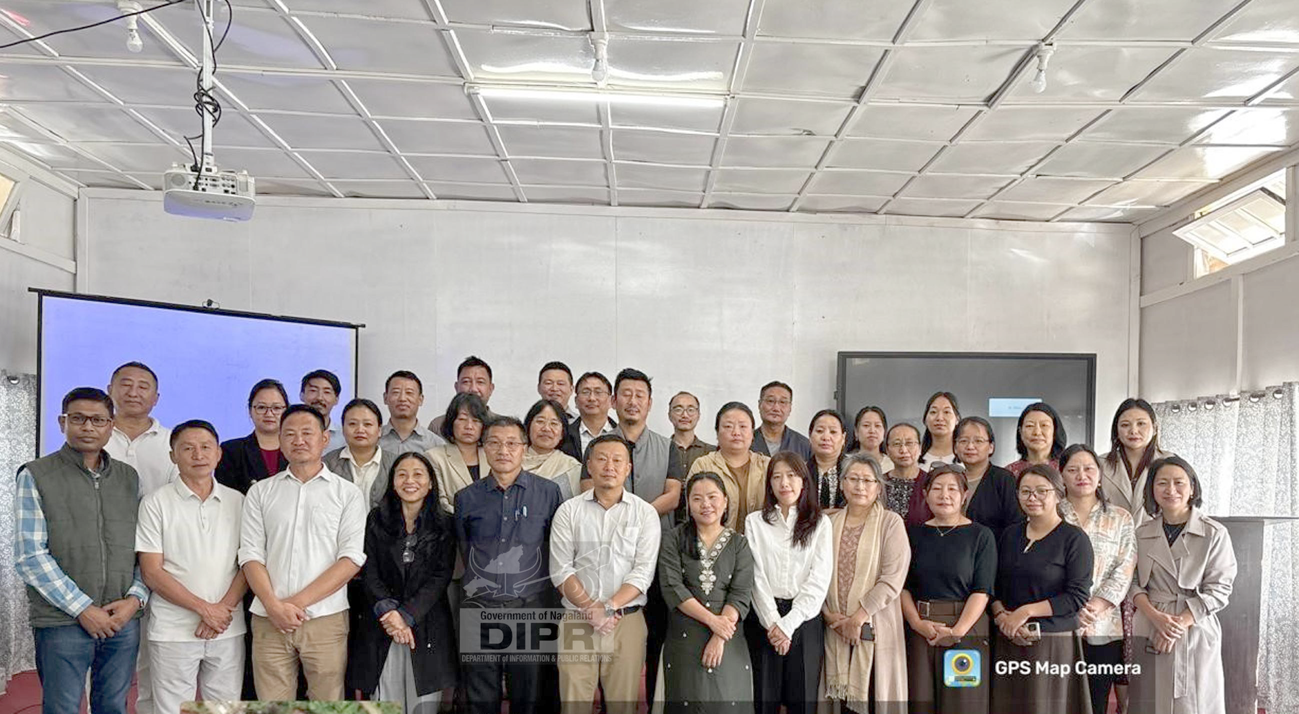
The Internal Quality Assurance Cell (IQAC) of Kohima Science College (Autonomous), Jotsoma, successfully hosted a one-day seminar titled “Breaking the Silence: Understanding Mental Health” at the college’s conference hall. The event brought together approximately 50 faculty members to address critical psychological well-being aspects within higher education.
The seminar commenced with an inaugural programme chaired by Dr Lilongchem Thyug, Co-ordinator of IQAC, who also briefed the gathering on the core concept behind organizing the seminar and outlined the way forward.
Dr Temjenwabang, Principal of KSCJ, delivered the welcome note, emphasizing the vital importance of mental health in higher educational institutions and highlighting the role of the University Grants Commission (UGC) in effectively monitoring mental health challenges in Higher Education Institutions (HEIs).
The academic sessions featured expert resource persons addressing various dimensions of mental health.
Bokatoli Sumi (Co-founder & Assistant Director, Serendip Guardians) spoke on “Understanding Students Mental Health: From Recognition to Support.”. Through personal experience sharing, she enlightened the faculty on growing mental health concerns among students, particularly teenagers. She guided attendees on how to handle and share burdens without taking everything upon oneself, emphasizing that educators do not need to be clinical experts to make a difference. Instead, being aware of changes occurring among students and intervening sensitively is key.
Download Nagaland Tribune app on Google Play


She also reiterated that educational institutions must establish dedicated spaces and support systems to cater to mental health issues.
Dr Temsulong Pongener (MD Psychiatry Senior Specialist and Nodal Officer DMHP, District Hospital Phek) delivered a session on “When Mental Health Problems Need Medical Treatment: A Psychiatric Approach.”
Addressing the grim reality of mental health issues in Nagaland, he detailed methods for identifying severe clinical cases—such as major depressive disorders, generalized anxiety disorders, and acute trauma responses—and emphasized why early medical intervention is crucial.
He noted that acknowledging the problem is the first vital step. While highlighting that everyone undergoes everyday stress, he stressed that chronic or debilitating distress must be viewed seriously, and in many severe cases, clinical interventions (such as evidence-based pharmacotherapy and structured psychiatric rehabilitation) are essential and unavoidable.
Libeni Cheryl Jungi (Psychiatric Social Worker, Serendip Guardians) led the discussion on “Faculty Mental Health: Self Awareness, Healthy Boundaries and Self Care.” She engaged the participants through practical exercises designed to help them assess their stress levels and recognize personal boundaries essential for mental well-being. It was an interactive, discussion-oriented, and participative session where attendees actively enjoyed the experience while learning subtle yet effective ways to maintain healthy boundaries in their personal and professional lives.
Following the sessions, faculty representatives shared their reflections on the day’s events. Luiluile Lungalang, Dr Richard Dzuvichu, and Rongdensungla—representing their respective peer groups from the departments of Zoology, English, and Geography—expressed immense satisfaction with the three comprehensive sessions.
The program concluded with a valedictory session chaired by J Sharon, Assistant General Secretary of KSCTA. Dr Sedevikho Chase, Member Secretary, IQAC pronounced the vote of thanks.