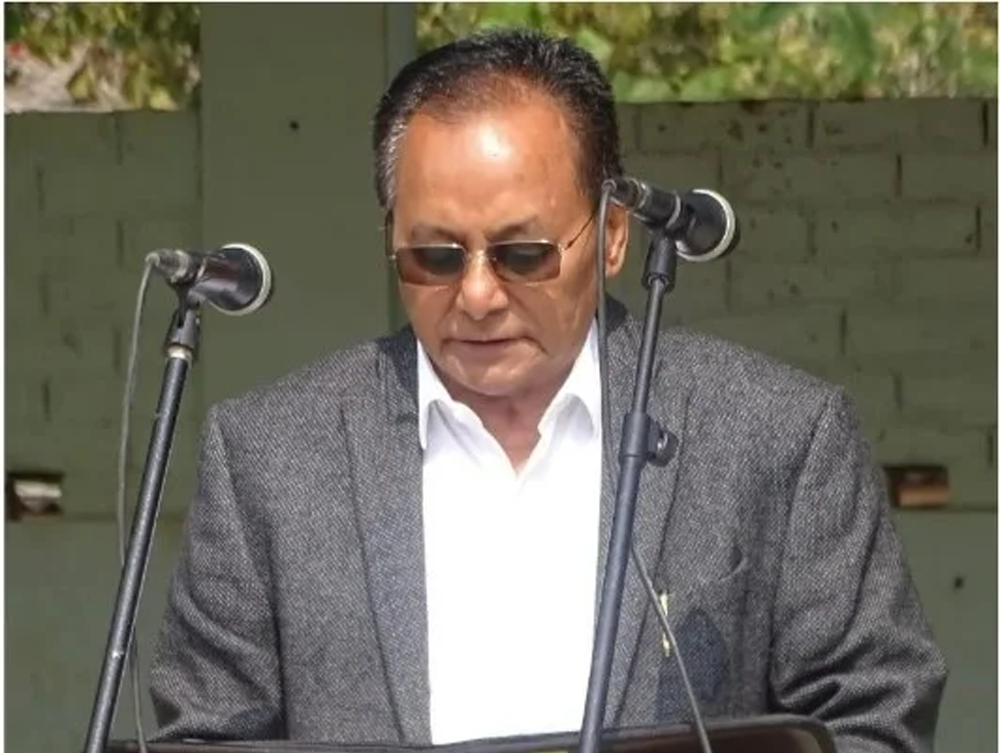
NSCN (IM) chairman Q Tuccu on Sunday paid tribute to Naga martyrs, recalling what he described as decades of atrocities against the Naga people, and called upon Naga leaders and national workers to rise above differences and place the collective interests of the people above individual and organisational considerations.
Addressing the commemoration of Naga Martyrs’ Day at the NSCN (IM) Council Headquarters (CHQ), Hebron, Tuccu said the martyrs had sacrificed their lives for the Naga people and the cause of the Naga nation. He described their lives as marked by courage, discipline, patriotism and commitment to what he termed truth and justice.
He also remembered the families of those who had died during the Naga national movement, acknowledging the hardship, separation and grief endured by parents, spouses, children and communities. He said their suffering was an integral part of Naga history and pledged solidarity with the bereaved families.
Tuccu maintained that the Naga struggle was not born out of hatred or a desire for power, but from the aspiration to protect the people’s identity, land, culture and right to determine their future.
Recalling the events of October 18, 1952, he alleged that Zasibito Nagi was shot dead by a sub-inspector named Dutta in Kohima during a peaceful rally against the alleged torture of a young Sumi boy by the Assam Armed Police. He described the incident as an early episode in a long period of violence and human rights violations against the Nagas.
The NSCN (IM) chairman cited several incidents from different parts of Nagalim, including the burning of villages, civilian killings, torture, sexual violence and the destruction of homes, granaries, churches and schools. He referred to alleged atrocities in Khonoma, Lungkhum, Chingmei, Yengpang, Mangmetong, Khensa and Chemong, among other places.
He also recalled the alleged confinement of more than 40,000 Nagas in around 180 concentration camps in 1958 and claimed that more than 49,000 Sumi Nagas were killed by the Indian Army between 1957 and 1960. These figures and historical accounts were presented as part of his address.
Download Nagaland Tribune app on Google Play


Highlighting the Yimkhiung region’s role in the national movement, Tuccu referred to the armed confrontation at Huker village on March 24, 1955, and the subsequent Longtukrü war. He said the Naga Army had established the Home Guard Eastern Division at Haphu camp under Major General Hothrung, which he described as a centre of organised resistance despite repeated military operations.
Tuccu also cited Operation Bluebird following the battle of Oinam, alleging that more than 30 Naga villages were subjected to violence, 27 civilians were killed and more than 300 people were tortured. He further referred to the December 27, 1994 incident in Mokokchung, alleging that nine Nagas were shot dead and six burned alive, alongside other abuses.
Remembering Haipou Jadonang, the Zeliangrong leader executed by the British in 1931, Tuccu said his martyrdom remained a testament to the enduring aspiration for freedom. He also invoked the Oting incident, in which 14 civilians were killed in December 2021, as a reminder of the continuing pain associated with violence against the Naga people.
He said remembrance of the martyrs should go beyond ceremonial observances and entail a commitment to truth, justice, integrity, unity and respect for the rights and future of the Naga people. He maintained that those who sacrificed their lives for the cause should be remembered as martyrs and that the responsibility entrusted to the present generation should not be abandoned.
Calls for dialogue and honourable settlement
On the Indo-Naga political issue, Tuccu said the NSCN (IM) remained committed to dialogue and negotiation, urging the Government of India to approach the negotiating table with sincerity, respect, transparency and the political will to find a resolution. He said his organisation was prepared to engage openly towards what he described as an honourable settlement.
He stressed, however, that a commitment to peace should not be mistaken for weakness, arguing that a lasting settlement must be founded on justice, dignity and recognition of the Naga people’s political aspirations.
“Peace without freedom is only silence. Peace without justice is only a pause before another wound, and peace without principle is unsustainable,” he said.
Tuccu also appealed to young people not to inherit hatred but responsibility, urging them to learn their history and protect their land, language and culture while respecting every tribe and community. He called upon elders and church leaders to guide people away from vengeance and reminded leaders that authority should serve the people rather than control them.
Addressing Naga leaders and national workers, he said differences should not undermine unity and that the common interest of the people must take precedence over individual or organisational considerations. He also called for a society founded on justice, equality, accountability, human dignity and freedom.
The chairman further noted that Naga Martyrs’ Day coincided with the Naga National Prayer Day, observed on the third Sunday of October. Describing Nagalim as being for Christ, he called upon Nagas across the region to pray for deliverance from bondage and seek divine guidance for their people and leaders.
He also renewed the pledge to remember the martyrs, protect the unity and dignity of the Naga people, pursue political aspirations through determination and negotiation, and remain committed to truth, justice and peace with freedom.
Tuccu further prayed for the bereaved families and the Naga people, declaring, “May their memory remain eternal.”