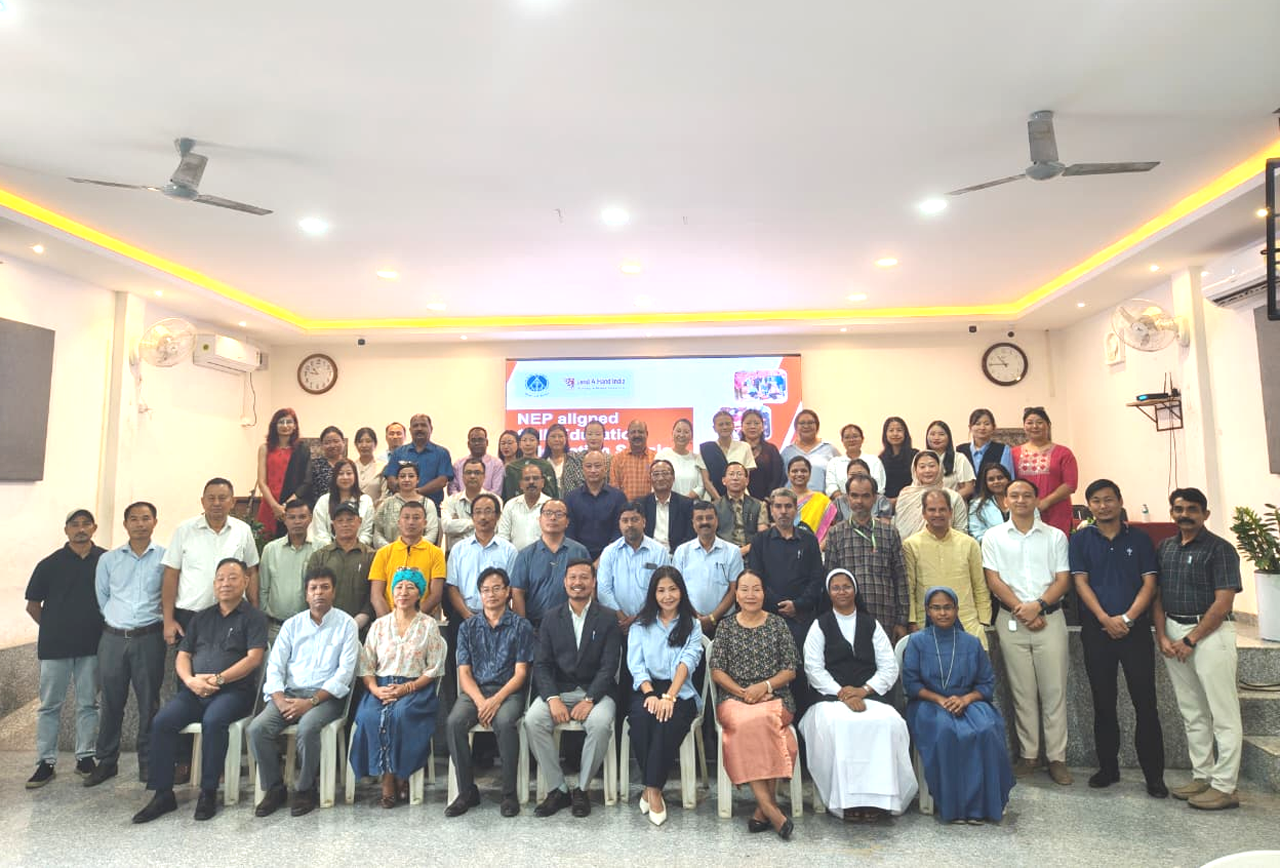
The Nagaland Board of School Education (NBSE), in collaboration with Lend A Hand India (LAHI), conducted a two-day orientation programme on skill education for heads of NBSE-registered private schools on November 2 and 3 in Kohima and Dimapur, respectively.
The programme saw participation from representatives of 82 private schools, including 34 from Kohima and 48 from Dimapur, marking an effort to strengthen the adoption of skill education across the state’s private-school sector.
The orientation aimed to familiarise school heads with the vision and framework of skill education under the National Education Policy (NEP) 2020 and the National Curriculum Framework for School Education (NCF-SE) 2023, while exploring practical approaches to introducing and implementing skill-based learning in schools.
The programme was chaired by Chinglensana Khangembam, Officer, LAHI. In his context-setting address, Richard Asoso, Programme Lead, LAHI, outlined the changing landscape of school education and emphasised the need to move beyond conventional academic instruction by providing students with meaningful opportunities for experiential and hands-on learning.
Delivering the keynote address, NBSE Chairperson, Rangumbuing Nsarangbe highlighted the growing challenge of educated unemployment, observing that many young people remain unemployed either because of limited employment opportunities or a lack of practical skills and competencies required to access available jobs.
He emphasised that academic learning and skill education must go hand in hand, calling for a shift in mindset to recognise vocational education not as a secondary or supplementary subject but as an integral part of every student’s learning journey.
Illustrating the gap between theoretical knowledge and practical application, Nsarangbe referred to instances where technically qualified professionals, including electrical and automotive engineers, may find it challenging to perform certain basic practical tasks despite their academic qualifications. He stressed that education must go beyond conceptual understanding and equip learners to apply their knowledge, troubleshoot, create and solve real-world problems.
Referring to the vision of Viksit Bharat 2047, the NBSE Chairperson said equipping young people with relevant skills, competencies and the ability to adapt to a changing world of work would be essential to achieving Viksit Nagaland 2047. He also highlighted the progress of vocational education in the State, with its coverage extending to more than 180 government schools and approximately 160 private schools.
Noting that private schools account for nearly 70 per cent of student enrolment in Nagaland, he urged school leaders to take a proactive role in advancing skill education. He said that while NBSE had a vision for the progressive development of school education, its successful implementation would require the active participation and support of private schools.
Download Nagaland Tribune app on Google Play


The technical sessions were facilitated by Nehali Ayare, Training Lead, and Avanti Harne of LAHI. Participants were introduced to the objectives and pedagogical approach of skill education under NEP 2020 and NCF-SE 2023, including its progression across Classes 6 to 10.
The sessions covered the Kaushal Bodh framework for Classes 6 to 8 and Kaushal Vikas for Classes 9 and 10, with discussions on how schools could progressively integrate experiential, project-based and hands-on learning into their existing academic structures.
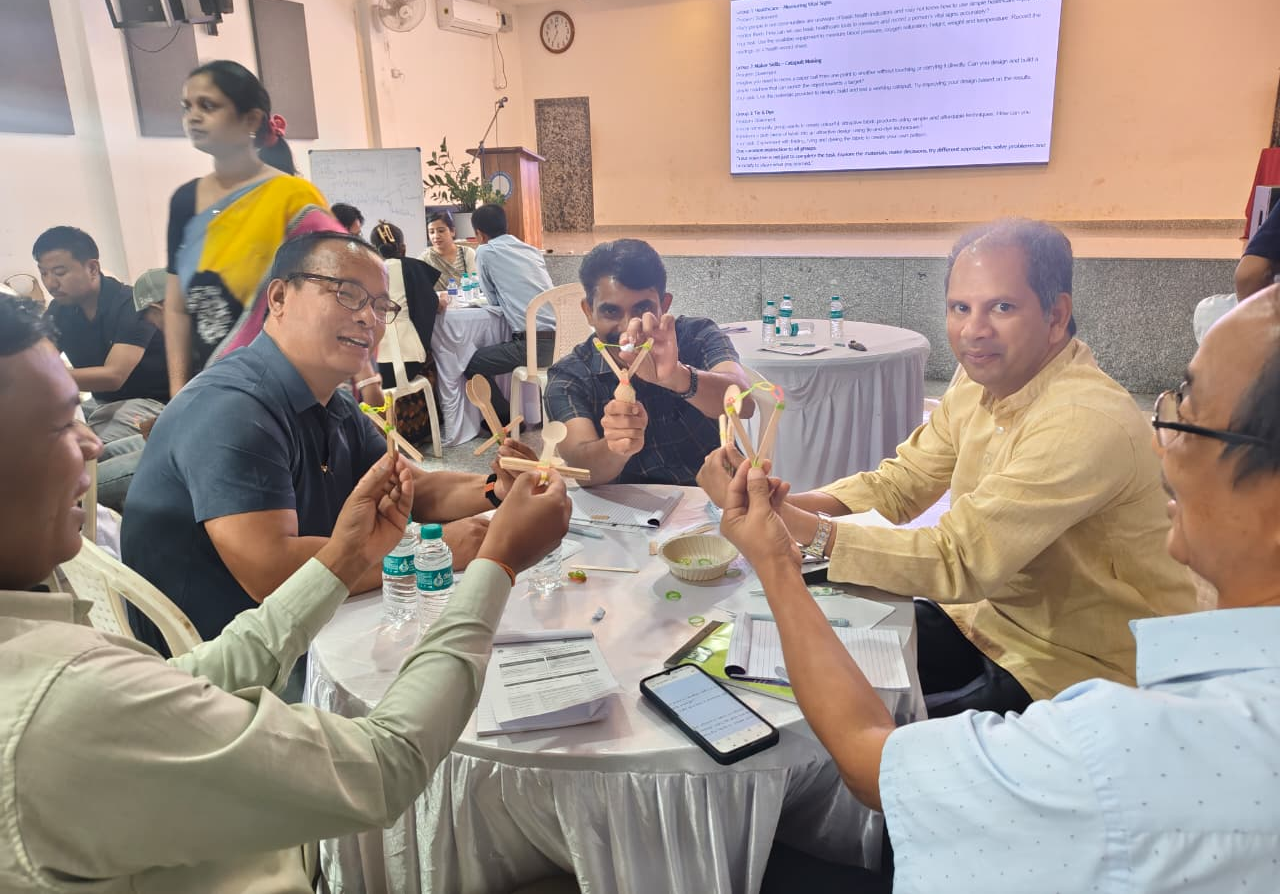
The orientation also featured practical activities, including a maker-skills exercise involving the construction of a simple catapult, a tie-and-dye activity and a short healthcare-related practical task. These exercises demonstrated how skill education can encourage learning through making, creating and doing, while developing problem-solving abilities, creativity, collaboration and practical competencies.
Discussions also focused on the requirements for implementing skill education at the school level and the role of school heads in creating an enabling environment for its adoption.
Through the programme, NBSE and LAHI sought to build awareness among private-school leaders and encourage them to explore concrete ways of integrating skill education into their institutional learning practices. The initiative is expected to expand the reach of NEP-aligned skill education beyond government schools and contribute to a more inclusive, experiential and future-ready school education system in Nagaland.
The programme concluded with a vote of thanks by Dziesevolie Tsurho, Academic Officer, NBSE, who acknowledged the participation of school leaders and the collaborative efforts of NBSE and LAHI in organising the orientation.