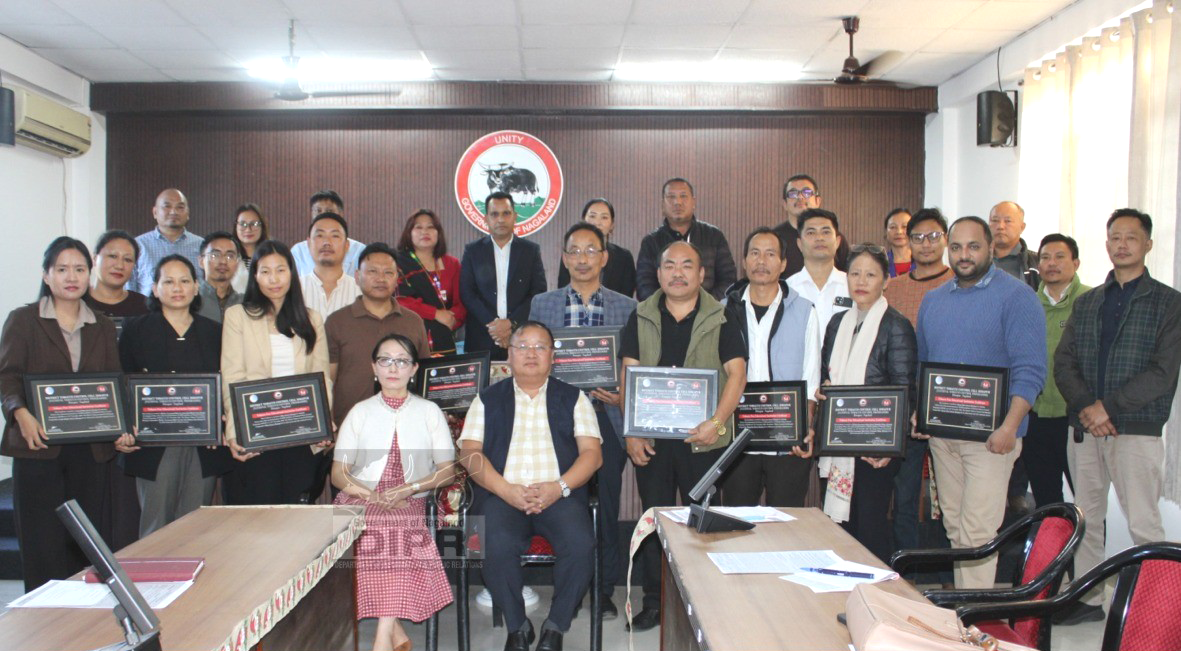
The District-Level Coordination Committee (DLCC) meeting under the National Tobacco Control Programme (NTCP) was held on November 25, at the DC Conference Hall, Dimapur, with a focus on strengthening tobacco control measures and promoting tobacco-free educational institutions and communities.
Addressing the gathering as Chairman of the DLCC & Deputy Commissioner of Dimapur, Dr Tinojongshi Chang, NCS, highlighted the importance of the National Tobacco Control Programme, and mentioned that various awareness and enforcement activities are being undertaken across the country to address tobacco-related issues. He emphasized that active participation from all stakeholders, including civil society organizations and student bodies, is essential for the effective implementation of tobacco control initiatives.
He further appreciated the commitment and concern shown by the participants towards safeguarding future generations from the harmful effects of tobacco consumption. Stressing the importance of collective responsibility, he called for stronger coordination between government departments and civil society organizations to intensify efforts towards achieving the goal of a tobacco-free district. He expressed hope that the meeting would pave the way for more collaborative initiatives in the days ahead, and urged all stakeholders to continue their cooperation and active participation in strengthening the tobacco control movement at the district level.
Download Nagaland Tribune app on Google Play


Headmaster of Mount Zion School, Chumjamo Lotha, in his address highlighted the growing concern over tobacco use among children and adolescents, stressing the need for stronger awareness and preventive measures in schools and communities. Pointing out that tobacco is a leading cause of cancer and other severe diseases that can reduce life expectancy by up to 10 years, he noted that survey findings identify peer pressure, imitating adults at home, and easy retail availability as major drivers of youth consumption.
Expressing concern over poor enforcement of sales restrictions, Lotha cited survey data showing that only 17.3 per cent of minors attempting to buy cigarettes were refused by shopkeepers, while the refusal rate for smokeless tobacco stood at just 7 per cent. He stressed the urgent need to educate shopkeepers on the legal provisions and penalties prohibiting sales to minors.
Sharing experiences from the education sector, Lotha stated that schools have introduced preventive measures, including mandatory tobacco-free rules for newly recruited staff and regular bag checks for students. While violations invite fines, suspension, or stricter penalties for repeat offenders, he maintained that punishment alone is not enough, emphasizing that institutions must detect early signs of use and step up vigilance in vulnerable campus areas like restrooms and locker rooms.
In conclusion, he urged concerned authorities to organize targeted awareness campaigns for students, parents, and local communities to strengthen collective efforts toward a tobacco-free district.
The Vice President of Western Sumi Totimi Hoho, Dimapur, in her address, lauded schools for declaring their campuses tobacco-free zones and raising awareness about the harms of tobacco. Emphasizing that educational institutions shape children’s character and habits alongside academics, she noted that youth are particularly vulnerable to addiction and that early prevention through guidance and positive role modelling is far more effective than later intervention.
To help students resist peer pressure and make informed choices, she called for sustained, engaging awareness programmes rather than one-off events. Assuring continued support from parents, NGOs, and civil society organisations, she urged collective action across communities and the district administration, concluding that protecting children from tobacco is a vital investment in building a healthier, tobacco-free future generation.
The meeting concluded with presentation of certificates to 14 schools recognising educational institutions for their efforts towards maintaining tobacco-free environments.