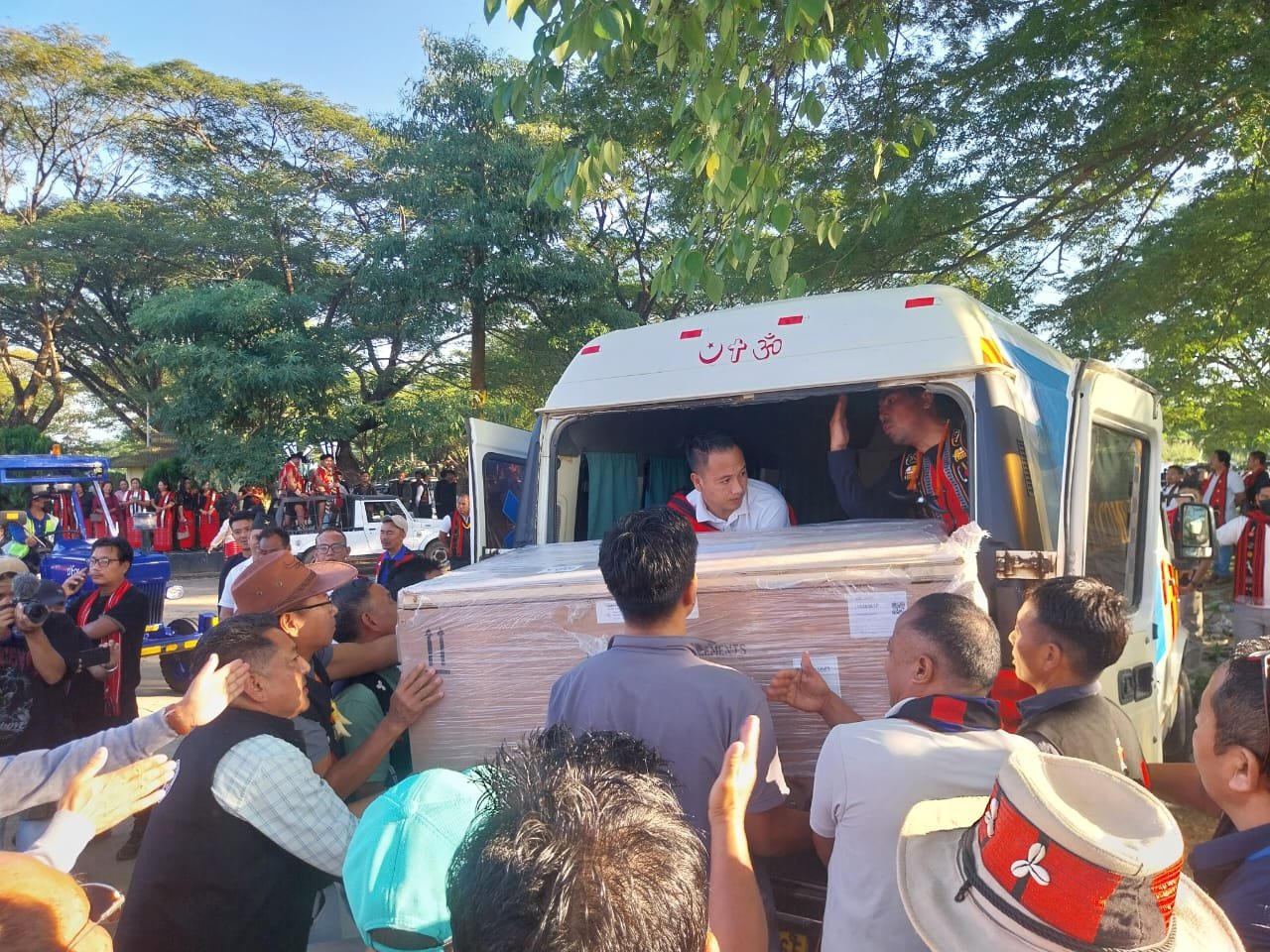
Thirty-nine Naga ancestral human remains, repatriated by the University of Oxford’s Pitt Rivers Museum in the United Kingdom, arrived at Dimapur Airport on Friday, marking a significant homecoming after more than a century.
The remains, transported in eight boxes, were received by representatives of Naga tribal bodies, community leaders, elders and members of the Forum for Naga Reconciliation (FNR), along with other organisations and state officials. They will be taken to Kohima for a series of public programmes culminating in a mass burial at Naga Solidarity Park on November 30.
The 39 remains belong to eight Naga tribal communities, with the Phom community accounting for the largest number at 24. The other communities include Konyak, Yimkhiung, Khiamniungan, Sumi, Tangkhul and Pochury, among others.
Download Nagaland Tribune app on Google Play


According to FNR convenor, Rev Dr Wati Aier, the repatriation was the culmination of six years of efforts involving the FNR, Naga tribal bodies and its research team.
The remains had been taken by British anthropologists more than 100 years ago and kept at the museum. Their return is being viewed as an important step towards restoring cultural dignity and ensuring a respectful burial.
The exact identities of the individuals remain unknown, although historical records maintained by British anthropologists JH Hutton and JP Mills have helped establish their respective tribal affiliations.
The public homecoming programme would be held on November 28 at 12 noon at the NBCC Convention Centre, Kohima, followed by public viewing and homage on November 29 from 9 a.m. onwards at the same venue. The mass burial ceremony is scheduled for November 30 at 2 p.m. at Naga Solidarity Park, Kohima.
The repatriation involves only the 39 human remains. More than 6,000 Naga cultural artefacts, including traditional ornaments, weapons and textiles, continue to remain at the Pitt Rivers Museum.