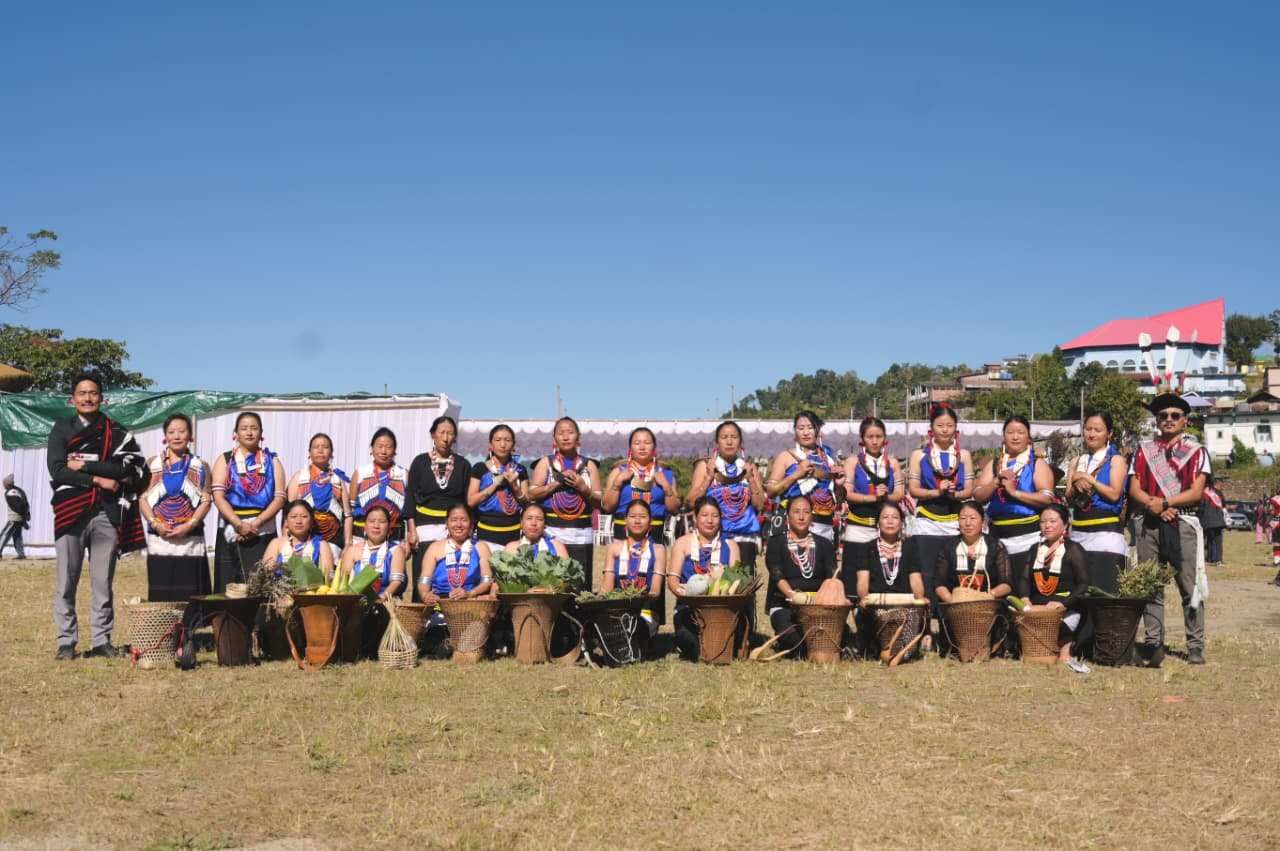
An initiative to revive and preserve indigenous seeds as part of the Rengma community’s cultural heritage and traditional food systems was launched during the Ngada Post-Harvest Festival 2026 at Tseminyu on November 28.
The Rengma Seed Collective, launched by the Kenono Foundation in collaboration with the Rengma Hoho, aims to conserve traditional seed varieties, promote agricultural biodiversity and strengthen community food sovereignty.
As part of the launch, 25 women representing seven Rengma ranges of Tseminyu district took part in a symbolic indigenous seed exchange. Dressed in traditional agricultural attire and carrying locally preserved seeds along with their harvest produce, the women exchanged seeds, highlighting their role in preserving agricultural knowledge and passing it on to future generations.
The initiative recognises indigenous seeds not merely as agricultural resources but also as carriers of ancestral knowledge, traditional food practices and cultural identity. It also seeks to draw attention to the importance of community-led conservation at a time when biodiversity loss, climate change and increasing dependence on commercial seed systems pose challenges to traditional agriculture.
Download Nagaland Tribune app on Google Play


The collective is planned as a continuing community initiative rather than a one-time event. Women who participated in the exchange will cultivate the seeds received during the next agricultural season, preserve and multiply them, and return during Ngada 2027 with their harvest and newly multiplied seeds for another exchange.
The annual cycle of sharing, cultivating, multiplying and exchanging seeds is expected to strengthen links between villages while helping preserve indigenous varieties and traditional farming knowledge.
Through the initiative, Kenono Foundation and Rengma Hoho also seek to encourage wider community participation, particularly among women and younger generations, in protecting the agricultural and biodiversity heritage of the Rengma people.
The initiative carries the message that indigenous seeds are closely linked to the community’s heritage, identity and food sovereignty, and that preserving them is essential to securing food resources for future generations.