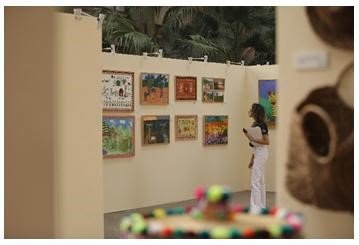
The first ever art exhibition of its kind, named the ‘Silent Conversation: From Margins to the Centre’ organized by the National Tiger Conservation Authority (NTCA), Ministry of Environment, Forest and Climate Change(MoEF&CC) and Sankala Foundation in New Delhi was held from November 3 to 5. According to the Press Information Bureau (PIB), the exhibition was inaugurated by the President of India, Droupadi Murmu on November 3. The President addressed the gathering emphasizing the need for a comprehensive and an united approach towards addressing the issue of climate change, which is an imperative not only for safeguarding the environment but also for the very survival of humanity. The address highlighted the importance of embracing the traditional practices of the tribal and other forest dwelling communities, noting that there are valuable lessons to be learned from them on how to lead a prosperous and contented life while coexisting harmoniously with nature.
The President was presented with a memento made by an artist belonging to the Mahar community of Kanha Tiger Reserve. The painting titled Baghdev in dot/ bindu style represents how Mahars engage in night time worship rituals under the blue sky, seeking the tiger’s eternal protection.
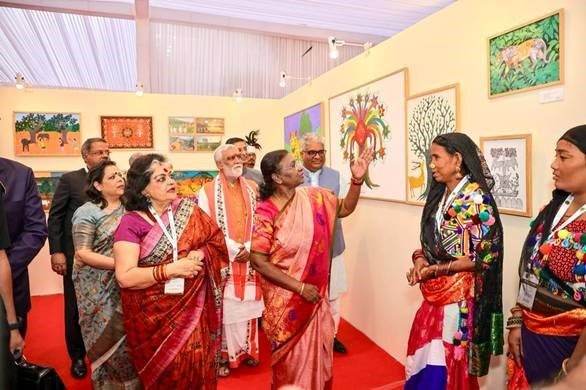
The Inaugural ceremony was also graced by Bhupender Yadav, Union Minister of Environment, Forest and Climate Change, Ashwini Kumar Choubey, MoS, MoEF&CC, Leena Nandan, Secretary, MoEF&CC, Bharat Lal, Secretary General, NHRC; C. P. Goyal, DG (Forest) & Special Secretary, MoEF&CC, S. P. Yadav, ADG (PT & E)/Member Secretary, NTCA and other senior officials from the Government.
In addition to the above, Ambassadors/ High Commissioners/Diplomats, eminent personalities from the field of art and wildlife attended the inaugural event.
The exhibition showcased the exceptional talent of 43 artists from 12 different states across India, representing a myriad of art styles such as Gond, Bhil, Patachitra, Khovar, Sohrai, Warli, and many more. The display highlighted the intricate relationship between tribal communities and other forest dwelling communities residing around India’s tiger reserves and their deep-rooted connection with the forest and wildlife.
Download Nagaland Tribune app on Google Play

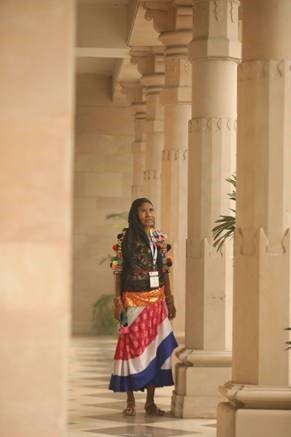
The artists were invited to visit the Rashtrapati Bhavan, where they had the opportunity to meet the President.The exhibition offered an extraordinary platform for the public to immerse themselves in the art and culture of these communities, enabling a deep appreciation of their ethos & culture. Throughout the weekend, Delhi NCR played host to numerous distinguished guests such as Ambassadors and High Commissioners representing various nations.
The exhibition served as a platform to educate the public about the importance of wildlife conservation, the challenges faced by tiger reserves and the pivotal role of tigers in maintaining ecological balance. Through the sale of artwork, the exhibition empowered the participating artists economically, providing them with alternate and sustainable livelihoods, informed the PIB. A remarkable feature is that proceeds from the sale were sent directly to the bank accounts of the tribal artists via a QR code.The artists further enriched their experience with an engaging day tour, exploring some of the iconic landmarks in the city. Their itinerary included a visit to India Gate, a symbol of national pride and sacrifice, and Kartavya Path, a place that inspires a sense of duty and responsibility, among others. This allowed the artists to connect with the historical and cultural significance of these contributing to their holistic experience in the heart of India’s capital.
The exhibition marks the beginning of a series that will further be showcased in other major cities in India, spreading the message of art, culture, and tiger conservation to a broader audience.