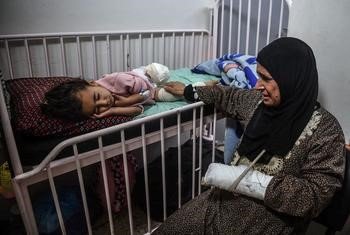
Hospitals and other vital medical infrastructure in Gaza and the West Bank have been attacked nearly 600 times since war erupted in the enclave in response to the Hamas-led terror attack in southern Israel, the World Health Organization (WHO) UN health agency said on January 5.
Reported figures by the WHO highlight the critical need for attention and efforts to address the healthcare challenges in the region. About 613 people have died within health facilities in the Occupied Palestinian Territory since 7 October last year – 606 in Gaza and seven in the West Bank – and more than 770 have been injured, according to latest data on healthcare attacks from the World Health Organization (WHO).
Condemning the continuing fighting and bombardment, WHO spokesperson Christian Lindmeier stated that the “ongoing reduction of humanitarian space plus the continuing attacks on healthcare are pushing the people of Gaza to breaking point”.
The situation reflects deep concern with children in the Gaza Strip are more susceptible to a deadly triple threat to their lives, as cases of diseases rise, nutrition plummets and the escalation in hostilities approaches its fourteenth week.
Thousands of children have already died from the violence, while living conditions for children continue to rapidly deteriorate, with increasing cases of diarrhoea and rising food poverty among children, raising the risk of mounting child deaths, reported the WHO.
WHO’s online platform covering attacks on healthcare indicated 304 attacks in the Gaza Strip since 7 October. The attacks affected 94 health care facilities (including 26 hospitals damaged out of 36) and 79 ambulances.
In the West Bank, 286 attacks caused seven deaths and 52 injuries. Some 24 health facilities were affected along with 212 ambulances.
Download Nagaland Tribune app on Google Play

The head of the UN Children’s Fund UNICEF Catherine Russell said in a statement on January 6 that children in Gaza “are caught in a nightmare that worsens with every passing day”. Russell’s statement underscores the critical need for protection of young lives in Gaza. Prioritizing access to basic services, supplies, and ensuring a safe environment are crucial steps to mitigate the risks faced by children in the region.
Cases of diarrhoea in children under five rose from 48,000 to 71,000 in just one week starting December 17, equivalent to 3,200 new cases of diarrhea per day.
Russell noted that the significant increase indicated child health in Gaza is deteriorating quickly. Before the escalation in hostilities, an average of 2,000 cases of diarrhea in children under five were recorded per month.