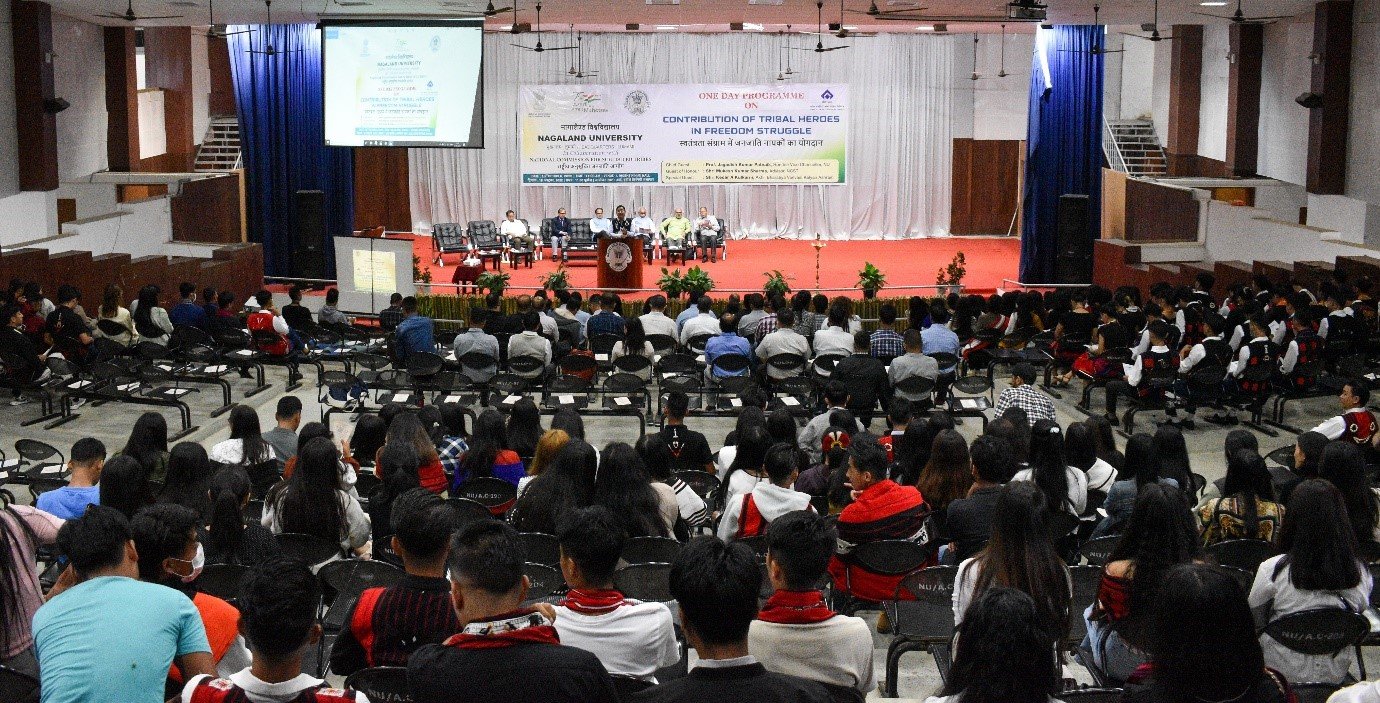
‘Contribution of Tribal Heroes in Freedom Struggle’ was the theme of the One Day Programme held at Nagaland University (NU), Lumami today.
The event was organised by Nagaland University in collaboration with the National Commission for Scheduled Tribes (NCST), New Delhi under Azadi Ka Amrit Mahotsav, Government of India.
The Chief Guest of the programme was Prof Jagadish Kumar Patnaik, Vice Chancellor NU, while the Guest of Honour and Special Guest were Mukesh Kumar Sharma, Advisor NCST and Kedar A Kulkarni, Akhil Bharatiya Vanvasi Kalyan Ashram, respectively.
Kulkarni while delivering his speech on ‘Exhibition of Tribal Heroes in Freedom Struggle’ began by disclosing the relevance of NCST and its progression. He elaborated on the existing tribes in India and the reasons on why Azadi Ka Amrit Mahotsav should be celebrated.
He narrated the origin of the first martyr (Murmur clan) who resisted the colonial rulers and how the British administrators executed him. He also spoke about numerous tribes across India that had resisted the colonial rulers.
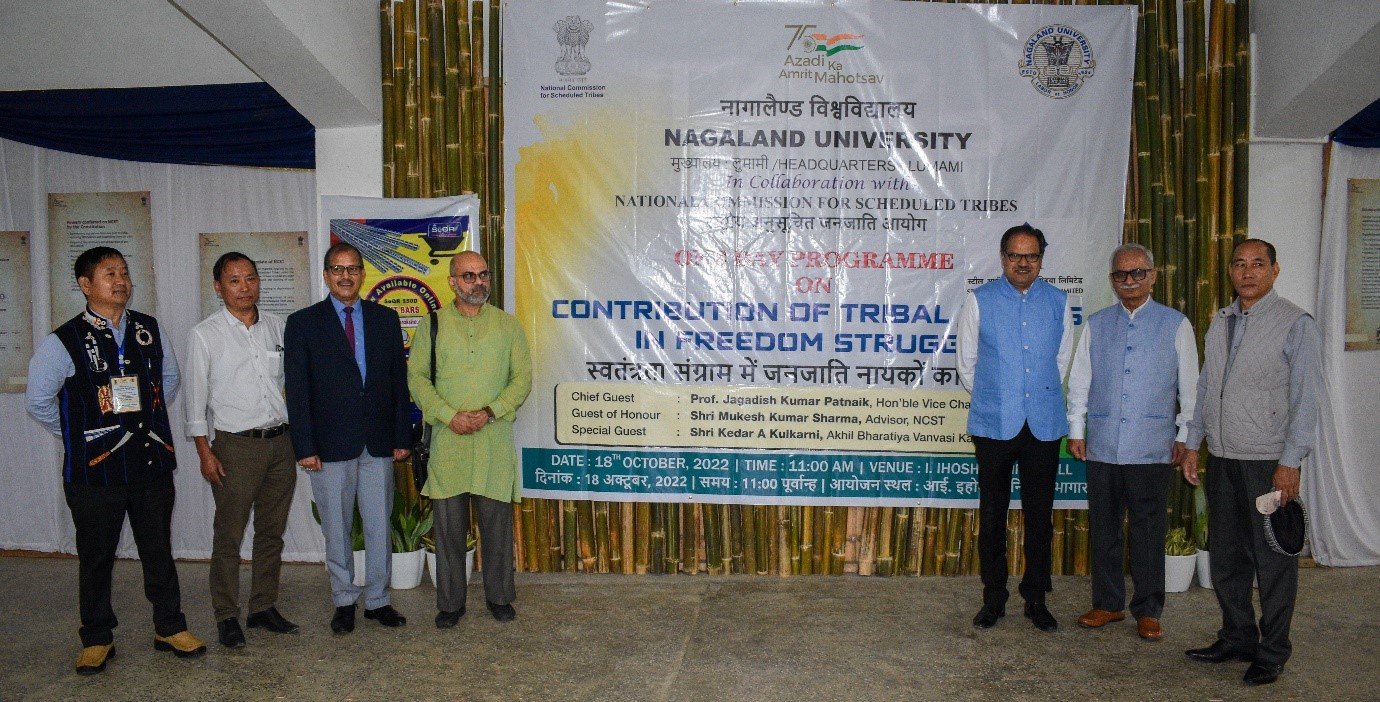
The special guests of the programme – Prof Jagadish Kumar Patnaik, Mukesh Kumar Sharma, and Kedar A Kulkarni – along with organisers at NU Lumami.
Kulkarni further stated that tribal people were viewed as a threat by the Britishers. The Criminal Tribes Act of 1871, therefore, labelled every tribal a criminal and this tag which persisted over generations has been constantly resisted by the tribals. He felt that such resistance by the tribals deserved to be acknowledged and celebrated.
Furthermore, Kulkarni stated that tribal people from the Northeast are flourishing in different sectors today. Their contribution in various fields should be celebrated, he said.
While highlighting the potential scope of research in the Northeast region, he challenged the scholars to carry out indebt research in these areas.
Prof Y Ben Lotha, Dept of History & Archaeology, NU also delivered a speech on the theme of the programme. Laying out the concept of marginalised groups including the STs and SCs, he dwelt on how these groups have been marginalized over the years. He spoke on how the Britishers had invaded the cultural domain of the tribal people by exploiting their natural resources. He also dissected the different movements initiated by the tribal leaders across time and space in India that have played a dominant role in resisting the British rule in India.
Prof Y Ben Lotha illuminated the audience on the battle of Khonoma and the resistance of Pangti village against the British colonialists.
Lotha then contextualized the Northeast region and expounded on the significant role of tribal leaders in different parts of the region and their struggle to resist the colonial rulers.
The significant role of Pangti and Khonoma villages in resisting the Britishers was illuminated by him along with the many other incidents in the NE region.
The professor concluded by acknowledging the roles of tribal heroes and leaders who had taken part in the resistance movements and how their active involvement had played a dominant role in shaping the history of the tribal communities.
A short visual film on the National Commission for Scheduled Tribes was shown during the programme.
Mukesh Kumar Sharma, Advisor NCST, spoke on the ‘Role of NCST’.
He said that that the NCST was established through the 89th amendment in which 338A was added to the Constitution of India. He then elaborated on the objectives, provisions and jurisdictions of article 338A.
The advisor pointed out the role of the Commission (NCST) in approving and implementing policy for the tribal community both at the Centre and the states, including the developmental process in the tribal areas.
He further explained the procedures to file a complaint and the availability of NCST to any tribal communities in India facing atrocities or problems of any kind. He disclosed that the NCST has conducted several seminars for the tribal people especially during the COVID-19 phase to assist the tribal people.
Sharma concluded by emphasizing the necessity and importance of NCST and the significant role it plays for the tribal communities.
During interaction, the advisor also answered the various questions that were posed to him in relation to the NCST.
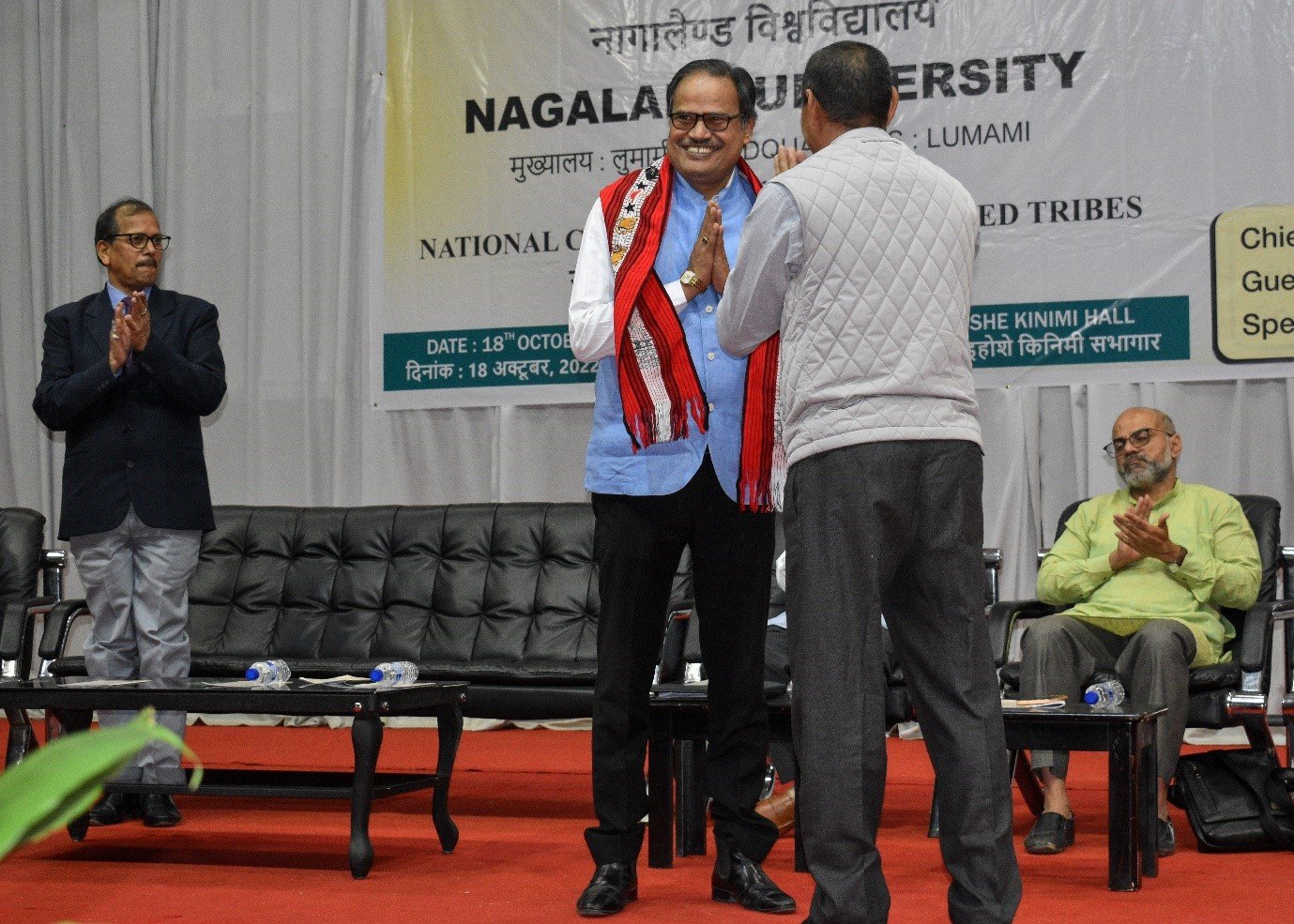
We must continue the legacy of the unsung heroes to persist through the difficulties of modern issues – Prof Jagadish Kumar Patnaik, Vice Chancellor NU.
Prof Jagadish Kumar Patnaik, in his Chief Guest address, pointed out the defect in history, how it has been misrepresented by historians over the years and how there is a need to revisit history. He also highlighted the atrocities faced by the tribals and how they were divided by the colonial rulers, further adding that we should not stop at just celebrating the historical contribution of unsung heroes challenging the British colonial rulers, but must continue the legacy to persist through the difficulties of modern issues.
There is a need to revisit history to critically identify ourself in order to develop a better understanding of the existing issues, Patnaik said.
The Vice Chancellor also reiterated the importance of NCST for the tribal communities.
The vote of thanks was delivered by Peter Ki, Administrative Co-ordinator.
Prof M S Rawat, Dean, School of Sciences, delivered the welcome address while felicitation was done by Dr Abemo, Registrar, Nagaland University.
The programme was chaired by Prof Athungo Ovung, Academic Co-ordinator.
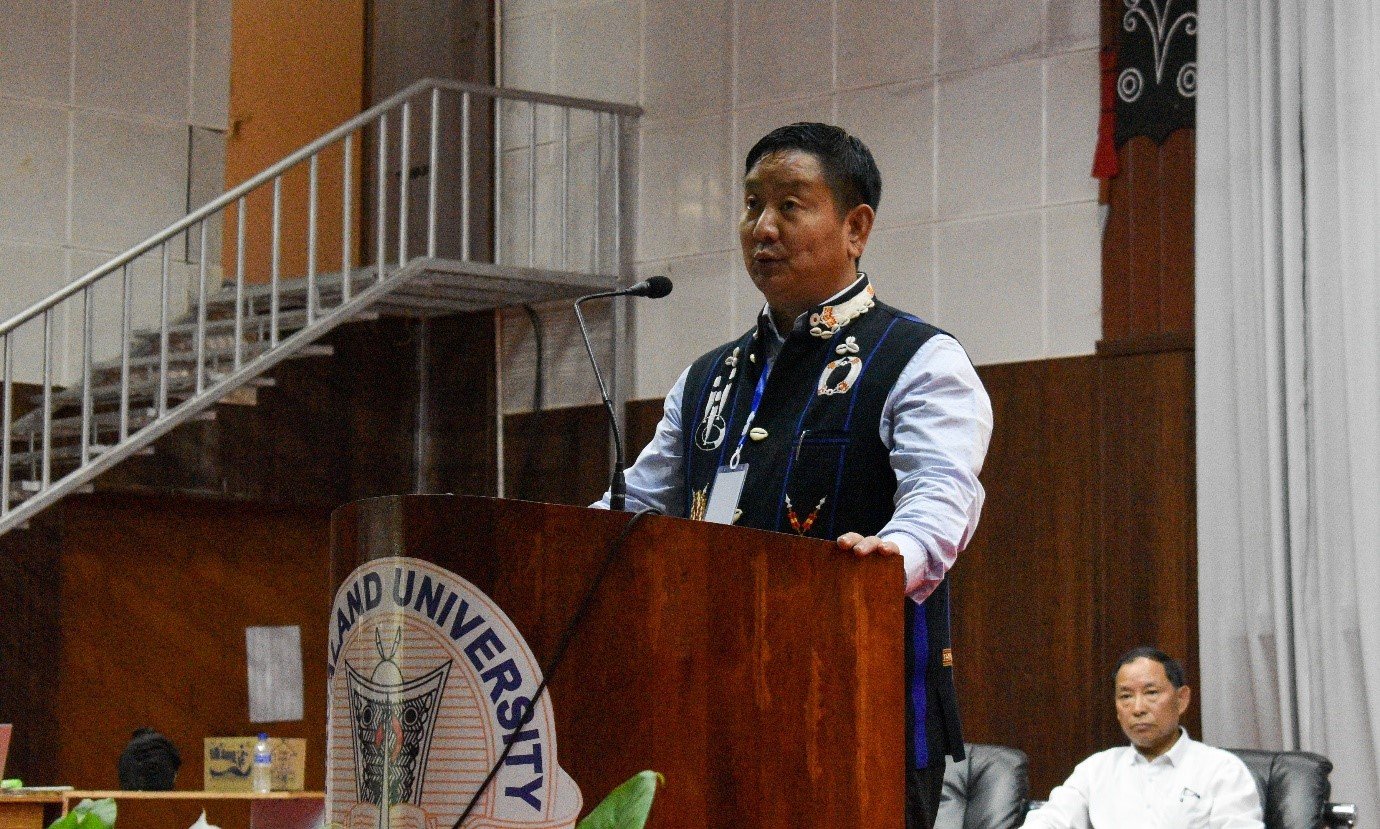
Prof Athungo Ovung, Academic Co-ordinator, called for the repatriation of the left-out heroes.
During the introduction, he laid out the significance and relevance of the programme. He asserted that many tribal heroes have been left out in our history accounts.
Prof Ovung called for repatriation of the left-out heroes. He also dwelt on the role and significance of the tribal people and felt that there was more scope for such type of programmes in the near future.
A special folk song under the theme of the Eastern Naga culture was presented by NUSU, Lumami.
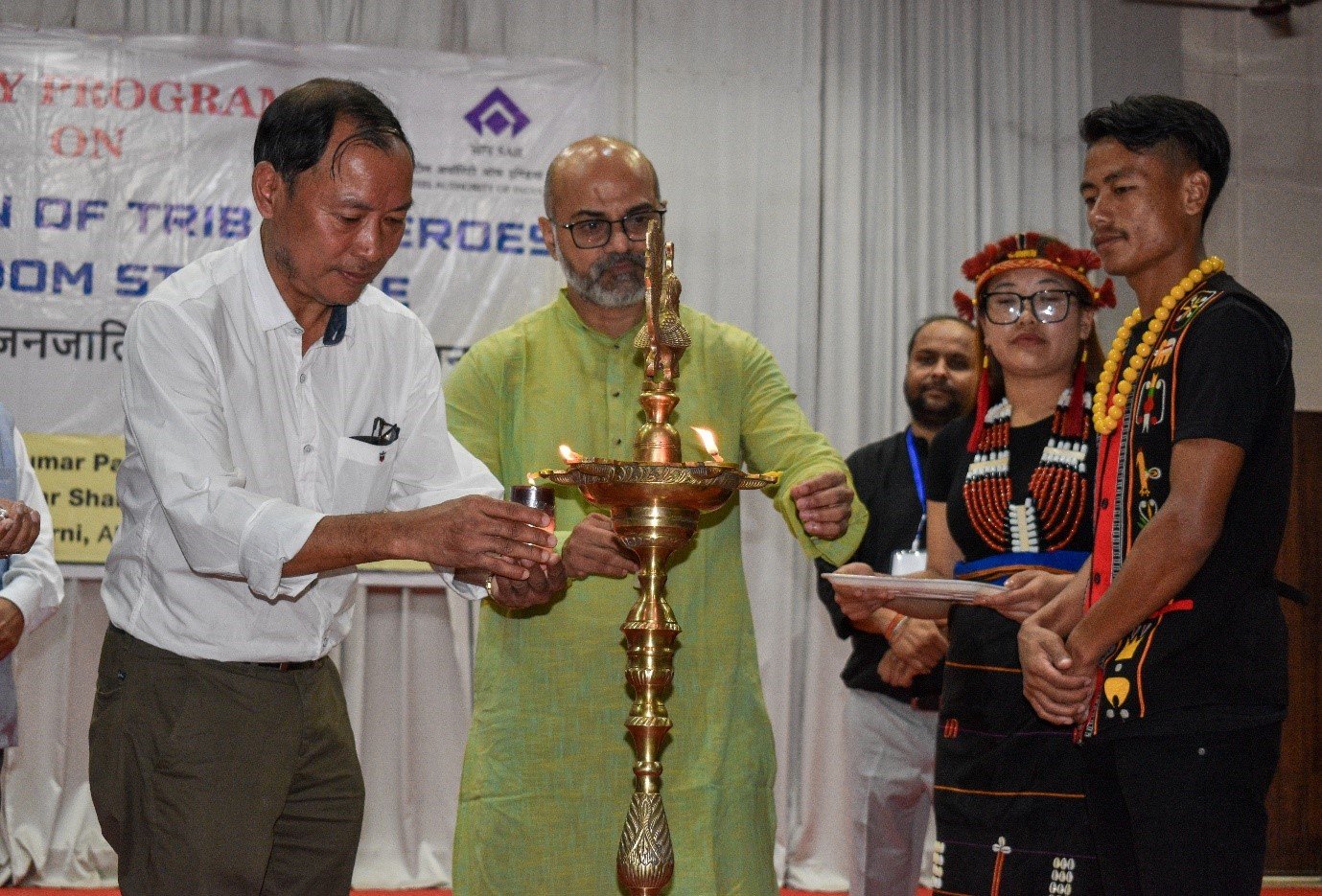
Earlier, the poster exhibition on tribal heroes and the NCST was inaugurated by the Chief Guest.
The programme was attended by over 700 people including faculty members, statutory officers, administrative staff, research scholars, students, KVK staff, KV Principal and invitees from in and around Lumami.