The Baptist College, Kohima (BCK) held the Literary Day on October 24 under the theme “What’s in a Book?”. The event comprised of twelve workshops conducted simultaneously chronicling how a book begins till it is available to readers, informed a press release from BCK.
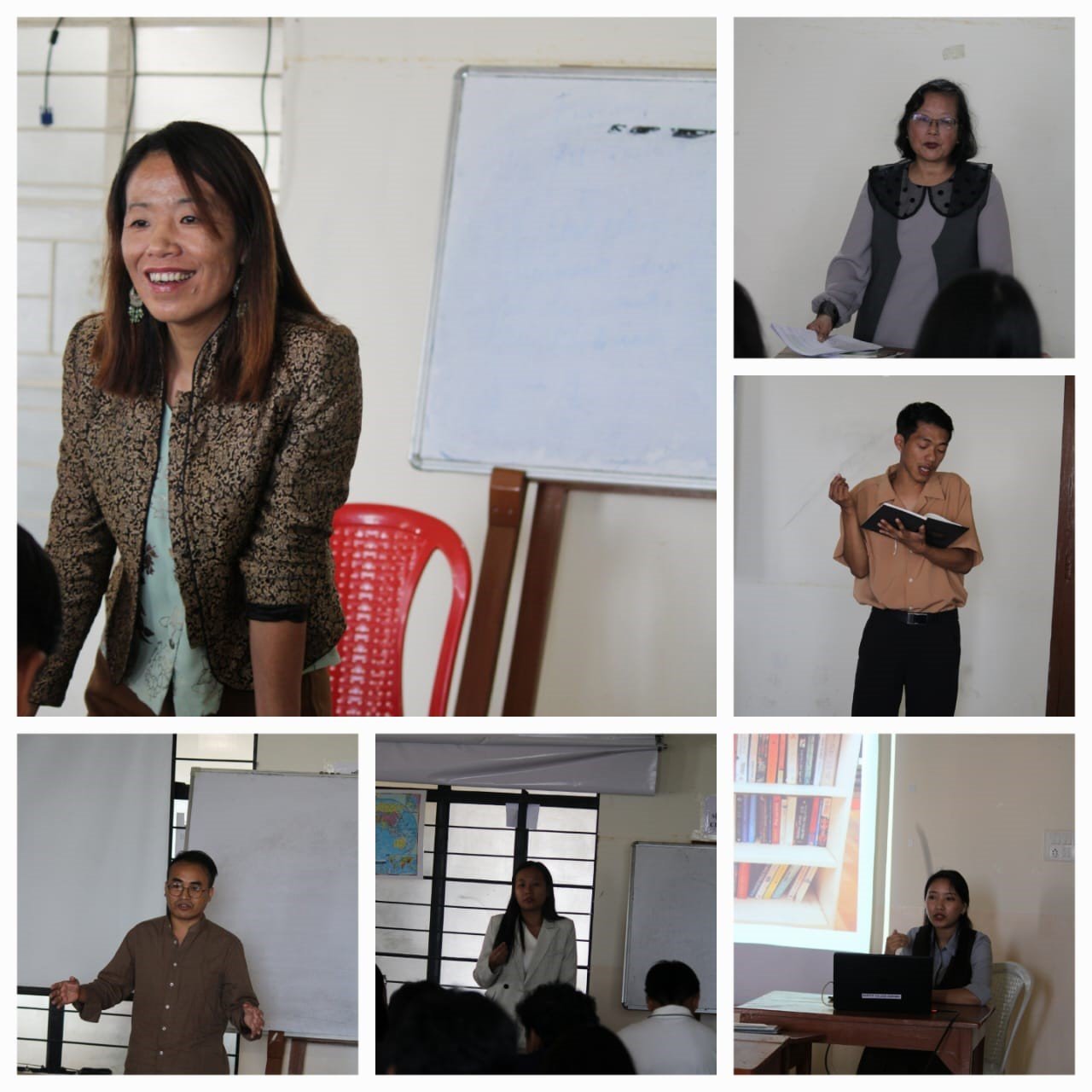
The workshop on “Crafting a Book-1” was chaired by Assistant Professor, Loly Chophy. The resource person Rovi Chasie began with a quote by Stephen King. “If you want to be a writer, you must do two things above all others: read a lot and write a lot.” Encouraging the students, Chasie narrated her experiences in her journey as a writer. She asserted that her books are a result of her personal experiences. She spoke of the importance of allowing one’s integrity and conscience to be one’s guide in tasks undertaken. The workshop concluded with readings from her work by a student.
The session on “Crafting a Book-2” was led by resource person Limatoshi Longkumer, who was introduced by chairperson Dr. Khobu Tsolo. Longkumer offered valuable tips to students who aspire to write a book, advising them to start with honesty, avoid plagiarism, read widely across different genres, seek feedback from friends, and refrain from rushing into publication. The workshop provided a wealth of information and guidance for students interested in creative writing, and was deemed a success by all accounts.
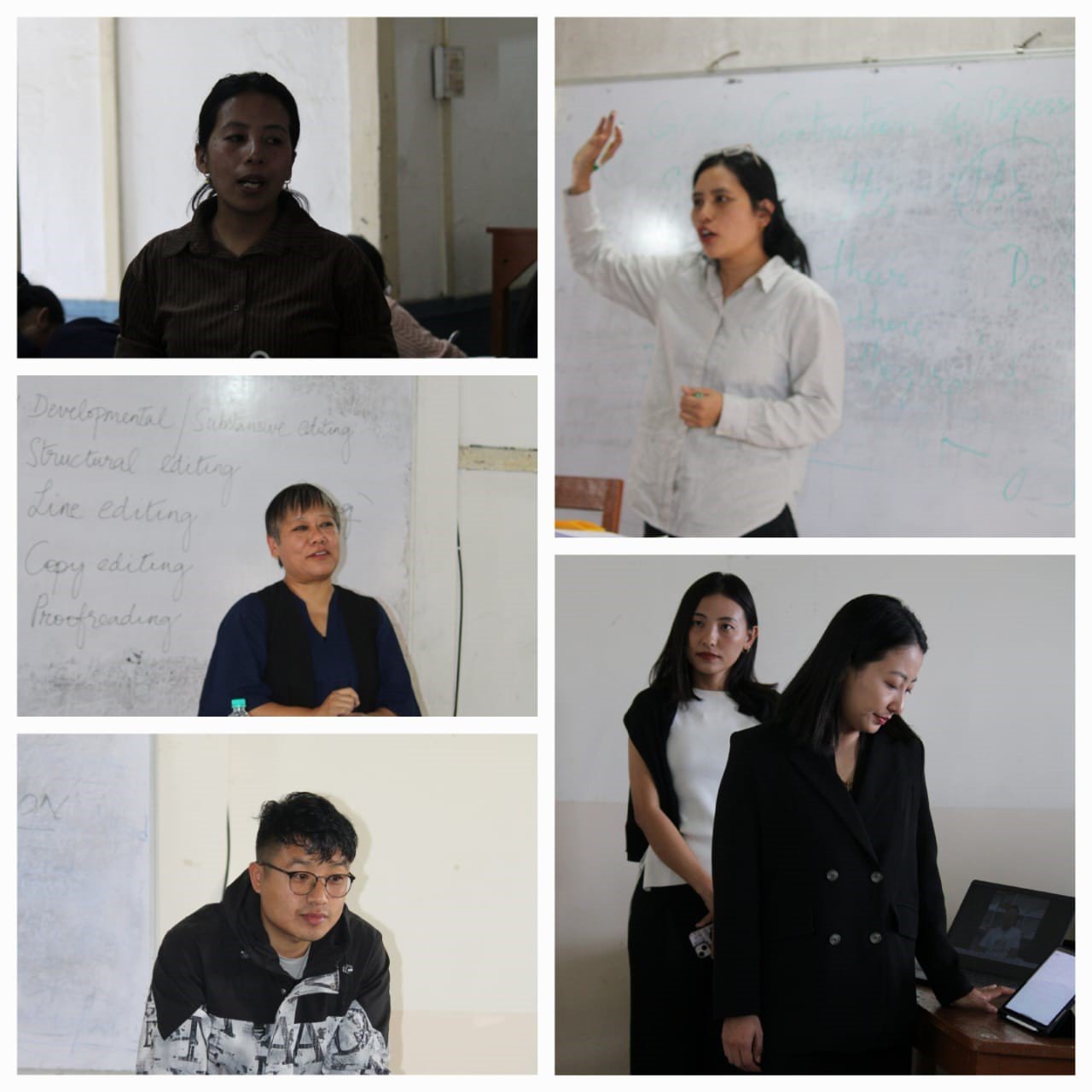
The session on “Publication Houses” commenced with a brief introduction of the resource person, Vishii Rita Krocha, by the chairperson, Dr. Sentinaro. Krocha delivered an insightful talk on the Penthrill Publishing House and elaborated on the various stages involved in the publishing process — beginning with the receipt of manuscripts, followed by reviewing and editing to eliminate errors, obtaining approval, designing the layout, and culminating In the final publication. Engaging with the students, she discussed the significance of a book’s cover design and its contents. The session concluded with an interactive Q&A segment, followed by a lottery draw, in which four students received her books — Talks from the Enchanted Village, Where the Light Finds Us, From the Broken Earth, and Yearning — as gifts from the resource person.
“Fundamentals of Editing” was chaired by Enibemo W.Kikon, where the resource person Dr.Vizovono Elizabeth, Independent Researcher and Editor, talked about the importance of editing as many tend to ignore the crucial art of it. She highlighted the three stages of the journey of a book and how editing is part of that as well as the different types of editing that takes place in the process of publishing a book. She also emphasized on the 4 Cs of editing: Clarity, Consistency, Coherency, Correctness. The session was concluded with a productive Q&A.
The workshop on “The Basics of Writing -1” was led by Dr.Enünü Sale, Asst.Prof, Department of English, BCK. The purpose of the workshop was to equip the students with the foundational, transferable skills necessary to produce clear, correct and compelling written communication in any academic or professional setting. Dr. Sale also outlined on how to write a good relfective essay and stressed on the importance of reading as a habit. The workshop successfully delivered critical instructions to its attendees, fulfilling the Literary Committee goal of supporting improved academic standards.
Download Nagaland Tribune app on Google Play

A session on “The Basics of Writing-2” was delivered by Suvilü Venuh, Assistant Professor, Department of English, BCK. The resource person emphasized that writing often presents greater challenges than speaking, primarily due to concerns about accuracy and potential errors. Additionally, the lecture covered verbs as action words, the eight parts of speech, and various types of pronouns, along with the proper use of tenses. The session was highly informative and reinforced the essential principles required for effective and accurate writing.
The workshop on “Community Libraries – 1” was conducted where the chairperson Chubutse Naro welcomed the participants and introduced the resource person, Akho Phira, who shared his experiences in founding and managing the Community Library at Kigwema. Phira emphasized the importance of community libraries as inclusive learning spaces that promote reading habits, preserve local culture, and strengthen community ties.
Phira traced the library’s development from its modest beginning in July 2021 with a single shelf, gradually expanding to over 600 books and several outdoor reading spaces. He highlighted recent initiatives such as the inauguration of the third outdoor shelf, a Spelling Bee Competition, and a CV Writing Workshop organized in collaboration with the Kigwema Students’ Union. The session also focused on practical strategies for setting up community libraries such as identifying suitable locations, mobilizing local support, collaborating with schools and organizations, and curating diverse reading materials relevant to the local context. An interactive discussion followed, during which participants shared their ideas and questions regarding library management, sustainability, and outreach.
The session on “Community Libraries-2”, chaired by K.Peter was held with Longitili Sangtam, an entrepreneur, community leader, and youth advocate. Sangtam highlighted the development of the community library in Kiphire and stressed the importance of libraries as centres for knowledge sharing and rural learning. Encouraging students to take part in promoting reading culture, he challenged them to “Donate one book to a community”. An interactive Q&A followed, during which he shared that reading books has been his greatest inspiration. The session concluded with remarks from the chairperson, who thanked the resource person for his inspiring message and encouraged the students to continue seeking knowledge within their communities.
The workshop on the theme “Printing Press: Functions, Processes and Team Work” was chaired by Seyieselie Vüprü, and the resource person for the workshop was Leykam Thüvüri, Graphic Designer at Spectrum Printers. Thüvüri began his session with a concise historical overview of the printing press and its transformative role in shaping human civilization. He highlighted the role of designers in the production process, explaining that while writers give content to a book, the press gives it life—and the finishing stage lends it a soul. The speaker elaborated on the importance of soft skills in the printing and design industry, noting that engaging with clients, understanding their perspectives, and adapting to evolving design trends are vital for professional success.
Thüvüri further underlined the significance of teamwork in the printing process, remarking that publishing a book requires a blend of emotion, hard work, and mechanical precision. In his concluding remarks, Thüvüri returned to the Literary Day theme, “What’s in a Book?” He remarked, “Behind every page in a book is a press, behind every press is a team, and behind every team is an unending belief that ideas are meant to be shared.” The workshop ended leaving participants with a deeper understanding of the intricate relationship between literature, design, and technology.
Angel Meru Librarian Baptist College Kohima opened the session for “Nagaland State Library: A Resource Centre and Reading Space” introducing the resource person, Sürhü Dozo, Deputy Librarian, State Library Kohima. The speaker began by stating that the library is not merely a storehouse of books but a space for spreading ideas, learning, and discoveries. She highlighted that the State Library serves as an important institution supporting students, researchers, and professionals across various fields in the state.
The State library also provides essential facilities such as conference room, reading room, reprographic, a reference section, children’s section and computer room. She added that plans are also underway to develop digital repositories to make materials more easily accessible in the future. She further stated the importance of making book as our reliable companion on the journey of knowledge. The session ended with a Q&A.
A session on “Book Stores and Reading Spaces” was conducted with Khriezovonuo, Librarian of The Book Home, as the resource person. She began by emphasizing that a children’s library is a place where one’s imagination comes alive- a space where stories inspire the desire to not just read, but to own the books themselves. She highlighted that reading in a library evokes a different feeling of focus and connection, where an author’s imagination and characters truly come alive.
In conclusion, Khriezovonuo encouraged everyone to visit and experience the joy of reading at the library. She remarked that “the library will never die but will continue to grow.” She also shared that The Book Home is open from Monday to Saturday, 10:00 a.m. to 6:00 p.m. The session was chaired by Veshetsülü Rüho, underscored the importance of cultivating reading habits and highlighted how books connect people, broaden perspectives, and inspire new visions, concluding with an interactive Q&A session involving both teachers and students.
The workshop on “Libraries as Reading Spaces and Sources” featured Susanti Kath and Asiwa Kath, Proprietors of Jini’s Study Hall, with Mhasivino Chale as chairperson. The resource persons briefed the students about the difference between library and reading spaces and how they have tried to bring these two together under one roof, curating an ideal study sanctuary for active learners. They emphasized the importance of libraries and study rooms to foster a study culture. The students were urged to enhance their reading skills by visiting libraries, be it public or private owned, and be productive, ensuring reading spaces becomes training grounds. Jini’s Study Hall is open 12 hours a day, from 8:00 am to 6:00 pm, in two shifts, from Monday till Saturday providing a conducive environment for learners to achieve their academic/competitive goals. The session aimed to inspire students to leverage libraries and study spaces for academic growth and personal development.
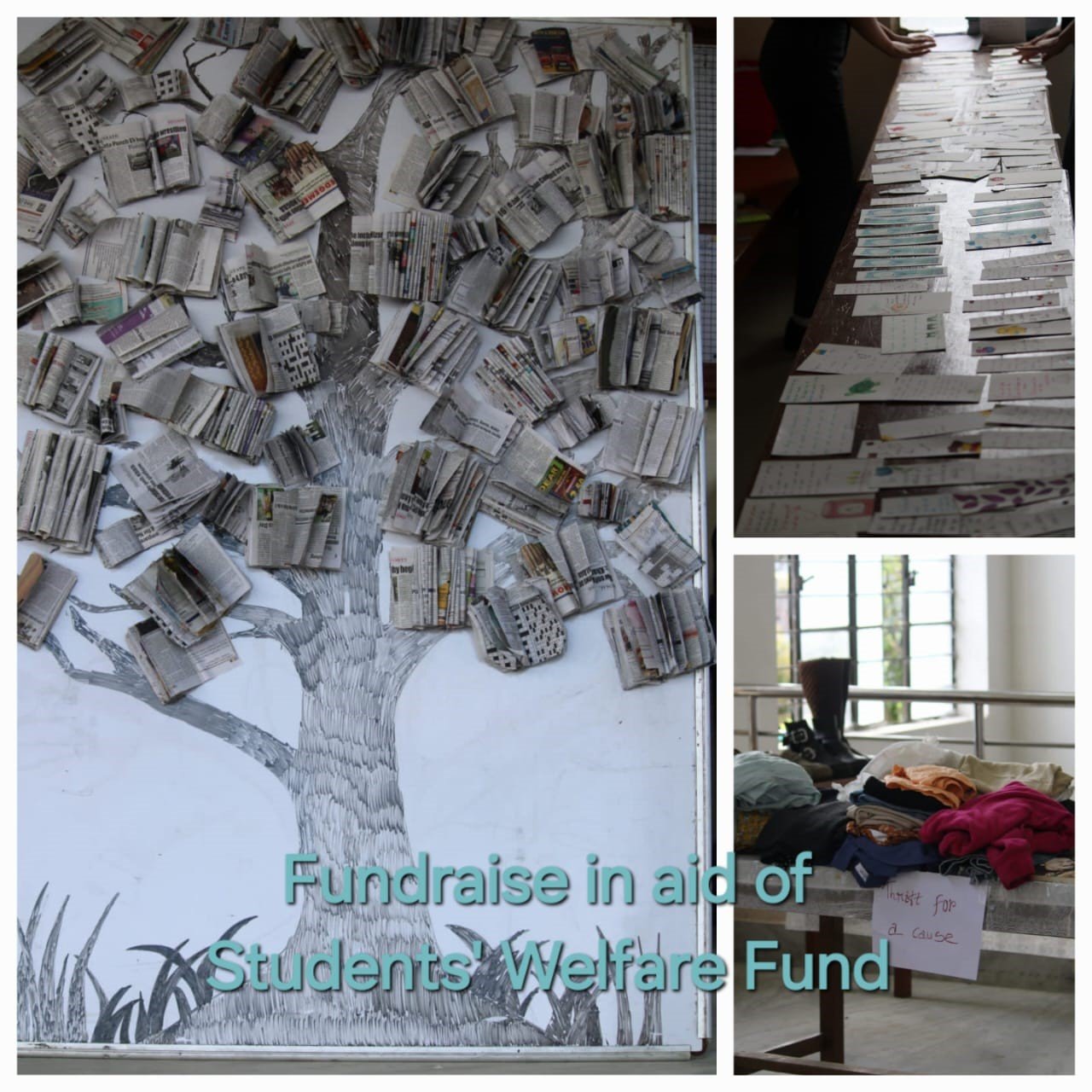
The workshops were followed by fundraiser for the Student Welfare Fund which is designed for financially underprivileged students. There were four stalls for this purpose- Thrift for a Cause, Kindness Kiosk, Live Art and a photo booth all based on free will donation.