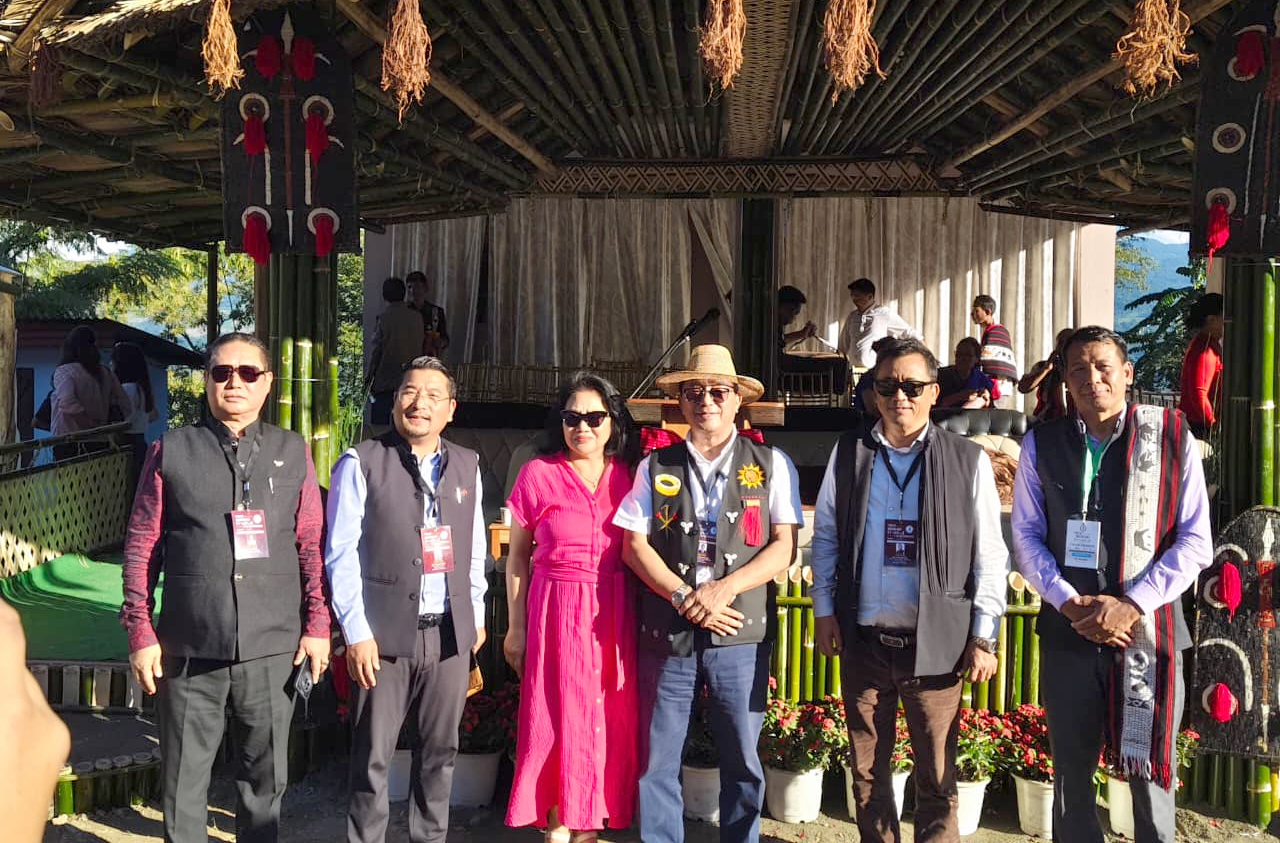
The P Shilu Ao Memorial Indigenous Games Festival-cum-2nd Tug of War Championship 2025, organized by the Longjang Riongjanger Cultural Society, Mokokchung, under the aegis of the Longjang Village Council, was held under the theme “Tenten” at Longjang village playground.
The two-day event, held from November 7, concluded on November 8 with MLA and Advisor for Water Resources, Tongpang Ozukum, as the inaugural guest and MLA and Advisor for Law & Justice and Land Revenue, TN Mannen, IAS (Retd.) as the Closing Guest.
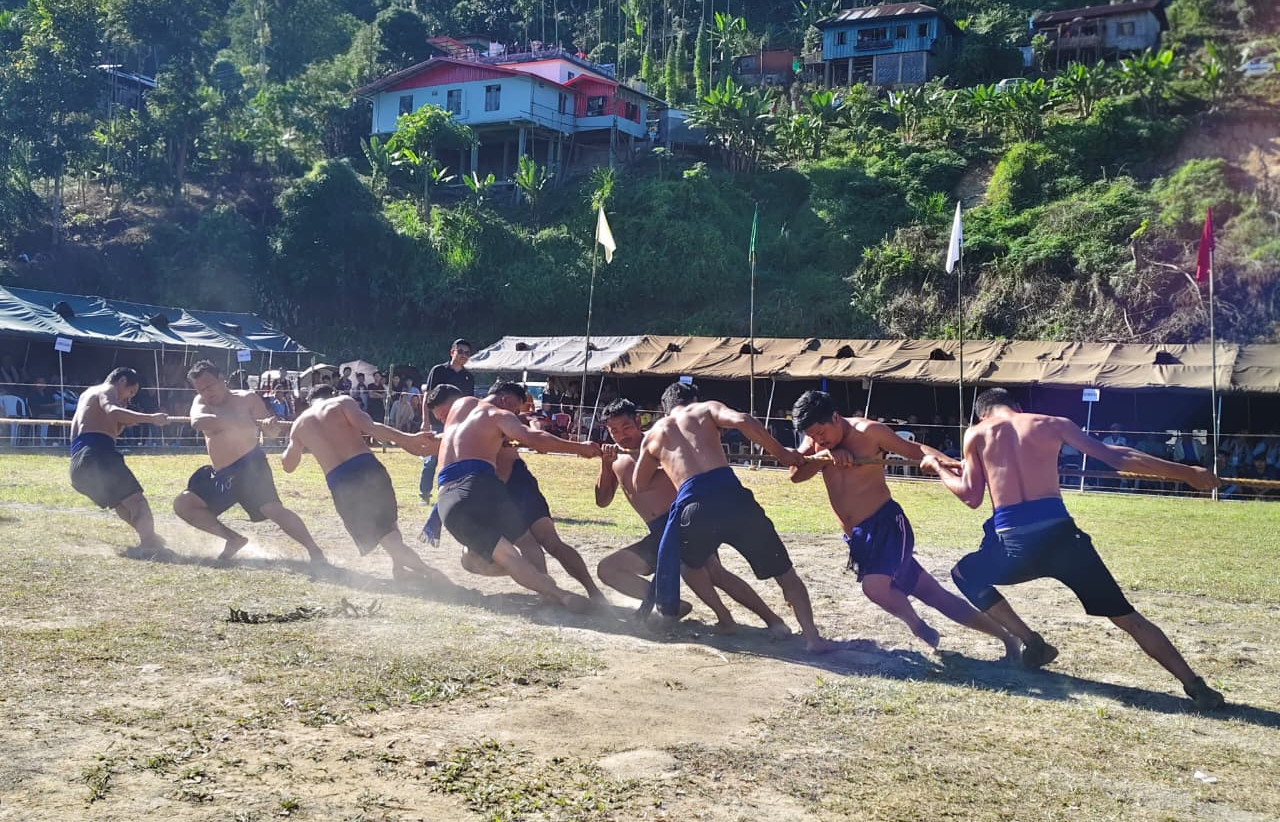
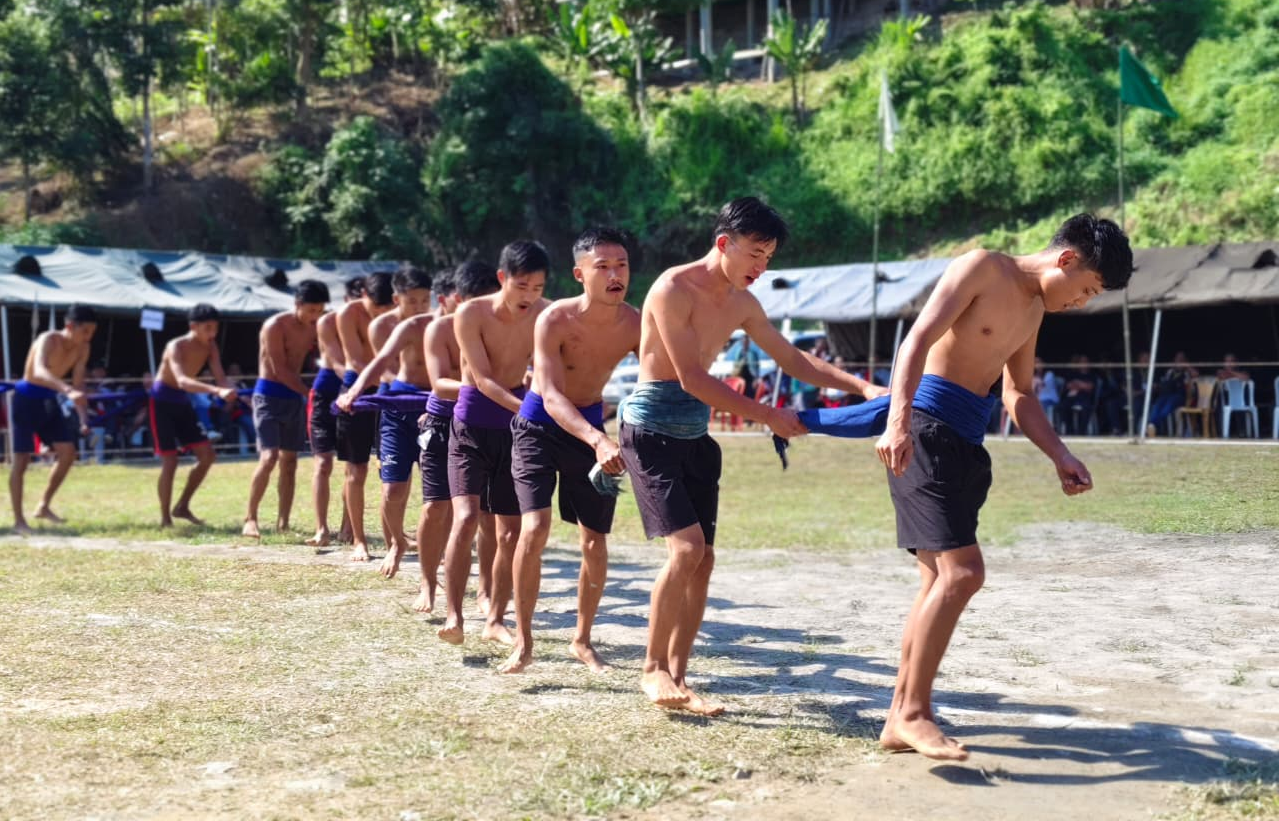
The event brought together Longjang village and its 10 neighboring villages — Longpa, Dibuia, Sungratsü, Waromung, Mongsenyimti, Chuchuyimlang, Khar, Asangma, Mongchen, and Kilengmen for the two-day celebration of traditional sports, including tug-of-war competitions, indigenous games, and cultural activities.
The 2nd Tug of War Championship 2025 saw enthusiastic participation from all 10 neighboring villages, culminating with the final between Süngratsü Village and the host village, Longjang.
The championship was bagged by Longjang Village, which received a cash prize of ₹30,000 along with the trophy, while the runners-up, Süngratsü Village, were awarded ₹20,000.
Over the course of the two-day festival, various indigenous games were played, with winners being awarded.
In his address, Tongpang Ozukum said that the first Chief Minister of Nagaland, P Shilu Ao, was described by his contemporaries and those who worked with him as extraordinarily intelligent, and remarkable oratory skills. He said they often remarked that no one like him has been born since.
Ozukum said that before Nagaland attained statehood, P Shilu Ao served in the Interim Body along with Dr Imkongliba Ao, who was the Chairman, Dr SC Jamir and RC Chiten—four members representing the Aos. Out of the 42 members in the Interim Body, five were selected as Executive Councilors, and among them, P Shilu Ao was designated as the Chief Executive Councilor, equivalent to the position of Chief Minister. He added that the Interim Body, which was not an elected body, functioned for three years and ended on November 30, 1963, followed by the declaration of Nagaland as the 16th State of India on December 1, 1963.
He said that after the first general elections in 1964, P Shilu Ao became the first Chief Minister of Nagaland. Leading a new state and government came with great responsibilities, Ozukum said, but the most important concern at that time was achieving ‘Naga peace’. Under his leadership, the historic ceasefire agreement was signed on September 6, 1964, which he described as the greatest achievement of that government. Within just two years, significant progress was made before P Shilu Ao resigned on August 13, 1966.
He added that the Government of India later appointed him as Advisor on Tribal Affairs.
Ozukum said that it is not only the Aos but all Nagas who should honour and remember his contributions. He appreciated the event organized in his memory and said the initiative should serve as an example for all Nagas.
He mentioned the P Shilu Ao Park project in Mokokchung as a befitting tribute to the first Chief Minister of the state and that more greater initiative in his honour to be initiated and urged the villagers to bring good concepts and to begin soon.
Highlighting the importance of indigenous sports, Ozukum said that while modern games are important, traditional games must also be preserved and promoted among the youth, as they reflect the essence of Naga culture and identity.
In his address, MLA and Advisor for Fisheries and Aquatic Resources, A Pangjung Jamir remarked that while there are numerous games around the world, indigenous games are not as widely celebrated or practised among us.
Speaking about P Shilu Ao, the first Chief Minister of Nagaland and a native of Longjang Village, Jamir described him as a visionary Indian politician who played a key role in the negotiations that led to the creation of the state. He noted that many of P Shilu Ao’s good works continue to benefit the people today.
Jamir further highlighted that Longjang Village now enjoys connectivity with ten neighbouring villages, calling it a matter of great pride and a reflection of peaceful coexistence. He lamented that the essence of indigenous games is gradually being lost and urged the people to revive and preserve the traditional games once played and practised by their forefathers.
Marsanen Imsong, President of Ao Senden, in his address said that P Shilu Ao was like the rising of a new sun for the Nagas during a time of turmoil and limited education. Through his leadership in the movement for Nagaland Statehood, the Nagas found a new path and direction, he said.
He stated that the story of Nagaland’s Statehood is incomplete without P Shilu Ao, just as the story of Christianity in Nagaland cannot be told without Rev Dr EW Clark. While the park in Mokokchung named after him is a mark of respect, he said it does not suffice to honour his legacy. A leader of such stature deserves recognition from all Nagas. He urged the Ao community to unite and work together with a shared vision in his honour.
“Today we talk about unity, but it must be built on truth,” he emphasized.
He also observed that while the Aos have many educated individuals, many remain unemployed. “Learning signifies progress, but only when education leads to self-reliance does it bring prosperity,” he added.
Download Nagaland Tribune app on Google Play

To the youth and present leaders, he urged them to focus on what can be done rather than what is lacking, and to work towards raising more capable and visionary leaders for the community.
Chief Host and closing Guest, TN Mannen highlighted the significant contributions of P Shilu Ao, recalling that he became the first Chief Minister of Nagaland and played a key role in the state’s early political and peace-building efforts.
Mannen noted Shilu Ao’s historic achievement as the first Naga to clear the Assam Civil Service examination and emphasized his dedication to the Naga cause during his tenure in various administrative roles, including Additional Deputy Commissioner in Mokokchung and later as Chief Councillor of the First Interim Body (1961–63).
Tracing his early journey, Mannen recounted that after completing Class 10 in Jorhat, Shilu Ao returned to Longjang village to teach at his former primary school for a modest salary of Rs. 10 per month. He subsequently served in Impur, Kohima, and Wokha, before pursuing higher education in Shillong, earning B.A. and B.T. degrees.
Mannen also highlighted Shilu Ao’s efforts to promote peace in Nagaland, including his participation in the first Peace Mission aimed at establishing a ceasefire, noting that even though the mission did not succeed, his leadership left a lasting impact on the state’s history.
Concluding his address, Mannen expressed hope that the P Shilu Ao Memorial Indigenous Games Festival would continue to grow in the coming years and develop unity and healthy competition among participating communities.
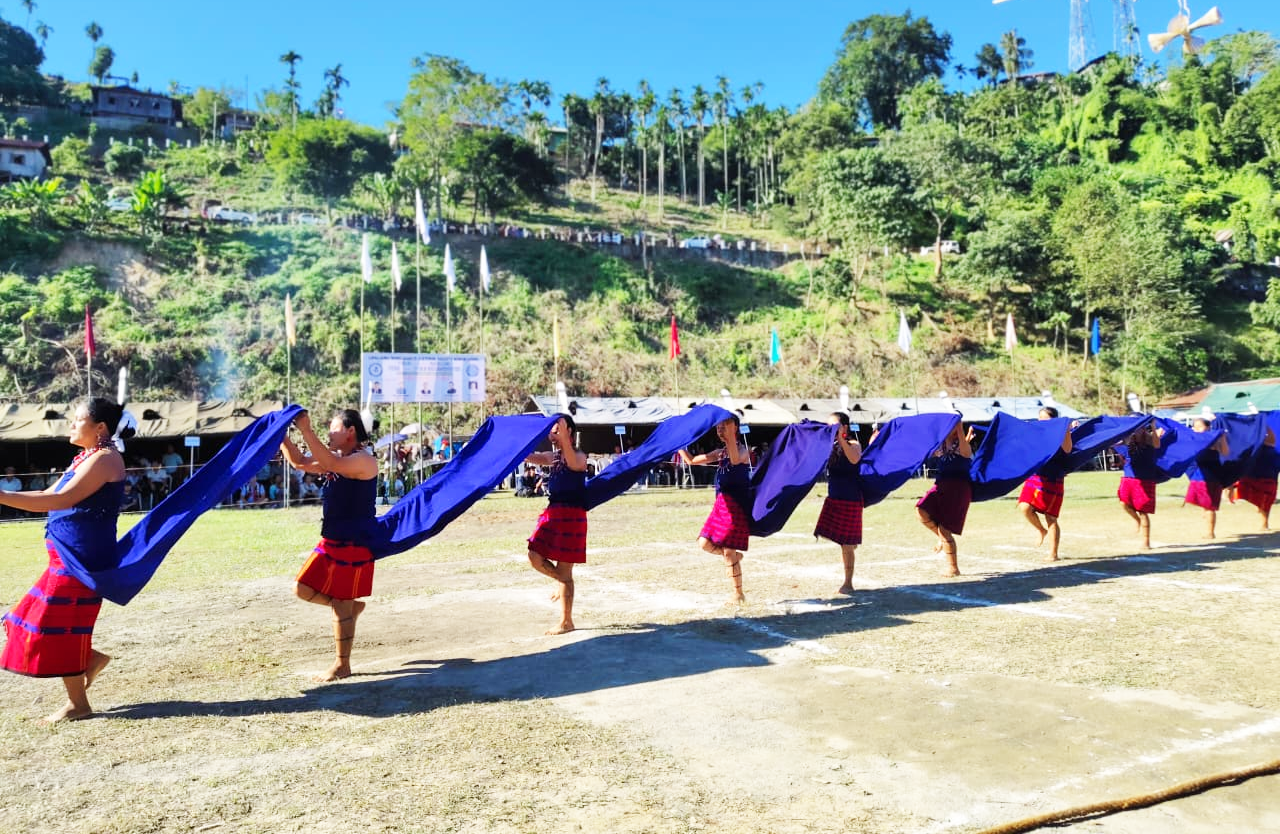
Ningshi Aier, Chairman of the Longjang Village Council, delivered the welcome address, followed by I Ali Aier representing the organizing committee. The program featured cultural performances, including a dance presentation by Longpa Lanur, a special number by Nungsanglemla, and ‘Pro-Pro’ performed by Longjang Kaketshir Telongjem. The event concluded with a vote of thanks delivered by Imnatemsu Aier, President of LRCSM.