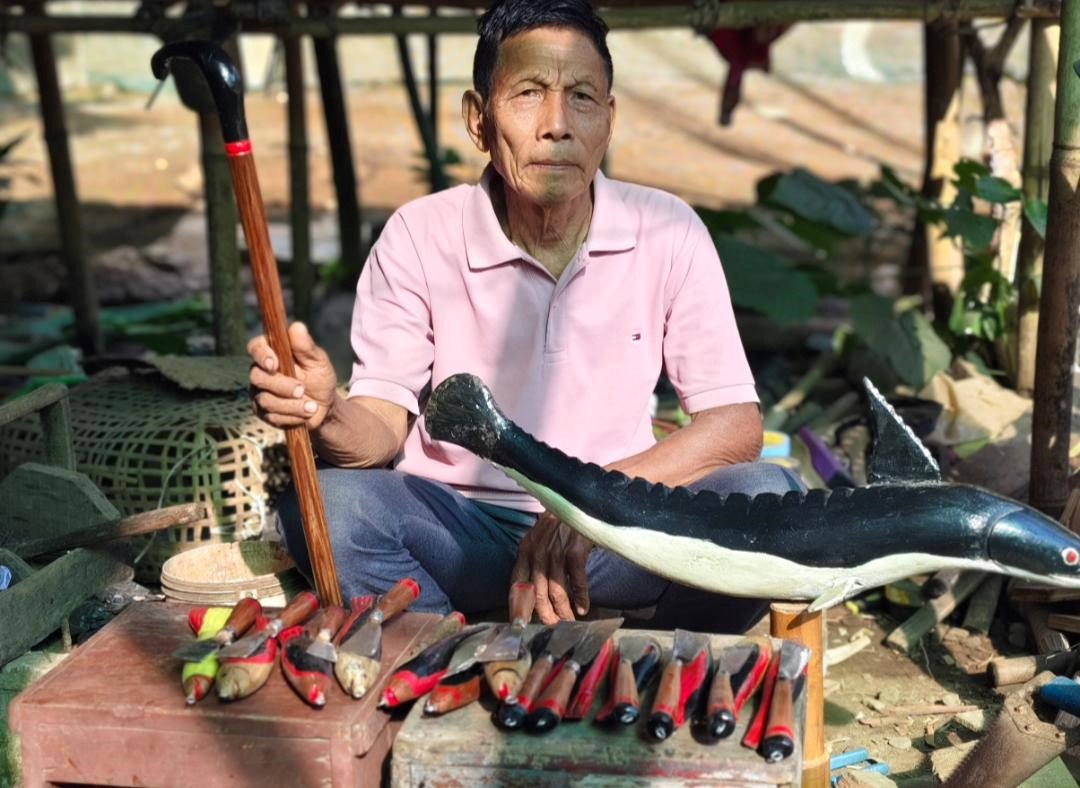
Age has not dimmed 80 years old L. Amen Jamir’s hands who keeps his wooden craft and dreams alive. A native of Kangtsüng village, Jamir and his family settled at Aitlenden, Tuli Subdivision, Mokokchung in 1993 and has since built his legacy of craftsmanship, faith, and hope.
“I have been a mistri and trying out crafting since youth,” shares Jamir who over time mastered his skills with hands-on experience. He passed his craft down to his three sons who were enthusiastic to learn because their living depended on It, learning self-sustenance along the way, alongside a daughter who grew up watching him carve wooden items. Three of the children are now married and have their own families.
Jamir says his strongest support throughout this journey has been his wife, Moazungla Pongen (65). Married for 47 years, Amen explains that his wife has been involved in the work for as long as he has, often staying up late with him to complete orders. Moazungla helps in brushing and smoothening each piece with sandpaper and in polishing the finished items before they are packed. She also assists in selling the products, keeping track of small orders from neighbours and local customers. Amen says his wife’s involvement has allowed him to continue the craft even as age has slowed him down.
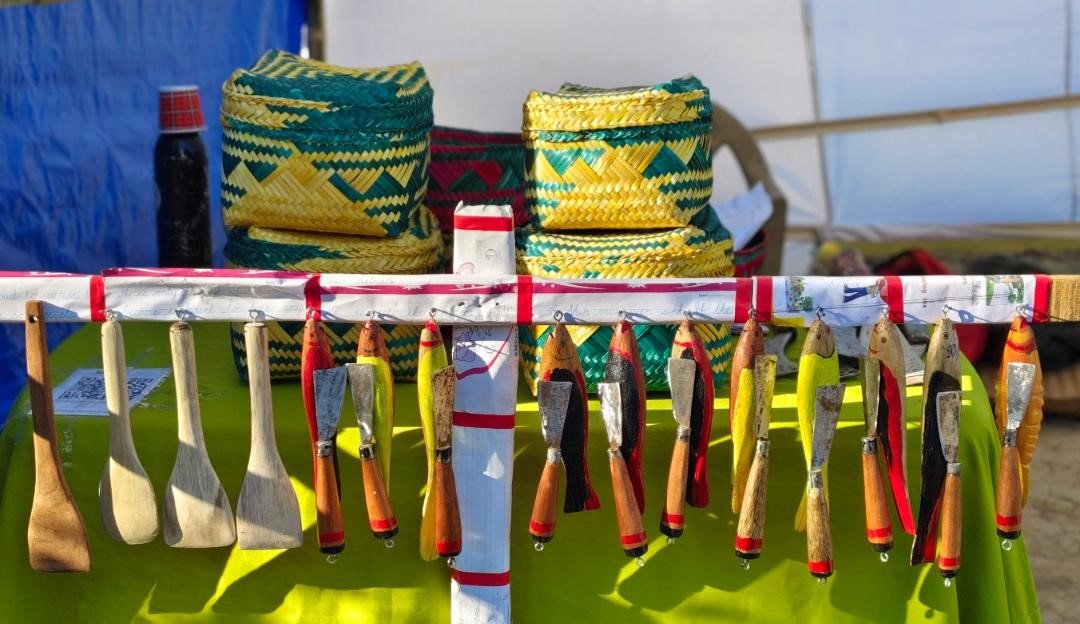
The items he makes include wooden knives, daos, walking sticks, plates, bowls, Naga plates, and handcrafted wooden hornbill models, dolphins, and other animals made from Gamari trees commonly found in Tuli. He says he buys Gamari trees in whole, big or small with prices ranging from hundreds to thousands.
Download Nagaland Tribune app on Google Play

From a single big tree, he can produce 10-15 wooden hornbill models. A day’s work often turns into five knives or up to 15-20 wooden rice spoons. His handcrafted hornbill models, sturdy enough to fold and admired for their detailing, remain among his most ordered pieces, often priced between ₹10,000 and ₹15,000 for custom sets. Among his trademark works is a wooden fish magnet hanger used for hanging knives, priced at 200 rupees only.
Their second eldest son, who passed away in 2008, remains a cherished memory in their home and in their craft.
Amen says with quiet pride, “My late son had A1 quality, even better than mine. He learned the craft from me and honed it further shaping his skills. In 2003, he took both his own creations and some of my handcrafted wooden hornbill models to the Hornbill Festival. After that, my son’s passing in 2008 left a lasting void in our lives.”
Though Amen has not visited the Hornbill Festival himself, he notes that his products continue to reach the “festival of festivals,” brought there by buyers who purchase his work in wholesale. For both Amen and his wife, every carving they shape today carries a quiet remembrance of their son whose hands once worked alongside his father’s and whose craftsmanship remains a living part of their story.