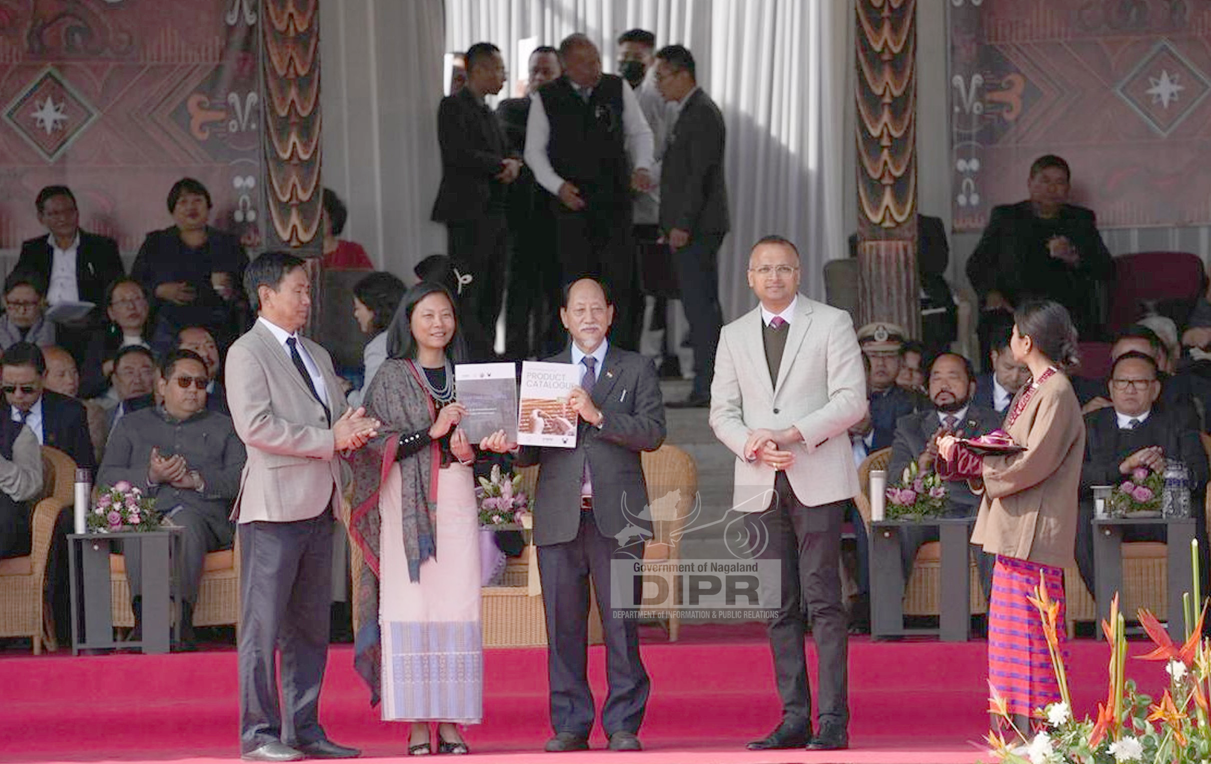
In a significant step towards promoting the artisanal economy in Nagaland, Chief Minister, Neiphiu Rio, officially launched two pivotal documents on December 2, namely the “PM Vishwakarma Nagaland Product Catalogue” and the report titled “Crafting Cultural Futures – A Study on the Artisanal Economy in Nagaland under PM Vishwakarma.”
The launch was done in the presence of Hekani Jakhalu, Advisor for Industries and Commerce, Kumar Ramnikant, IAS, Secretary of Industries and Commerce, and P Tokugha Sema, Director of Industries and Commerce.
The PM Vishwakarma Nagaland Product Catalogue, developed by the Department of Industries and Commerce, is the first-of-its-kind compilation showcasing handcrafted products made by artisans trained under the PM Vishwakarma Scheme.
The catalogue features a diverse range of items across trades such as carpentry, basket weaving, doll and toy, and tailoring. Created to enhance market visibility, the catalogue serves as a bridge between artisans and buyers encouraging retail purchases, institutional sourcing, and customised or bulk orders. It underscores the State’s commitment to accelerating the craft economy by promoting traditional skills, supporting artisan entrepreneurship, and highlighting Naga craftsmanship in both local and wider markets.
The second document, “Crafting Cultural Futures – A Study on the Artisanal Economy in Nagaland under PM Vishwakarma,” provides a comprehensive analysis of the artisanal economy under the PM Vishwakarma Scheme. This report examines the status and experiences of trained artisans, captures customer preferences for handicraft products, and reviews the existing institutional support and market channels available across the State.
Download Nagaland Tribune app on Google Play

Highlighting the rich cultural foundations of Naga craftsmanship, the report identifies structural challenges faced by artisans, including gaps in product design, branding, packaging, digital literacy, and access to formal marketplaces and e-commerce platforms. It also presents insights into consumer behaviour, noting an increasing preference for visually appealing, meaningful, and locally crafted items, especially gifting. Drawing on field-level data from artisans, customers, and institutions, the study outlines a set of forward-looking recommendations aimed at strengthening product development, expanding market access, improving quality assurance, and enhancing convergence among relevant departments.
The launch of these documents marks a significant milestone in the journey towards empowering artisans in Nagaland and building a vibrant craft economy that honors the State’s rich cultural heritage.