The much-awaited Hornbill Festival 2025, also known as the “Festival of Festivals,” is going on at the Kisama Heritage Village from December 1 along with a series of exciting cultural and traditional events organized by the Department of Tribal Affairs, Government of Nagaland at NSF Solidarity Park on December 1 to 2 and 6.
In keeping with the spirit of the national Azadi Ka Amrit Mahotsav, the festival would serve as a grand celebration of India’s 75 years of independence, while also honoring the tribal identity and customs of Nagaland.
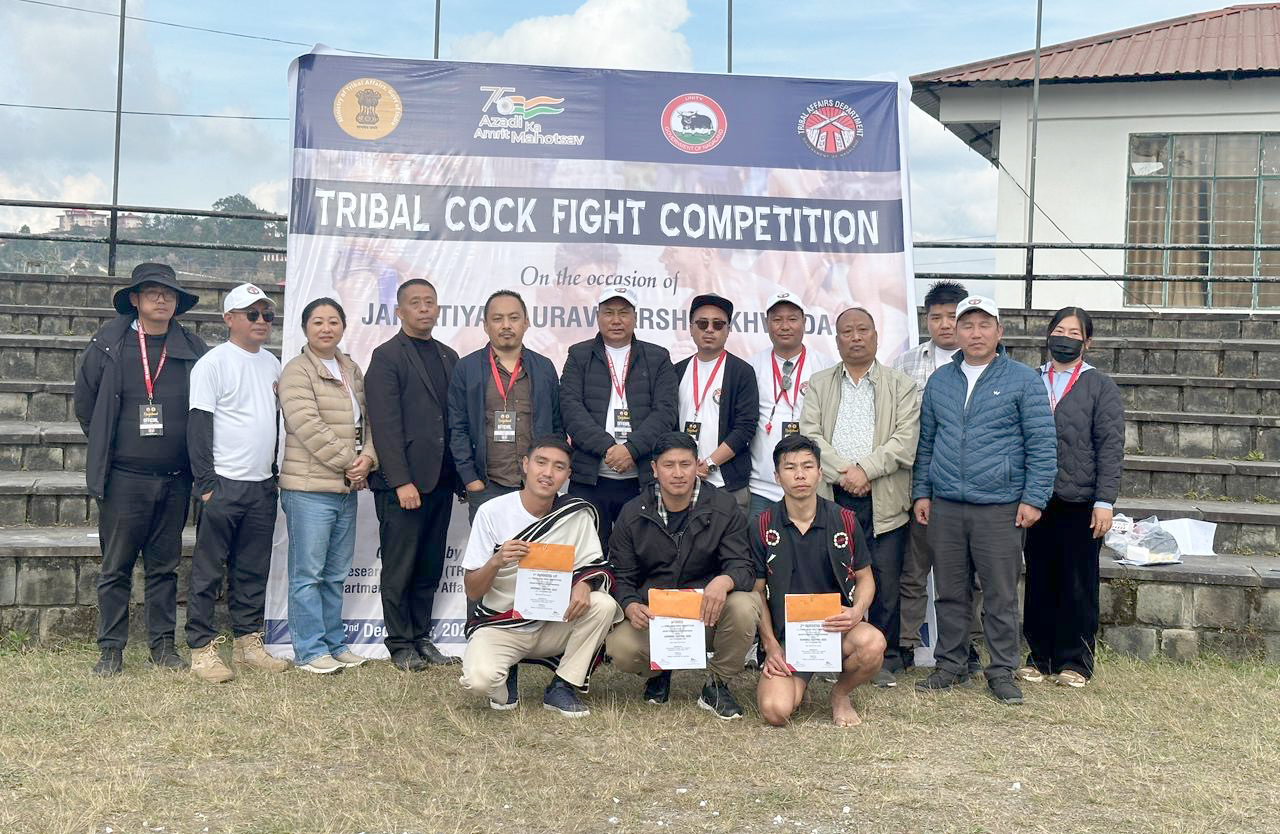
The event on December 2 highlighted Log cutting competition, Cock Fight competition, Arm Wrestling competition (Right Handed), Bamboo Cutting competition and Banana stem cutting competition.
The competition was sponsored by the Ministry of Tribal Affairs, Government of India.
A total of 34 contestants representing 17 tribes participated with great enthusiasm.
- State-Level Tribal Log Cutting Competition:
1st Prize: Gwashenlo Keppen (Rengma Tribe)
2nd Prize: Rhavi Rume (Chakhesang Tribe)
3rd Prize: Zulutoshi (Ao Tribe)
- Tribal Cock Fight Competition:
Ist Prize: Kevizhakho Suokhrie (Angami Tribe)
2nd Prize: Peuhaulungsing (Zeliang Tribe)
3rd Prize: Nukuto A. Sumi (Sumi Tribe)
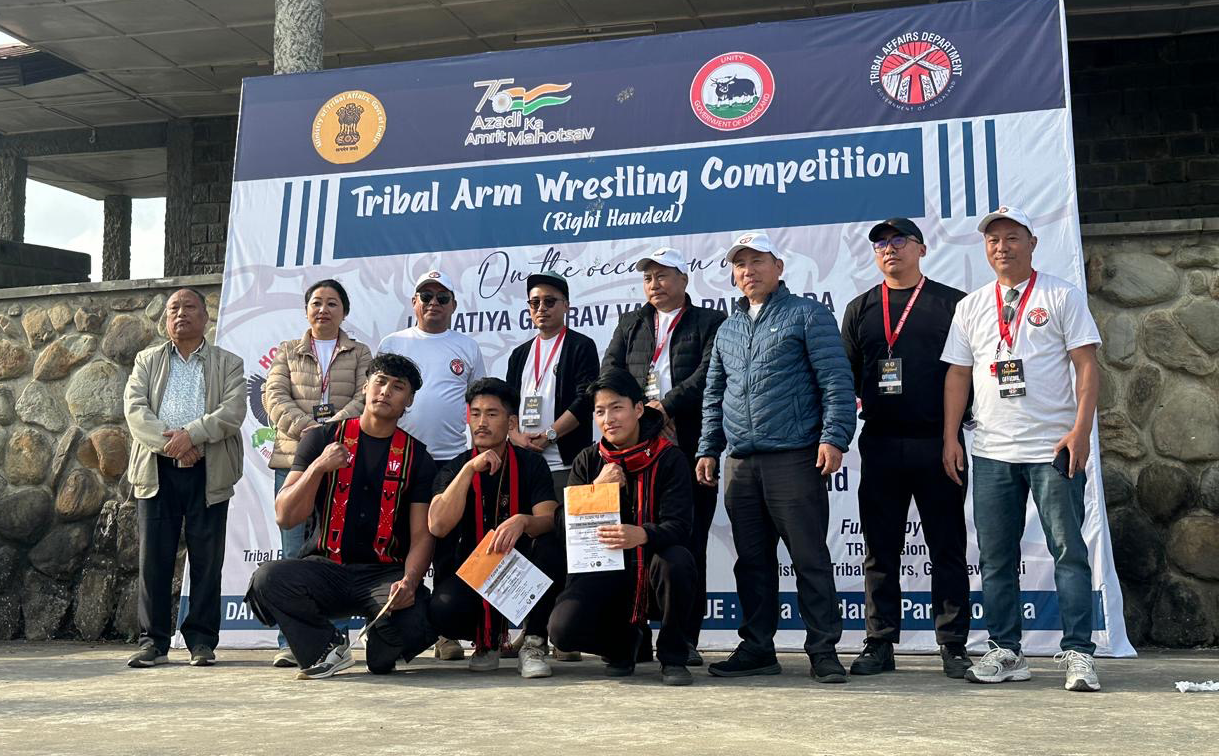
- Tribal Arms Wrestling Competition:
1st Prize: Avilie Zuyie (Angami Tribe)
2nd Prize: Thejaketuo Talie (Angami Tribe)
3rd Prize: Lunrito (Yimkhuing Tribe)
- Tribal Bamboo Cutting Competition:
1st Prize: Namyitiuleng (Zeliang Tribe)
2nd Prize: R. Tsanthungo Shitiri (Lotha Tribe)
3rd Prize: Zhüsutu (Pochury Tribe)
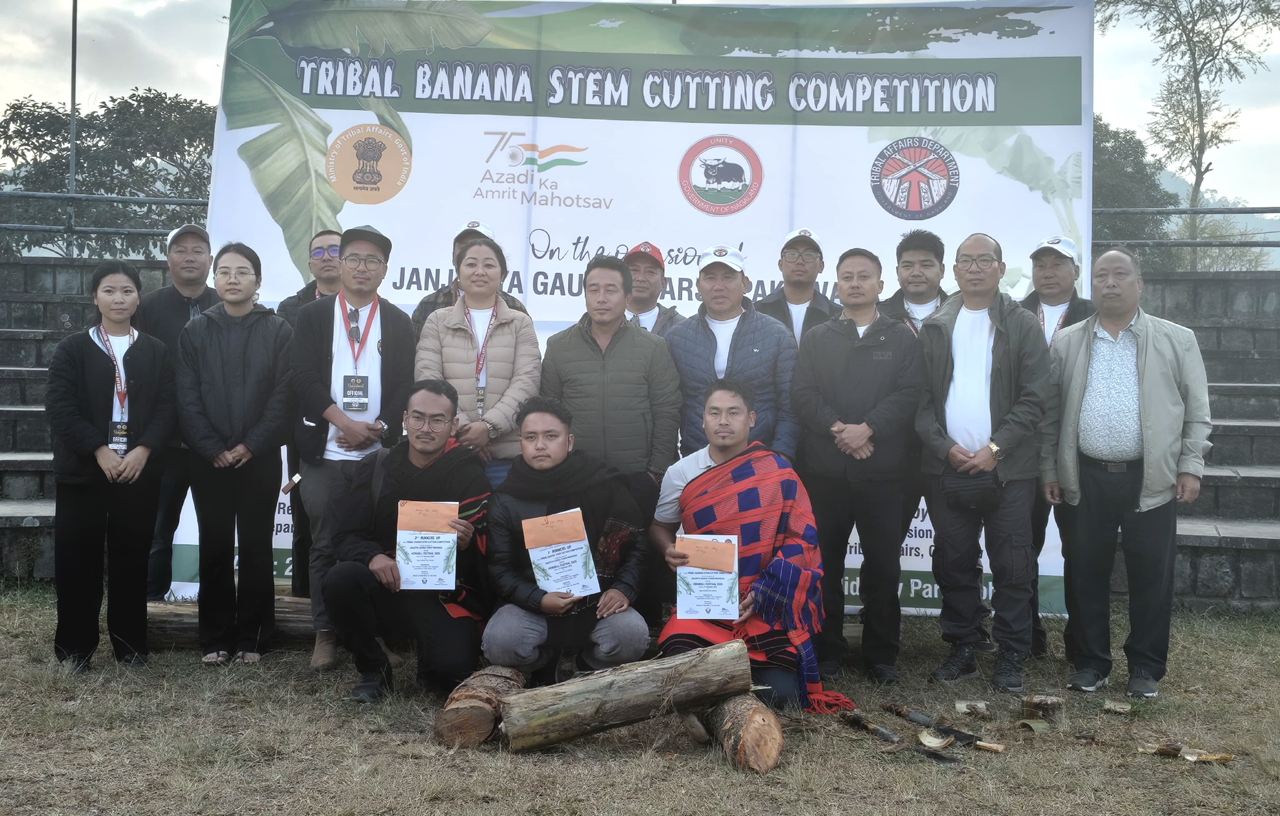
- Tribal Banana Stem Cutting Competition:
1st Prize: Limba (Chang Tribe)
2nd Prize: Joseph (Kuki Tribe)
3rd Prize: Letuozo Kiewho (Angami Tribe)
Download Nagaland Tribune app on Google Play

Kerala Tribal Research Institute undertakes cultural exchange journey
In a bid to explore and share Kerala’s vibrant tribal culture, the Tribal Research Institute (TRI) from Khoda, located in the northern part of Kerala were also present embarking on a cultural exchange journey that spans several Northeastern states. Led by Dr Indumenon, the team of artists, anthropologists, and social scientists aims to deepen their understanding of tribal traditions, while showcasing the rich, diverse heritage of Kerala’s indigenous communities.
Indumenon said that their journey began with a visit to Assam, where the team was introduced to the unique Brahmaputra River culture, an example of the region’s living, intangible cultural expressions. “Our goal is to engage with diverse tribal communities and explore their cultural expressions. The Brahmaputra region is rich in history, and we had the chance to interact with locals and scholars at Cotton University,” said Dr. Indumenon.
From Assam, the group traveled to Meghalaya, where they were honored as guests of Dr Shakil, the Chief Secretary of Meghalaya. “He is a dear friend and fellow Malyali, so it was an opportunity to share and learn from the cultural fabric of the region,” Dr Indumenon shared. The team also visited TRI Shillong and TRI Assam, both centers dedicated to preserving and promoting tribal culture.
In Cherrapunji, the team had the chance to immerse themselves in the local traditions before making their way to Nagaland, the final leg of their cultural exploration. “Nagaland’s role in preserving tribal culture is profound, and we believe the Hornbill Festival is an excellent model of how to blend tradition with modernity,” Dr. Indumenon explained.
Dr Indumenon emphasized that the ultimate goal of this journey is to participate in the Hornbill Festival. “We want to experience firsthand the strategies and techniques that make the Hornbill Festival a resounding success. This event is a testament to the unity and diversity of Nagaland’s tribal cultures, and we are keen to learn how they have successfully scaled their celebrations,” he said.
The Kerala team, consisting of 15 members, includes a mix of five culinary artists, five musicians, and five facilitators. They are working in collaboration with anthropologists and sociologists, aiming to offer a fresh cultural perspective to the Hornbill Festival. “Through food, music, and storytelling, we wish to showcase the artistry and traditions of Kerala’s tribal communities. It’s a cultural exchange where we can learn and share love, food, and music with the people of Nagaland,” Dr. Indumenon added.
The team is particularly interested in observing how Nagaland’s tribal communities have developed and sustained their festivals, and they hope to adopt some of these strategies to enhance the festivals in Kerala. “We want to understand what makes the Hornbill Festival so successful. The way they manage cultural representation, community participation, and sustainable tourism is something we would like to learn and implement back home,” Dr. Indumenon noted.