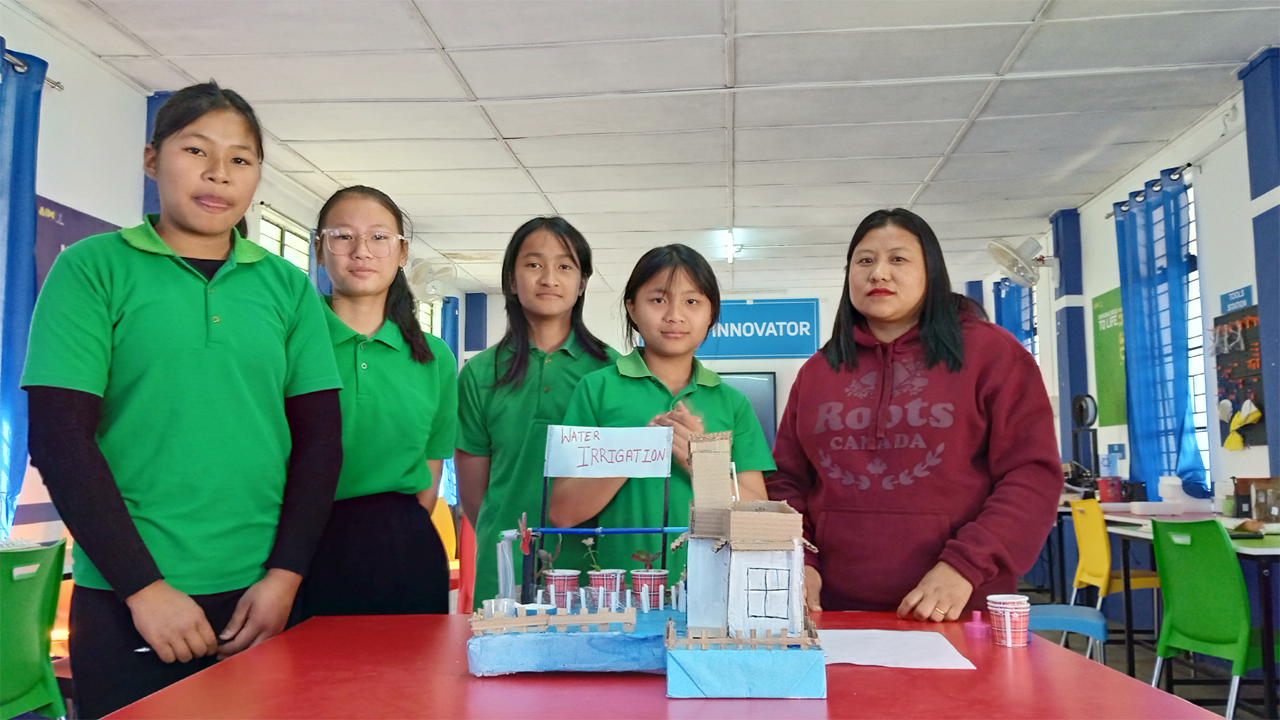
PM Shri Government High School, Kiruphema from Nagaland was one of the four schools from the Northeast, which has been awarded for their exceptional work at the 15th edition of the Wipro earthian Awards 2025 at Azim Premji University Bengaluru on January 31.
The annual program promotes integrated sustainability education and recognizes schools and colleges across India that demonstrates meaningful and enduring engagement with sustainable practices and principles.
The 2025 Wipro earthian program saw over 2,000 submissions, with an independent jury selecting 25 winning teams. The projects showcased fresh insight into biodiversity, waste, and water, combining hands-on activities with reflective written work. Among these winners, four schools from Assam, Arunachal Pradesh, and Nagaland were awarded for their exceptional work.
The team from PM Shri GHS Kiruphema surveyed water sources in their school campus and Peducha village, identifying notable differences in water quality. Interactions with local farmers helped them understand practical water use in daily life.
To demonstrate their learning on sustainability and water conservation, the students created engaging 3D models showcasing rainwater harvesting, drip‑irrigation systems, and simple water‑purification methods.
The project of Auniati Kamaldev Higher Secondary School, Guwahati, Assam focused on understanding local water challenges, traditional conservation practices and community attitudes towards water management.
The team conducted water quality testing at IIT Guwahati and shared the findings to promote awareness about safe drinking water. Collaborating with IIT Guwahati, the school organized workshops to educate students and the community on sustainable water management. Through interviews with residents and elders, the team documented traditional water preservation methods and observed the impacts of climate change on these practices.
The project of North Guwahati Girls’ High School, Guwahati, Assam helped students understand the interconnectedness of their local ecosystem while inspiring responsible behavior and positive change in both peers and the community. The team documented biodiversity at school and at home and extended their efforts into the community through initiatives like the Save Gangetic River Dolphin campaign, vulture‑conservation art, bird‑nest making, and neem‑soap preparation with local self‑help groups. They also reared stingless Melipona bees on campus to study pollination. Through interviews with fishermen and ferry passengers, they learned about community attitudes toward ecosystem services. Creative outputs included a wall mural painted with natural dyes, capturing their commitment to local biodiversity conservation.
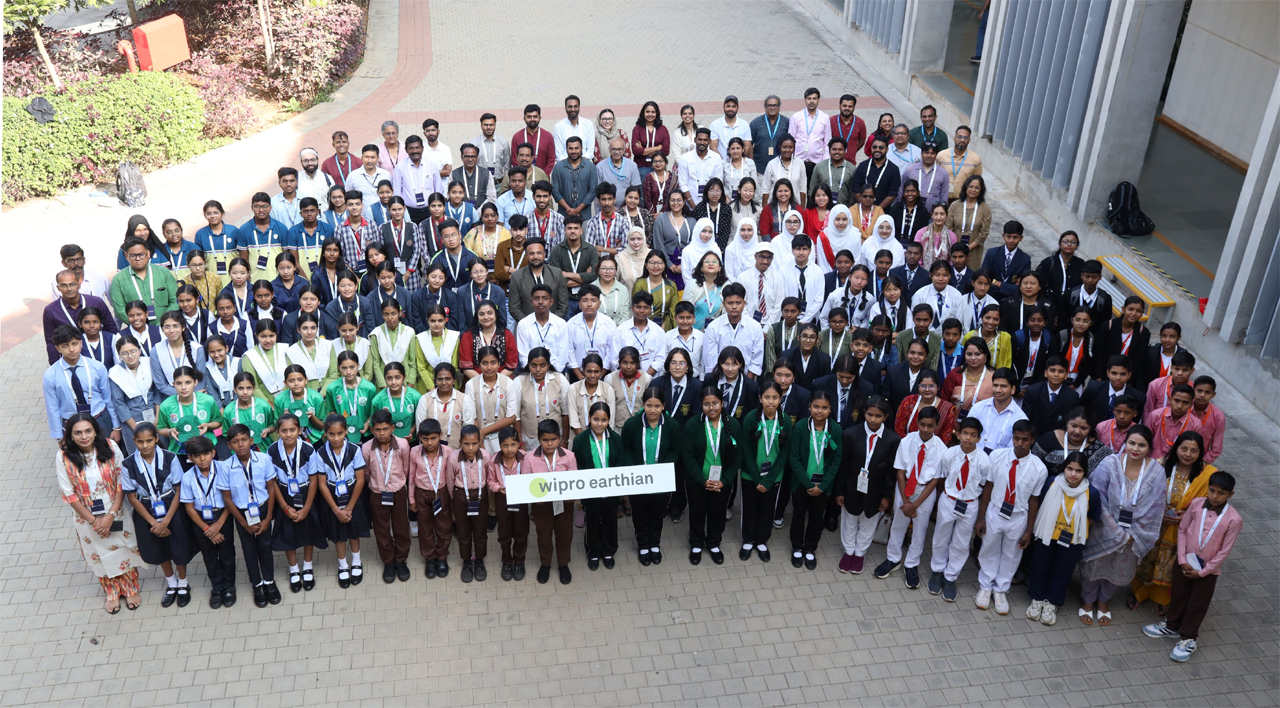
The winners of the Wipro earthian Awards 2025
The team of Intaya Public School, Ezengo, Arunachal Pradesh conducted a biodiversity study in their school backyard and the Lower Dibang Valley, documenting local wildlife and vegetation while comparing microhabitats to understand the impact of human activities on bird diversity. The project helped students see biodiversity as essential to food security, water sustainability, and cultural identity. A key feature was the use of Traditional Ecological Knowledge, including Mishmi folk tales about tigers and a seasonal calendar created in the Idu language. Through storytelling and building insect habitats from recycled materials, the students transformed into active “Biodiversity Detectives,” committed to protecting their environment.
Anurag Behar, Chief Executive Officer, Azim Premji Foundation, and Narayan PS, Global Head of Sustainability and Societal Initiatives, Wipro Limited, and Managing Trustee, Wipro Foundation, presented certificates and cash prizes to the winning teams.
Speaking on the occasion, Narayan PS said that the strength of the Wipro earthian program lies in grounding sustainability in lived reality, helping students understand water stress through nearby lakes and rivers, biodiversity through neighbourhood species, and waste through everyday community practices.
He said across regions and schools, students have moved well beyond awareness to sustained engagement, approaching real environmental challenges with curiosity, rigor and empathy.
Since its inception in 2011, Wipro earthian has engaged with more than 51,000 schools, 210,000 students, and 41,000 teachers. Its impact has grown through collaborations with partners such as CEE (Center for Environment Education), CPREEC (C.P.R. Environmental Education Center), Wild Ecologues, IIT Madras, IIM Bangalore, state governments, and educators in the Sustainability Educators Network.