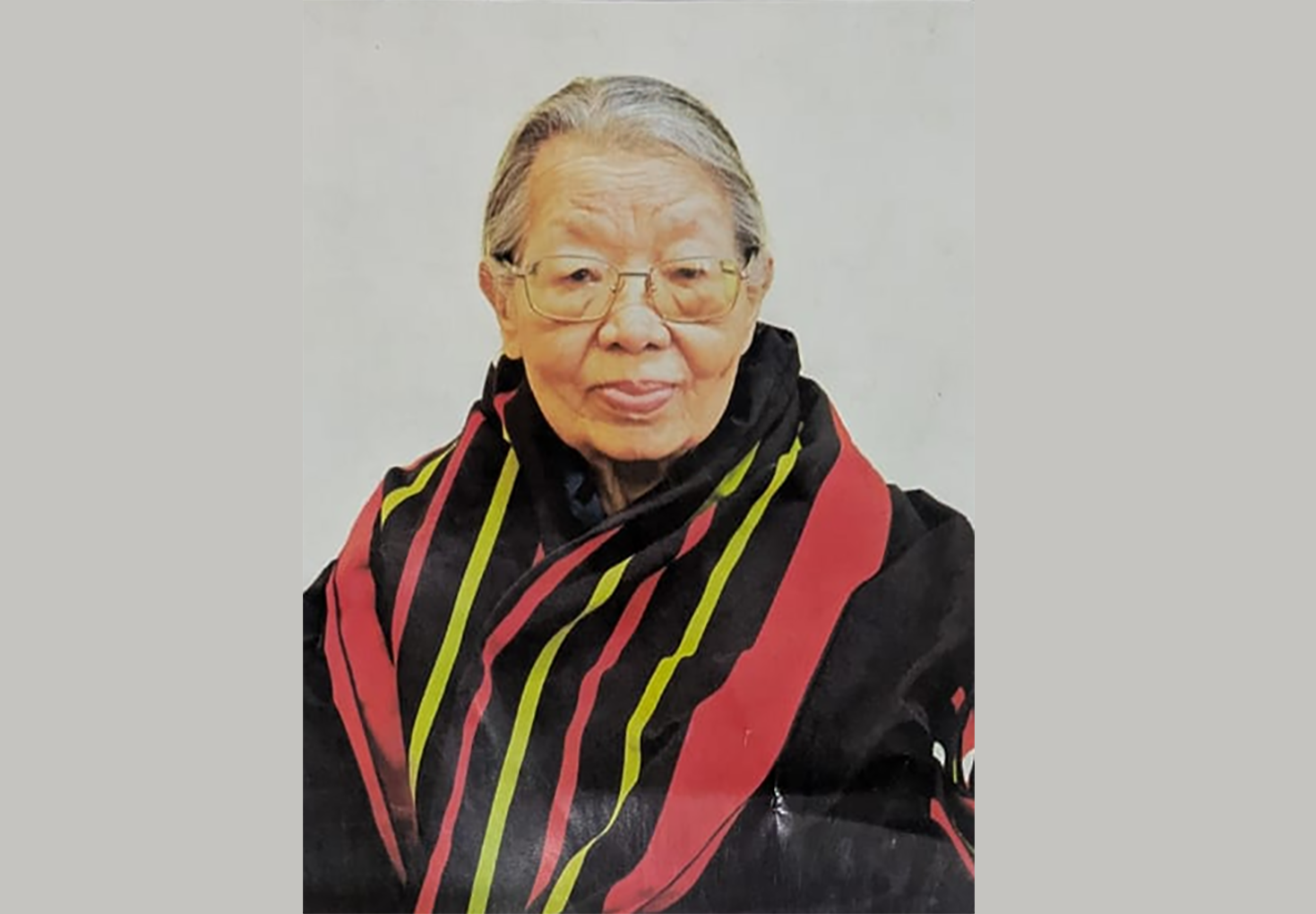
Marking the 80th anniversary of the formation of the Naga National Council (NNC), its President, Adinno Phizo on Monday reiterated the historical and political stand of the Naga people as a sovereign and independent nation.
Delivering his message at Chedema Peace Camp, Chedema, Phizo extended greetings to the people and expressed gratitude to Almighty God on what she described as a “historic day for the Naga nation”.
Recalling the political history of the Nagas, Phizo stated that Nagas are inherently a sovereign and independent people, with every Naga village functioning as a small republic in its own right. She said the intrusion of the British into Naga country in January 1832 led to intermittent warfare lasting 48 years, with the last major battle fought at Khonoma on March 27, 1879, followed by a verbal agreement on November 22, 1880.
She also referred to the rejection of British proposals for reforms in 1918, asserting that Naga leaders had clearly stated that the Nagas were complete and required no reforms.
Phizo highlighted the submission of the historic memorandum by the Naga Club to the Simon Commission on January 10, 1929, which called upon the British to “leave us alone as in ancient times.” She said 80 years ago, the people democratically constituted the Naga National Council on February 2, 1946, at Wokha, with the objective of safeguarding the sovereign independence of the Naga people.
Referring to key milestones, Phizo mentioned the signing of the Nine-Point Agreement between the NNC and Sir Akbar Hydari on June 26, 1947, which she said was later repudiated by India in November 1949. She also recalled the meeting of NNC leaders with Mahatma Gandhi in New Delhi on July 19, 1947, where the Naga position was clearly conveyed.
Phizo stated that the NNC formally declared Naga independence at Kohima on August 14, 1947, a day ahead of India’s independence, and informed India, His Majesty’s Government and the United Nations through official communication.
Download Nagaland Tribune app on Google Play

She further cited the conduct of the Naga voluntary plebiscite on May 16, 1951, the ratification of the Lakhuti Resolution in April 27, 1955, and the adoption of the Yehzabo of Nagaland in January 14, 1956. According to her, these developments led to the proclamation of the Federal Government of Nagaland on March 22, 1956, with the hoisting of the Naga national flag during what she described as the “period of the undeclared Indo-Naga war”, which she said began with India’s military movement into Tuensang in October 1955.
Phizo also recalled the signing of the Ceasefire Agreement in May 1964 at Sakraba village, Chakhesang Region between the Federal Government of Nagaland and the Government of India, facilitated by the Nagaland Baptist Church Council (NBCC)and the Nagaland Peace Mission, which included Jayaprakash Narayan, a Sarvodaya leader, BP Chaliha, Chief Minister, Assam and Rev Michael Scott of UK.
She noted that the ceasefire was officially observed on September 6, 1964, and acknowledged the messages sent by the then President, S Radhakrishnan and Prime Minister of India, Lal Bahadur Shastri on the occasion.
Paying tribute to those who lost their lives, suffered injuries and lost property during the decade-long conflict, Phizo expressed gratitude to past and present national workers for their sacrifices.
Reaffirming the NNC’s position, Phizo asserted that Nagaland is a nation with every right and not a movement or a demand. She stated that the Nagas do not demand anything from India, Burma or any other entity.
“Demanding flag and constitution from the enemy is a shameful thing and senseless. Asking solution from the enemy is a pollution of our national right,” she said, adding, “Nagas were one in the NNC/FGN and Nagas must be one in the NNC/FGN. Our people must discern the nation and the factions.”
Phizo called upon all Nagas, particularly the youth, to rise and work hard in defence of the nation, expressing confidence that no force could stop the Naga nation as long as the right remained on its side.
