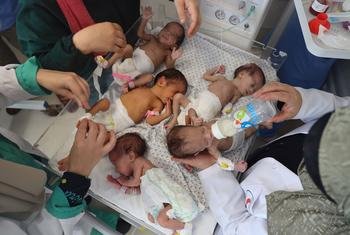
According to UN news, babies are being “delivered into hell” in Gaza with many others likely dying as a result of conflict with Israel and increasingly dire conditions in the enclave.
Reiterating urgent international calls for a ceasefire, the UN Children’s Fund (UNICEF) reported that there have been nearly 20,000 births since the start of widespread Israeli bombardment in response to Hamas-led attacks in Israel that left some 1,200 dead and approximately 250 taken hostage.
Highlighting the serious health concerns, the UN agency mentioned that the chronic aid access problems have led to many caesarean sections being performed without anaesthetic while other women have been unable to deliver their stillborn babies because medical staff are overwhelmed.
“Mothers face unimaginable challenges in accessing adequate medical care, nutrition and protection before, during and after giving birth. Becoming a mother should be a time for celebration. In Gaza, it’s another child delivered into hell.” Said Tess Ingram, UNICEF Communications Specialist .
Echoing deep concerns about the deteriorating humanitarian situation, Tedros Adhanom Ghebreyesus, UN World Health Organization (WHO) Director-General expressed alarm that hepatitis A infections had been confirmed in Gaza.
“The inhumane living conditions – barely any clean water, clean toilets and possibility to keep the surroundings clean – will enable hepatitis A to spread further and highlight how explosively dangerous the environment is for the spread of disease,” Tedros informed on X, formerly Twitter, on Thursday.
Download Nagaland Tribune app on Google Play
The latest WHO data indicates that on average 500 people are sharing one toilet, and over 2,000 people have to use a single shower, increasing the risk of disease spread.
In addition to a sharp rise in upper respiratory infections, diarrhoea cases among children under age five recorded during the last three months of 2023 were 26 times higher than reports from the same period in 2022, informed the UN health agency.
“People are being pushed into ever smaller places; they’re in overcrowded shelters with lack of access to clean water, lack of access to toilets,” said WHO spokesperson Tarik Jasarevic.
“A large chunk of the population in Gaza – people who are injured and bombarded – need immediate medical help,” the WHO official said, noting that Nasser Medical Complex in Khan Younis had only two doctors remaining in its emergency department compared to 24 before the war, with only 14 intensive care beds today, down from 45 and only four nurses available out of 20 initially.