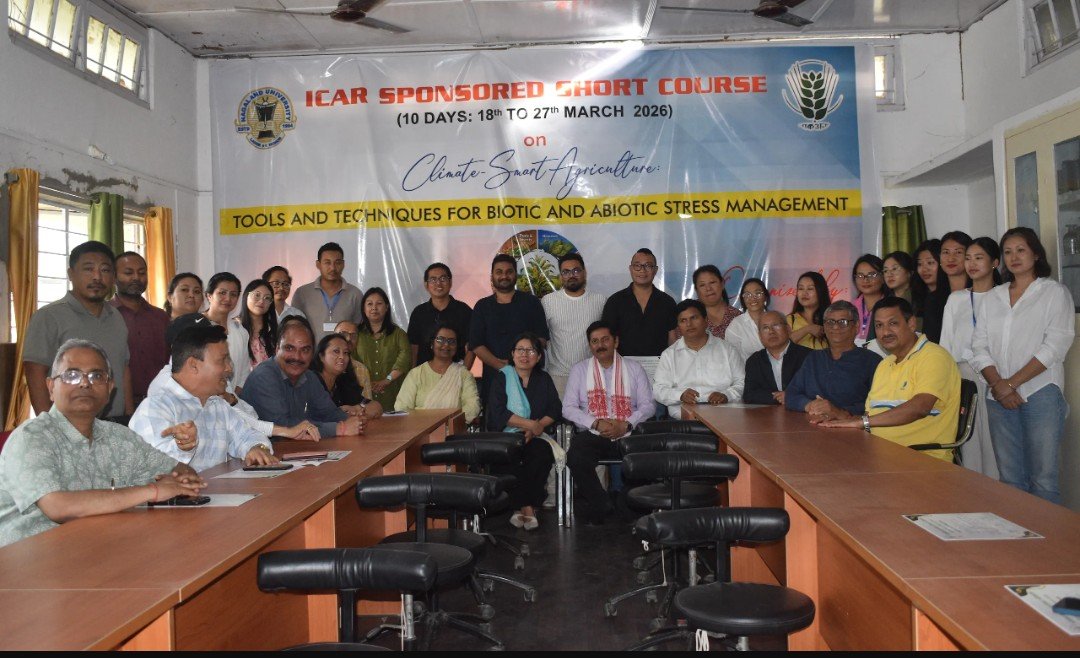
In a step towards addressing the growing challenges of climate change in agriculture, Nagaland University successfully concluded a 10-day ICAR-sponsored short course on “Climate-Smart Agriculture: Tools and Techniques for Biotic and Abiotic Stress Management” on March 27 at its School of Agricultural Sciences (SAS), Medziphema campus.
According to a press release, the course was organized by the Department of Genetics and Plant Breeding under the School of Agricultural Sciences (SAS), NU and conducted from March 18 to 27, with support from the Indian Council of Agricultural Research (ICAR).
Presenting the programme report during the valedictory session, Course Director Prof. H. P. Chaturvedi said that over the past ten days, the course has served as a platform for in-depth deliberations on climate-smart agriculture, with scientists and academicians sharing their expertise on strategies to address climate change challenges in the agricultural sector.
A total of over 33 lectures were delivered through both online and offline modes, complemented by field exposure visits. The sessions covered diverse disciplines including agronomy, plant pathology, plant breeding, soil science, soil conservation, and animal science, fostering interdisciplinary understanding of climate resilience in agriculture. He further encouraged participants to effectively apply the knowledge gained in their respective fields and work collectively towards promoting climate-resilient agricultural practices for the benefit of farmers.
Download Nagaland Tribune app on Google Play

The valedictory address was delivered by Prof. Pauline Alila, Dean, SAS, NU who described the course as essential for all departments. She shared that the feedback received from faculty members had been overwhelmingly positive, reflecting the programme’s value as a meaningful learning experience and lauded the department for organizing such initiatives. She further proposed in organizing similar programmes in the future with wider participation from different regions and encouraged participants to stay proactive and adaptive in addressing the challenges posed by climate change in agriculture. Emphasizing the need for innovative thinking, she remarked that agricultural education must go beyond classrooms to equip farmers with the skills to cope with changing conditions.
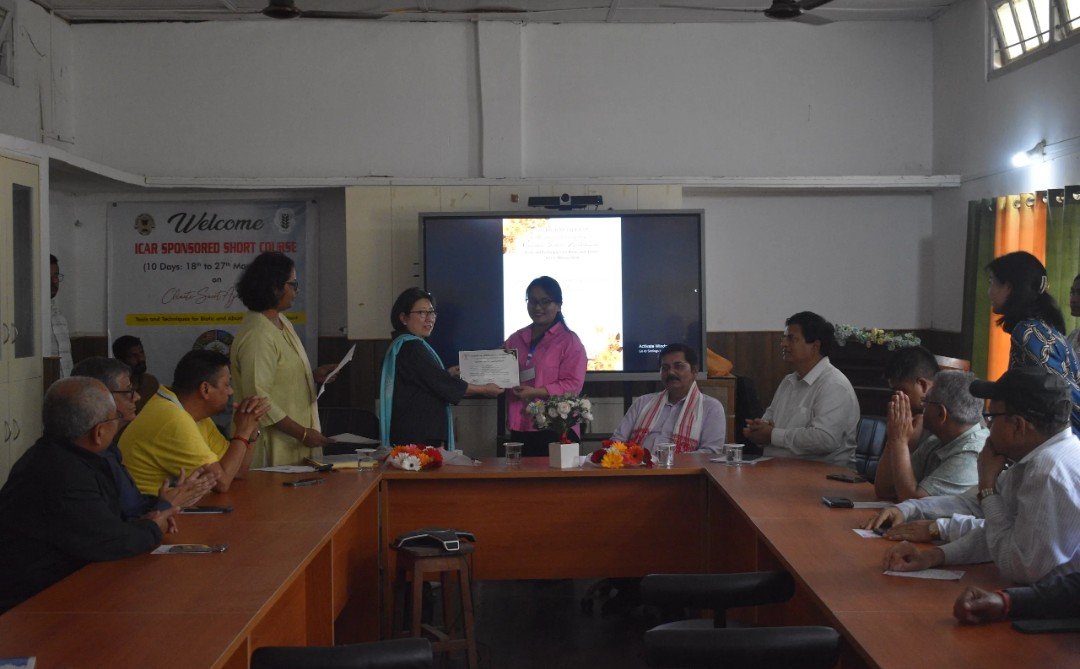
Prof. K K Jha, ICAR Nodal Officer ,SAS, NU in his address congratulated the department and participants for the successful completion of the course. He emphasized that the knowledge gained should be carried forward and implemented effectively. Highlighting current challenges in agriculture, he stated that while climate-resilient technologies are available, ensuring their accessibility to farmers remains a major concern. He urged scientists, professors and academicians to work collectively to bridge this gap and ensure that technological advancements translate into real benefits for farmers.

The 10-day ICAR-sponsored short course on “Climate-Smart Agriculture: Tools and Techniques for Biotic and Abiotic Stress Management” brought together 25 participants and 27 resource persons, with over 33 lectures delivered during the programme. Participants lauded the initiative taken by the department and expressed the need for organizing similar programmes in the future. They described the sessions as highly informative and beneficial, noting that complex concepts were presented in a simple and practical manner, enabling them to apply the knowledge in real-world situations. Certificates were distributed to all the participants including excellence certificates to five participants. The valedictory programme commenced with an invocation by Dr. Rokozenuo, followed by a vote of thanks delivered by Prof. Malini B. Sharma.