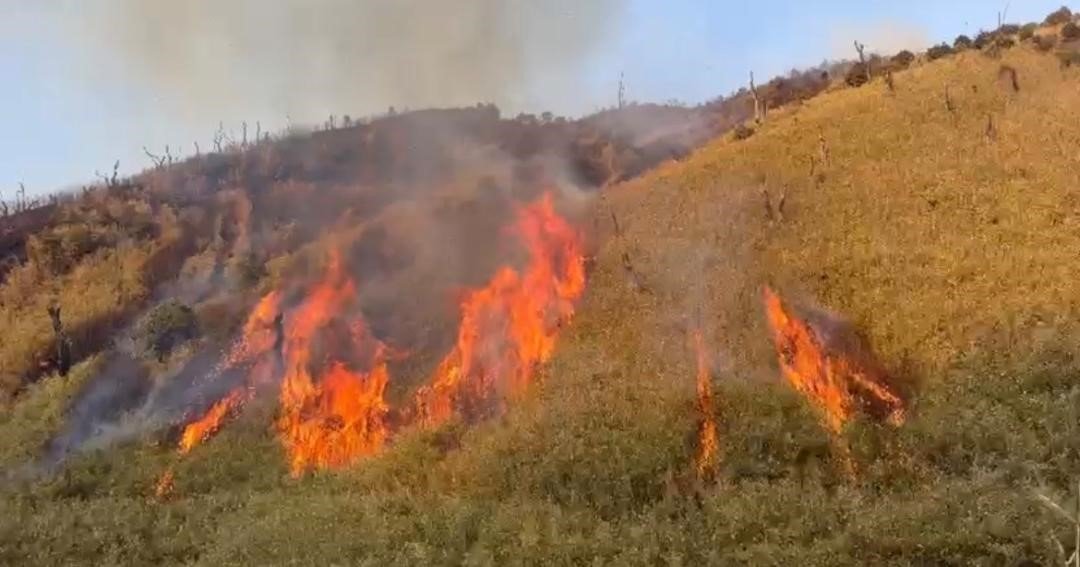
The wildfire raging in the southern region of Dzükou Valley entered its fifth day on January 30 with authorities confirming that the fire remains largely concentrated around the Dzükou helipad area and has caused extensive damage to the surrounding landscape.
According to DC Kohima, Henok Buchem , a surveillance and assessment operation was carried out by a joint team led by SDO (Civil) Jakhama Vineikho Tetso and District Commandant HG & CD Woenthung. The team included personnel from the SDRF, police, Dobashis (DBs), drone pilots and operators from NSDMA, along with volunteers from SAYO. The team closely monitored the affected zones using ground surveillance and aerial drone assessments to evaluate the spread and intensity of the fire.
DC further informed that later in the evening, a high-level review meeting was held at the residence of the Deputy Commissioner, Kohima, to assess the situation and plan further action. The meeting was attended by the surveillance team and the Nodal Officer for DDMA, Theja Zao.
Download Nagaland Tribune app on Google Play

Officials confirmed that surveillance operations will continue as the situation remains critical. In a significant development, the Indian Air Force (IAF) helicopters are scheduled to commence Bambi Bucket water bombing operations from the morning of January 30 to support ongoing fire suppression efforts.
To strengthen aerial firefighting operations, DC mentioned that Nsonji Lake in Tseminyu District has been identified as an additional water source, alongside Padampukhuri Lake. A No Objection Certificate (NOC) for the use of Nsonji Lake has already been obtained from the Tseminyu District Administration.
Authorities remain on high alert as coordinated efforts continue to contain the blaze and prevent further environmental damage in the ecologically sensitive Dzükou Valley.