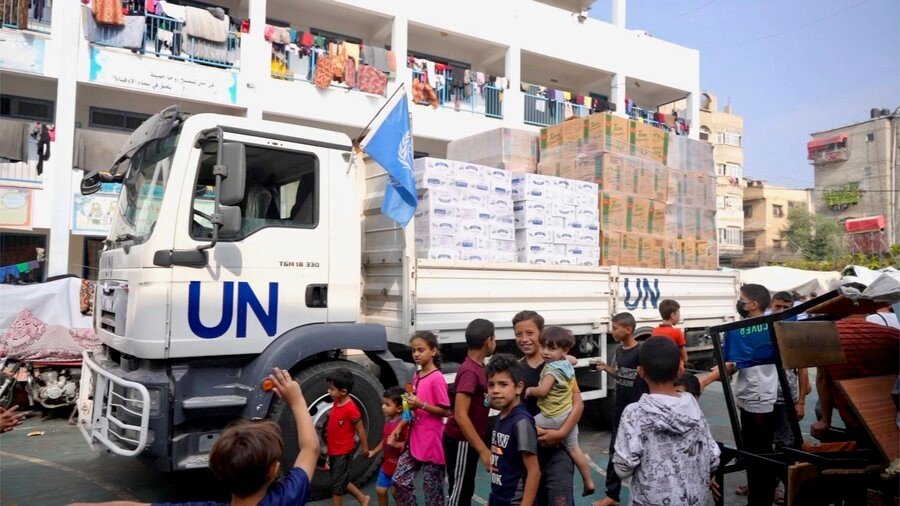
According to the UN news, food systems are collapsing in Gaza with the food production almost coming to a complete halt, markets collapsing, and inability of the fishermen and farmers to access the sea and farms.
The World Food Programme (WFP) has also reported on Thursday that cases of malnutrition and dehydration in Gaza “are increasing rapidly and by the day”. “Gaza actually risks sliding into hunger hell without fuel and a rapid surge in food supplies,” said Abeer Atefa, WFP Senior Spokeswoman for the Middle East, speaking from Cairo.
With winter fast approaching, and the unsafe and overcrowded shelters, lack of clean water, Atefa stated that people are facing the immediate possibility of starvation.
The Spokeswomen stated informed that only 10 per cent of necessary food items have entered the enclave since the start of the conflict, creating “a massive food gap”. Practically the entire population of 2.2 million people now needs food assistance.
“People are barely able to have one meal a day, food options are limited to canned food, if it is available, and bread is a rare luxury. Some people have actually resorted to consuming raw onions, uncooked eggplant, whatever they can get their hands on,” said Atefa.
Although aid trucks are trickling in, they can barely deliver their small cargoes of food and water because of damaged roads and short supply of fuel.
“The existing food systems in Gaza are basically collapsing,” she said, while shops have run out of supplies. The last bakery that the World Food Programme has been working with has closed its door because of the shortage of fuel.
Furthermore, bakeries that were operating are unable to do so now because of the shortage of fuel and clean water, or because of sustained damage. The last mill for grinding wheat flour used to make bread also shut down after being hit. “This has all halted the supply of bread, which is the last staple food for people in Gaza,” Atefa said, adding, “And with gas and electricity in desperate supply, many people are using wood to cook or to make bread, and perishable food is not really an option at all because there is no electricity to keep items refrigerated.”
Download Nagaland Tribune app on Google Play

Since the start of the conflict, the WFP and UNRWA has been working with 23 bakeries providing fresh bread each day to 200,000 people in shelters. All are now out of service, announced Atefa. Approximately 130 bakeries were dotted across Gaza prior to the conflict. More than 11 have been hit by airstrikes and destroyed, including one contracted by WFP.
According to Atefa, WFP has so far reached roughly 764,000 people across Gaza and the West Bank with ready-to-eat food, in-kind food parcels and electronic vouchers. Nearly half a million people in UN shelters have received bread and canned tuna, or nutritionally dense date bars.
She said people redeemed vouchers throughout October “but they’re deemed useless now” because there are no food commodities to buy.needs The WFP has appealed for the need for fuel, more aid convoys, multiple border entry points and safe humanitarian access to meet the growing needs.