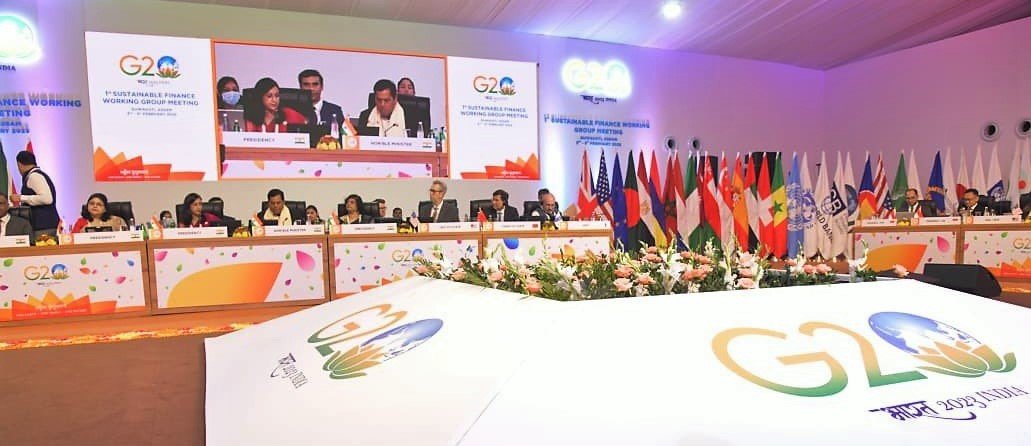
Discussions will be held on sustainable finance-related capacity-building measures on the second of the two-day G20 meeting in Guwahati on Friday.
The first Sustainable Financial Working Group (SFWG) meeting under India’s G20 presidency is underway at a luxury hotel in Guwahati, with the participation of over 100 delegates, including 95 foreign officials, comprising representatives of G20 nations, guest countries and international organisations.
An official said the second and concluding day will witness four sessions of deliberations with a thrust on capacity-building areas and services for sustainable finance.
The day’s first session will be on identifying areas in which sustainable finance capacity building is most needed, with a focus on demand, provision and a gap in capacity building.
Discussions on how to improve, supplement and scale up sustainable finance-related capacity building services, and capacity building of the ecosystem for financing towards sustainable development will form the core of two other rounds of sessions during the day.
A session on designing and implementing relevant TA to overcome data-related barriers to sustainability-aligned investments’ will also be held.

(Credit: @g20org/Twitter)
On the first day of the G20 meeting in Guwahati on Thursday, Raising funds through green bonds, Sustainability Linked Bonds (SLBs) and other such instruments for development projects was discussed.
The delegates of the influential world grouping also deliberated on raising the size of blended finance, and stressed on the importance of Multilateral Development Banks (MDB) to deal with growing concern for climate change impacts.
“We discussed how to raise funds through green bonds and Sustainability Linked Bonds by the private players for implementing their projects. All the members put forward their statements at the meeting,” an official of a Switzerland-based financial think tank told PTI on the sidelines of the meeting.
Green bonds, also known as climate bonds, are fixed-income financial instruments used to fund projects having environmental benefits, while SLB is a type of bond that focuses on achieving pre-defined sustainability objectives.
“Currently, green bonds and SLBs are just 5 per cent of the world’s total financial assets. The need to increase these instruments, especially by 2030 Sustainable Development Goals (SDGs), were stressed,” the official said.
“The meeting also discussed blended finance and how to increase it. How the government can encourage private players to invest in green technologies was deliberated upon during the day,” he said.
Blended finance is mobilisation of private capital alongside development or public funding to finance sustainable development in emerging and frontier markets.
A senior official of the People’s Bank of China, the central bank of the country, said the members raised their queries on how to “de-risk” projects funded by blended finance.
“Blended finance is an important tool to fight climate issues while not compromising developmental projects. The role of MDBs was also discussed in detail in one of the sessions,” the official said.
He said that as this is the first meeting of the year, the members just raised the issues so that everyone agrees to discuss the points in detail during the coming days.
“If all agree to the topics, then we will discuss the issues throughout the year and try to arrive at some solutions by the end of 2023,” the official said.
(Credit: @g20org/Twitter)
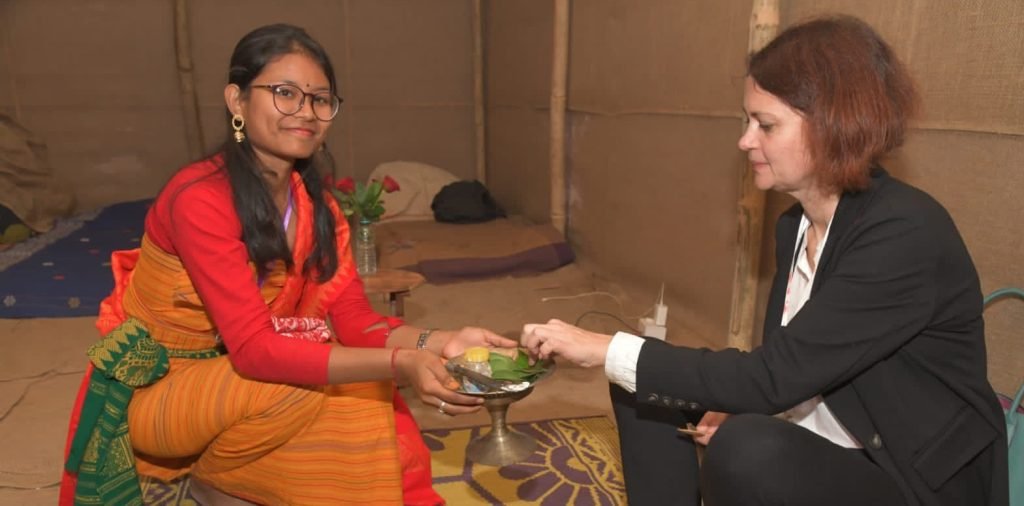
The first-ever G20 deliberations in Assam began on Thursday with Guwahati hosting the ‘1st Sustainable Finance Working Group Meeting’.
Ministry of Finance Adviser Geetu Joshi said: “All the delegates raised various issues ranging from green bonds, SLBs, Blended Finance to MDBs. All highlighted the need to arrange sustainable finance to fund development projects.”