Noklak, which is located at the eastern most part of Nagaland shares Indo- Myanmar border. While the place enjoys a scenic beauty, rich cultural heritage and biodiversity, the other aspect of life struggles to catch up the basic necessities. In such setting, presence of Red Cross Society is not merely beneficial, but a genuine necessity. .
Nearly two decades ago, when Chiu and Hempu villages across the Myanmar border were burned, and when Pangsha experienced a similar tragedy, the people of the region felt a profound need for compassion, support, and humanitarian response. These incidents exposed how vulnerable border communities were—and how urgently an organized act of kindness was required. It was in this atmosphere of pain and awakening that the Indian Red Cross Society (IRCS) took root in 2007, at a time when Noklak was still under Tuensang district. The response to crisis has today grown into a bridge of hope. With Noklak becoming a full-fledged district in 2017, the humanitarian movement found its rightful home in the form of the IRCS Noklak Branch, dedicated to serving.
The Red Cross Society continues to extend their humanitarian work across the region on different grounds such as attending emergency aids, organising medical camp by collaborating with Medical department, and providing basic needs to persons in need. While the IRCS Noklak continues to provide their humanitarian work across the region, the rocky journey across Noklak remains a reality.
Download Nagaland Tribune app on Google Play

Road connectivity remains one of the major challenges in the region, making it difficult for volunteers to reach remote villages. Path to villages like Kingpao, Kingjung, Pang and many others remains very crucial. With limited number of sub-centres in Noklak region, residents are left with limited access to basic health services. The situation is further compounded by the absence of an ambulance, a critical need for timely medical response and safe transportation during emergencies.
Despite these constraints, the dedicated members of the Red Cross continue to carry out their duties with genuine commitment. They often travel using their own personal expenses, ensuring that essential humanitarian support reaches those who need it most.
In the context of Pangsha, the challenges become even more pronounced. Situated along the Indo–Myanmar border, the area becomes a transit point for people crossing from both sides—many of whom are seeking livelihood opportunities. A significant number of families live below the poverty line, and in such circumstances, acts of compassion and service offered by organisations like the Red Cross become a true blessing for the community.
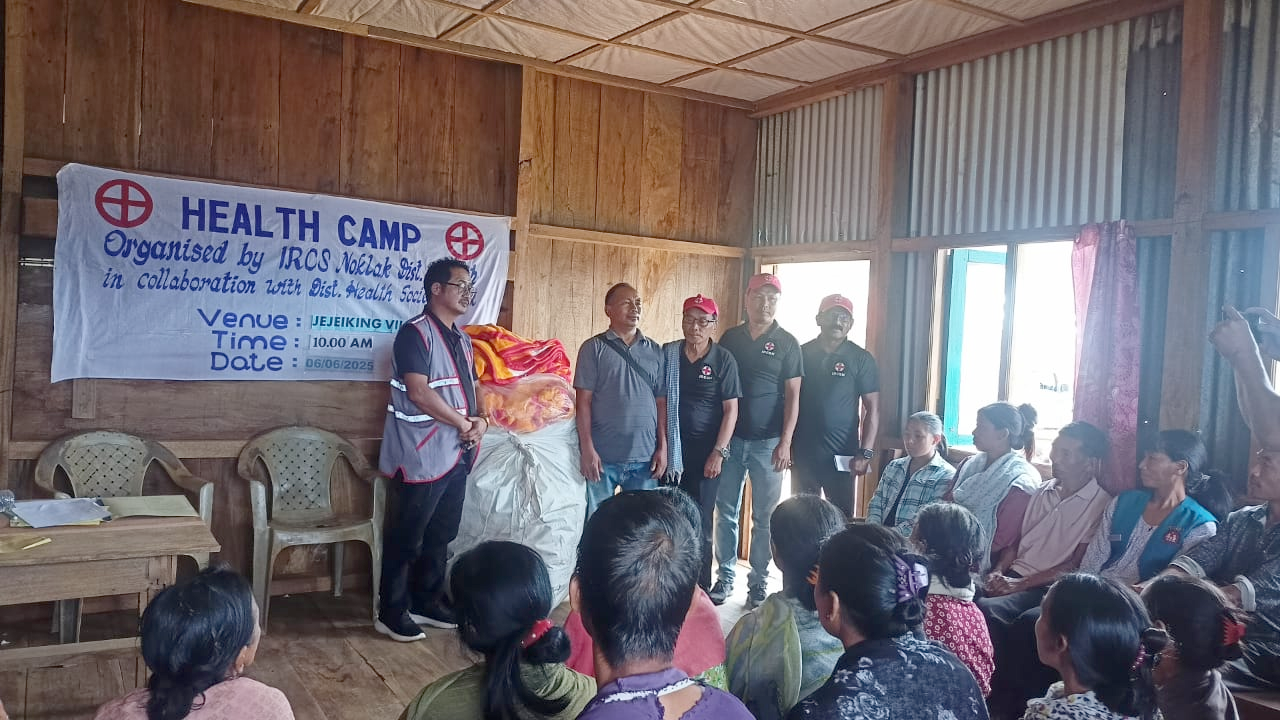
As a border region, Noklak experiences cross-border migration, socio-political tensions, and occasional instability. Communities living along these edges often find themselves vulnerable, especially during times of uncertainty. It is in such situations that neutral humanitarian support becomes crucial.
The Red Cross, known globally for its impartiality, neutrality, and non-political character, is uniquely positioned to serve such sensitive regions. Its presence ensures that vulnerable individuals—irrespective of their background—receive protection, care, and assistance when they need it the most.
“Let us all extend a helping hand to those in need support during winter. Even a small gesture can bring great comfort. IRCS Noklak will continue its effort to serve humanity”, states the Indian Red Cross Society, Noklak district Branch.