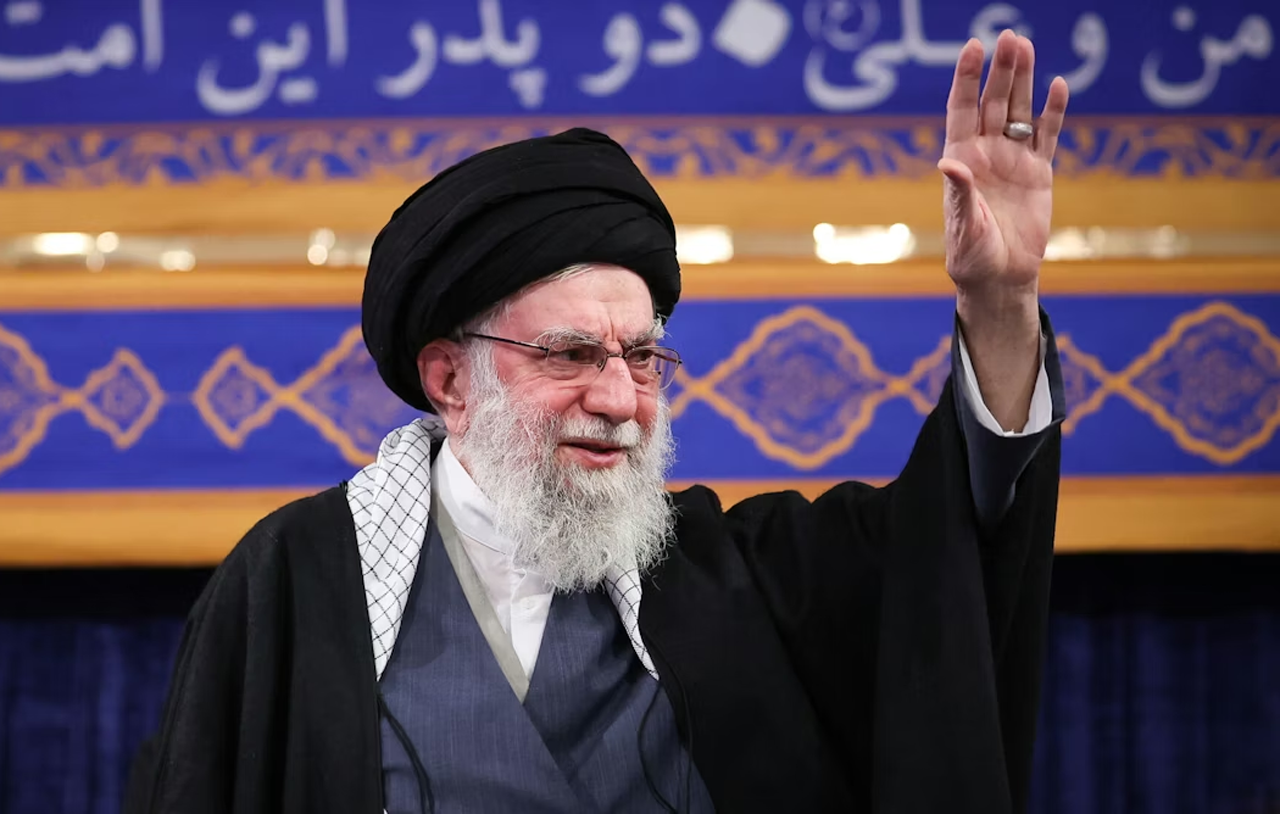
Iranian Supreme leader Ayatollah Ali Khamenei was killed in a massive joint strike by Israel and the United States, Iranian state media confirmed early Sunday, an event that has plunged the Islamic Republic into uncertainty and heightened fears of a broader regional conflict.
According to a report by The Associated Press (AP), US President Donald Trump announced the death hours earlier, declaring it Iran’s “greatest chance” to “take back” the country. Iranian reports said the 86-year-old leader was killed in an airstrike on his compound in downtown Tehran. Satellite imagery released by Airbus showed extensive bombing at the site.
State television portrayed Khamenei’s death as occurring while he remained steadfast in his duties, saying he “stood among the people and at the forefront of his responsibilities” in confronting what officials describe as global arrogance.
Trump, in a social media post, described Khamenei as “one of the most evil people in History” and warned that “heavy and pinpoint bombing” would continue in the coming days. The United States has justified the assault as necessary to cripple Iran’s nuclear capabilities.
Nagaland Tribune app on Google Play

Iran retaliated swiftly, launching counterstrikes and vowing retribution. The Cabinet declared that the “great crime will never go unanswered,” while the paramilitary Revolutionary Guard threatened its “most intense offensive operation” against Israeli and American bases.
The killing marks a dramatic escalation in U.S. intervention in Iran and raises the specter of retaliatory violence and a wider war. It also represents a striking assertion of military force by Trump, who returned to office pledging an “America First” agenda and promising to avoid prolonged foreign conflicts.
The AP report stated that the killing of Khamenei in the second Trump administration assault on Iran in eight months appeared certain to create a leadership vacuum given the absence of a known successor and because the 86-year-old supreme leader had final say on all major policies during his decades in power. He led Iran’s clerical establishment and the Revolutionary Guard, the two main centers of power in the governing theocracy.
Iran quickly formed a council to govern the country until a new supreme leader is chosen.