
The Khensa Kaketshir Telongjem (Khensa Students Union) 10th Walu Aten commenced at the Local Ground, Khensa, on December 28 on the theme “Putusen Yayim” (The Way of Life in the New Era). It would conclude on December 30.
On day 2, December 29, Moatoshi Longkumer, MLA and Advisor for Labour & Employment, Skill Development & Entrepreneurship, Government of Nagaland, would grace the programme as the Chief Guest, while Dr Arenla Walling, Additional Director, Health and Family Welfare, would attend as the Guest of Honour.
A total of 387 delegates from seven units are attending the event. The delegates include 35 from Amenyong, 26 from Mokokchung Town, 48 from Dimapur, 46 from Kohima, 100 from Yimyu ward, 67 from Yimtsüng (Village), and 65 from Kongrokong.
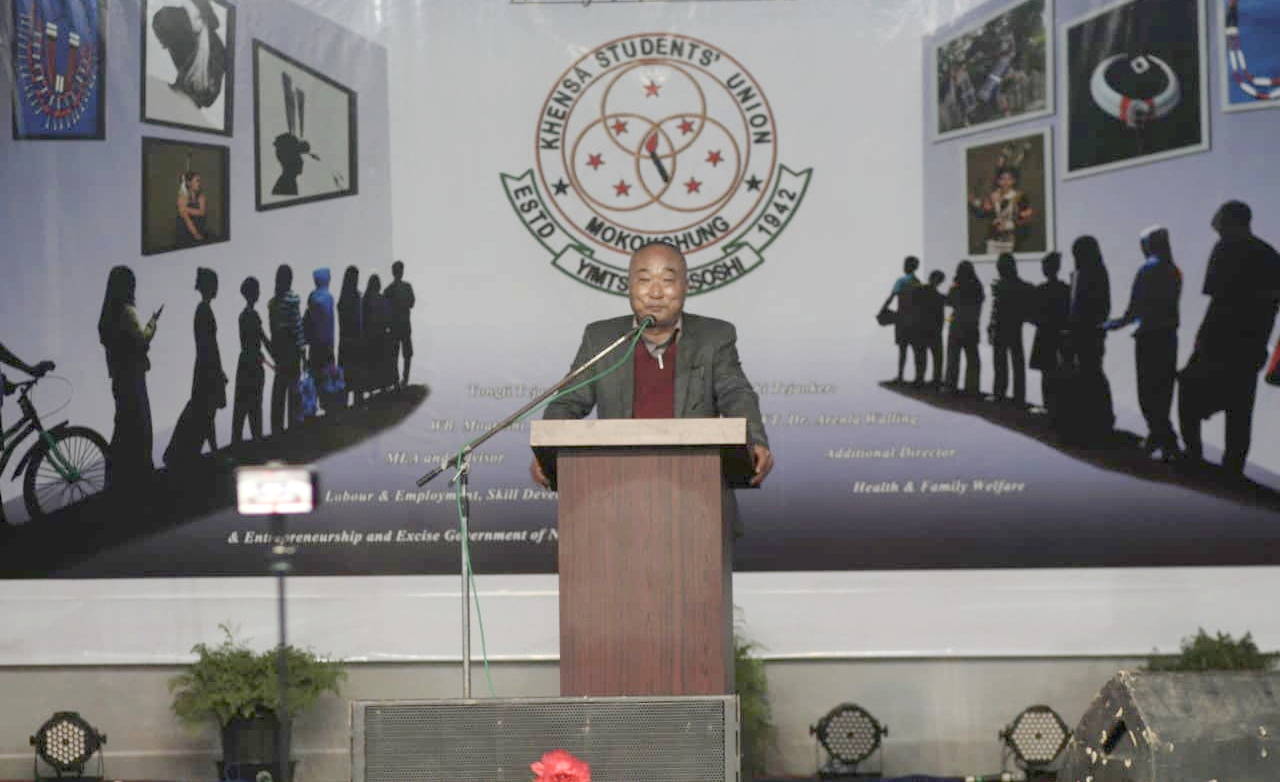
On the opening night, Temjenzulu, Economic and Statistical Organization (ESO), Kohima, in his brief exhortation, spoke on the theme of the 10th Walu Aten, “The Way of Life in the New Era.” He called upon the Khensa community, particularly students and youths, to seriously reflect on the present condition of the village and respond with concrete action.
He stated that he has been pondering over the current scenario of Khensa villagers in this new era and urged the gathering to evaluate themselves as individuals, acknowledging that some facts may be uncomfortable but were not shared with any ill intention. He emphasized the need for encouragement backed by a clear action plan.
Raising serious social concerns, he observed that Khensa is gradually becoming a “village of widows,” noting that he was informed there are around 40 widows in the village. According to his observation, nearly 80 percent of such cases are linked to substance abuse. Sharing from personal experience, he admitted that he himself was once a drunkard and warned about the dangers and long-term consequences of substance abuse. In this context, he questioned the responsibility of students and youths in addressing this issue.
He also pointed out that despite being a village, Khensa depends on labourers from outside because local people are unwilling to work, stating that laziness has crept in and the dignity of labour has been lost. He cautioned that such dependence could lead to future immigration-related problems and stressed that villagers themselves can engage in labour and earn with dignity.
On education and economic responsibility, Temjenzulu highlighted that Khensa has well-trained teachers, government high schools, and institutions, yet families continue to spend heavily on private institutions. He questioned this trend and asked what responsibility the community bears in achieving economic freedom and emancipation. He remarked how the villagers often honour and prioritize others more than their own community.
Addressing governance and accountability, he spoke about corruption, stating that some officials are misusing public funds while the community remains silent. He expressed regret that students are not questioning such issues, reminding them that they possess the tools and power to inquire, question, and seek transparency.
He further spoke on wisdom and leadership, stating that although wisdom is often discussed, it is not practiced. Referring to what the scholars say, they said wisdom begins to mature around the age of 60 and above, and such individuals must be regarded as valuable resources. He questioned why the village has not been able to access the wisdom and experience of its own people who are established in various professions.
Temjenzulu stated that there is a lack of political justice and economic evangelism, attributing this to disunity among the people. He clarified that blaming a “religious curse” is misplaced, stressing instead the importance of intelligence quotient, social quotient, and emotional quotient functioning together. He noted that Khensa has never had an MLA because of the absence of unity.
Questioning social integrity, he asked whether truth truly prevails in the village across various committees and institutions, including the Village Council, women’s organizations, student bodies, families, and churches. He suggested that every three months, the community should introspect, examining love for one another, jealousy, and personal attitudes, stating that there is currently no strong social advocacy or regional efficacy.
Reflecting on history, he acknowledged that while the past generation carried out many good deeds, they have also failed in several ways, including himself. He stated that the present generation of students and youths now carry heavier responsibilities to move the village forward.
Download Nagaland Tribune app on Google Play

Calling for reformation, he said that revolution must begin at three levels- individual, family, and society and that without self-reformation, broader change is not possible. He questioned the purpose of Walu Aten, stating that merely knowing and meeting one another is insufficient, and asked what concrete reforms the Khensa Students’ Union has achieved through the platform. He remarked that conversations within households remain unchanged. He then proposed specific action plans:
Education Reform: Establish collaboration among village schools, private institutions, the Village Education Trust, Village Council, and the Students’ Union. He urged parents to send their children to government schools and institutions, stating that this would strengthen the local economy and lead to freedom and emancipation. He also stated that the leaders would make sincere efforts to strengthen government schools and institutions by improving support systems and ensuring their effective functioning.
He encouraged villagers to engage in labour themselves instead of depending on outsiders, addressing unemployment, self-reliance, and future immigration challenges.
He emphasized nurturing children through Sunday Schools, stating they will become future leaders, and stressed the importance of teaching values and life skills at home.
He also proposed observing a day dedicated to reconciliation, urging the community to avoid enmity and move forward collectively.
Highlighting the presence of scholars, engineers, bankers, lawyers, doctors, agriculturists, theologians, and other professionals from the village, he questioned why progress remains limited. He proposed creating WhatsApp groups for different professional fields, administered by students, to seek guidance and solutions during legal, medical, agricultural, or administrative issues.
He concluded by challenging individuals to begin personal reformation through acknowledging weaknesses, seeking forgiveness, and accepting one another, stating that this marks the true beginning of revolution. He called upon the gathering to engage in meaningful discussions on ideas, reformation, and revolution for a progressive Khensa society.
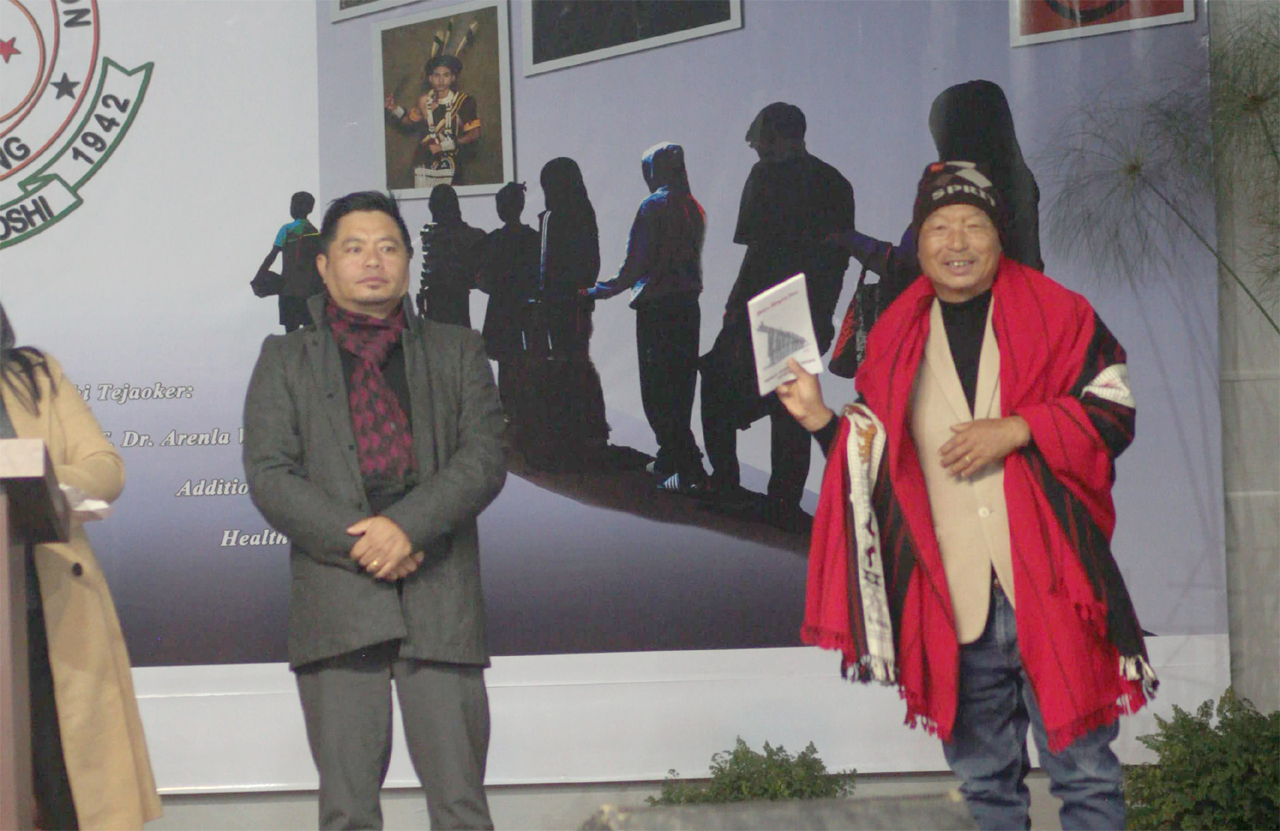
Khensa Mongsen Yusa (Khensa Mongsen language) book second edition was released by Alemyapang Longchar, ADC, Chiephobozou.
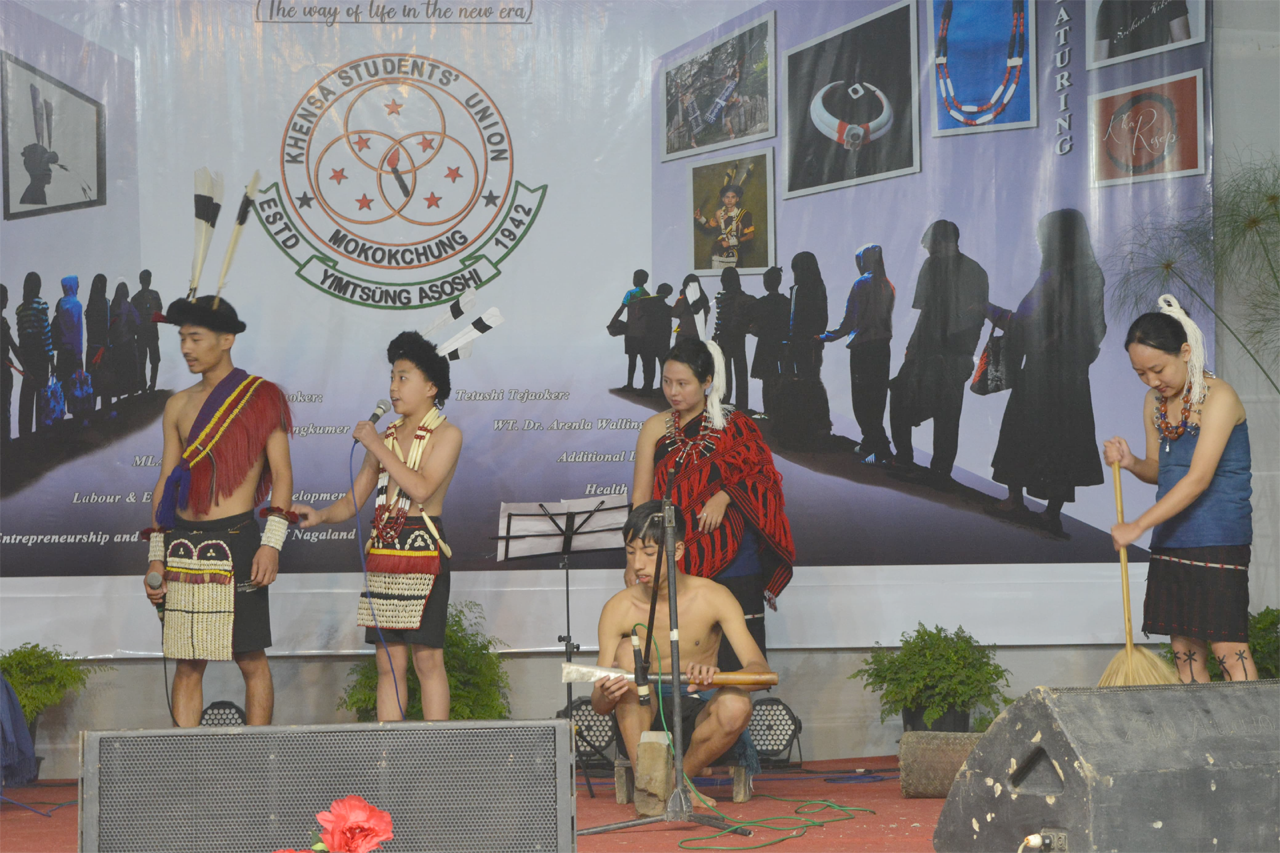
Nokrangtsüng, AGS of Khensa Kaketshir Telongjem (KKT), chaired the programme. The invocation was pronounced by Imlilemba, Home Evangelist, KBA, while Walunir Tatong Tir, Vice President of KKT, delivered the welcome address. A special number was presented by the Kohima Unit, followed by the first round of the Walu Aten Talent Show Competition. The programme concluded with the closing prayer pronounced by Tiakokla, President of Khensa Sensotsür Telongjem.
