Dr. Bornali Datta, Director, Respiratory & Sleep Medicine
Medanta – The Medicity
India’s smoking problem is not new. From hookahs to bidis to cigarettes, Indians have and continue to smoke tobacco in various shapes and forms. Vaping is often promoted as a safer alternative to smoking, especially for those trying to quit cigarettes. While vaping does expose users to fewer toxic chemicals than combustible tobacco, growing evidence suggests that vaping is far from risk-free.
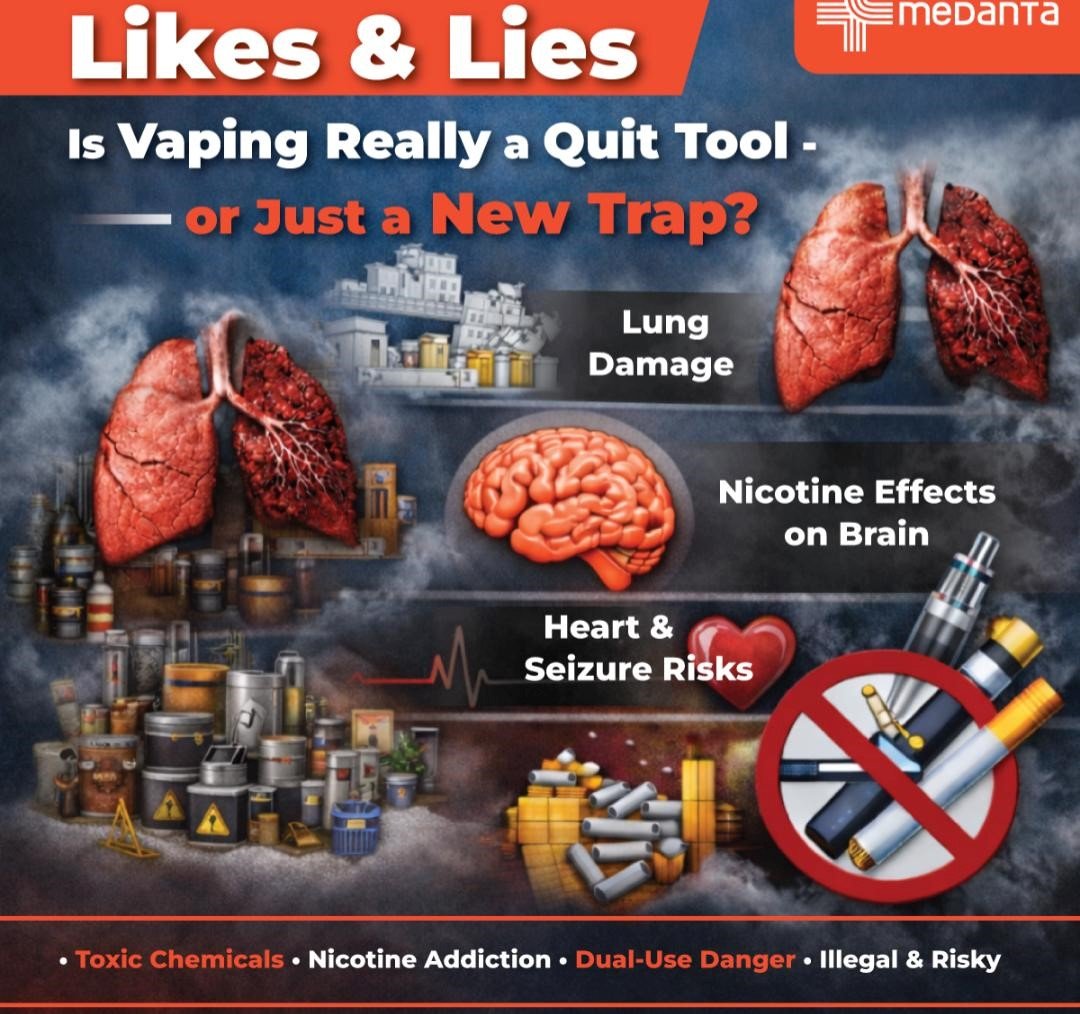
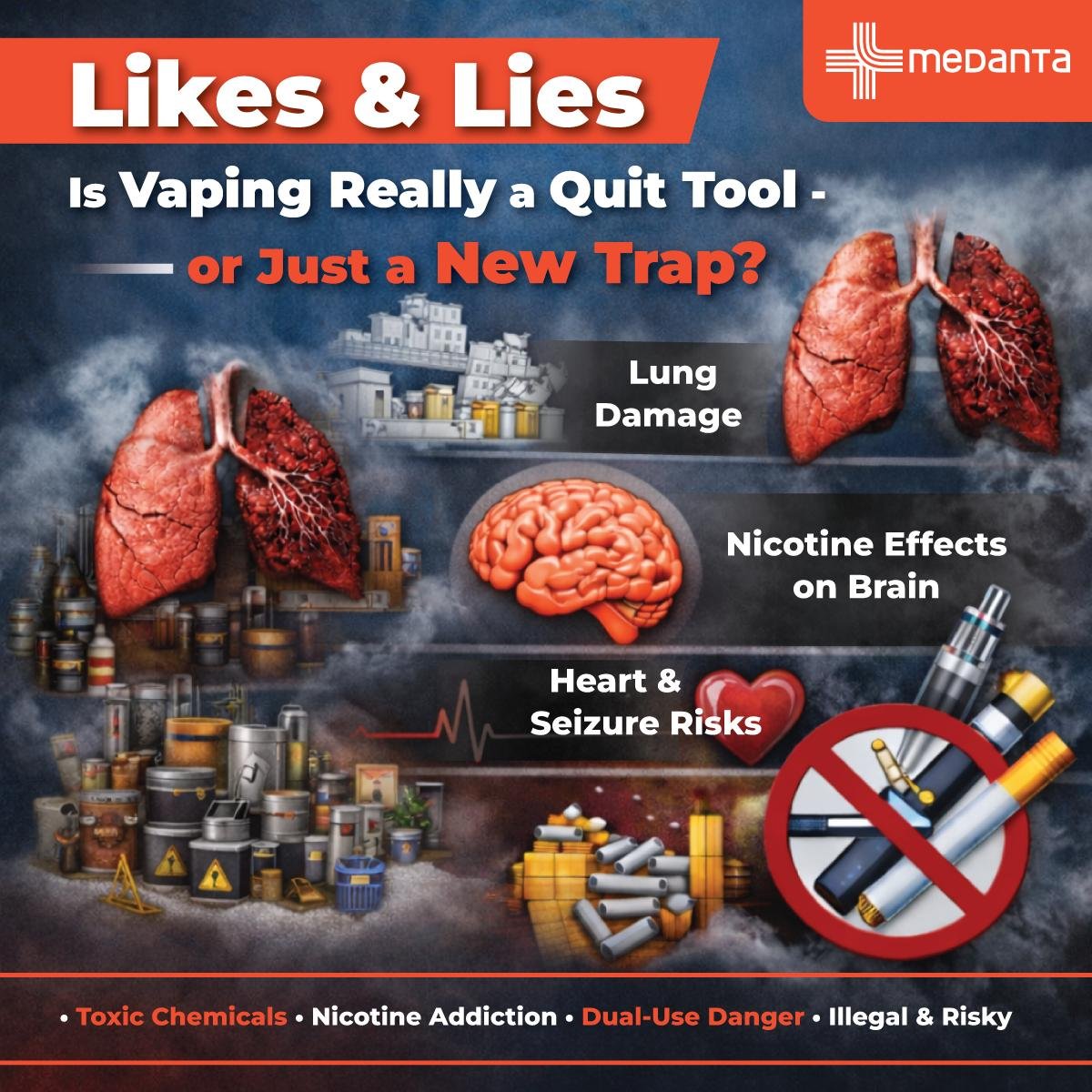
Vapes work by heating liquids that contain nicotine and flavouring chemicals, creating an aerosol that is inhaled into the lungs. Researchers suspect that some of these aerosolised chemicals can damage lung tissue and trigger inflammation. Symptoms include shortness of breath, chest pain, cough, fever, vomiting, and diarrhoea. In several cases, users have required hospitalisation, including intensive care.
High nicotine concentrations in vapes can also overwhelm the brain—a phenomenon often referred to as “nicotine flooding.” This overstimulation alters normal cell function, impairing memory, learning, and cognitive performance. Laboratory studies suggest that even short-term exposure may cause stress and damage to brain cells.
Download Nagaland Tribune app on Google Play

Concerns extend beyond the lungs and brain. Studies indicate that vaping may temporarily impair blood vessel function, raising questions about long-term cardiovascular effects. The US Food and Drug Administration is also investigating reports of seizures linked to vaping, particularly among young users, with nicotine toxicity considered a possible cause.
Many people who take up vaping to quit tobacco end up using both. Young people who experiment with vaping are also more likely to become smokers later in life. Despite a nationwide ban, vapes continue to be easily available through illegal channels in India.
Vaping is not a harmless substitute for smoking as perceived. As evidence continues to emerge, health experts caution against viewing e-cigarettes as a safe long-term solution and recommend medically supervised methods for quitting nicotine altogether.