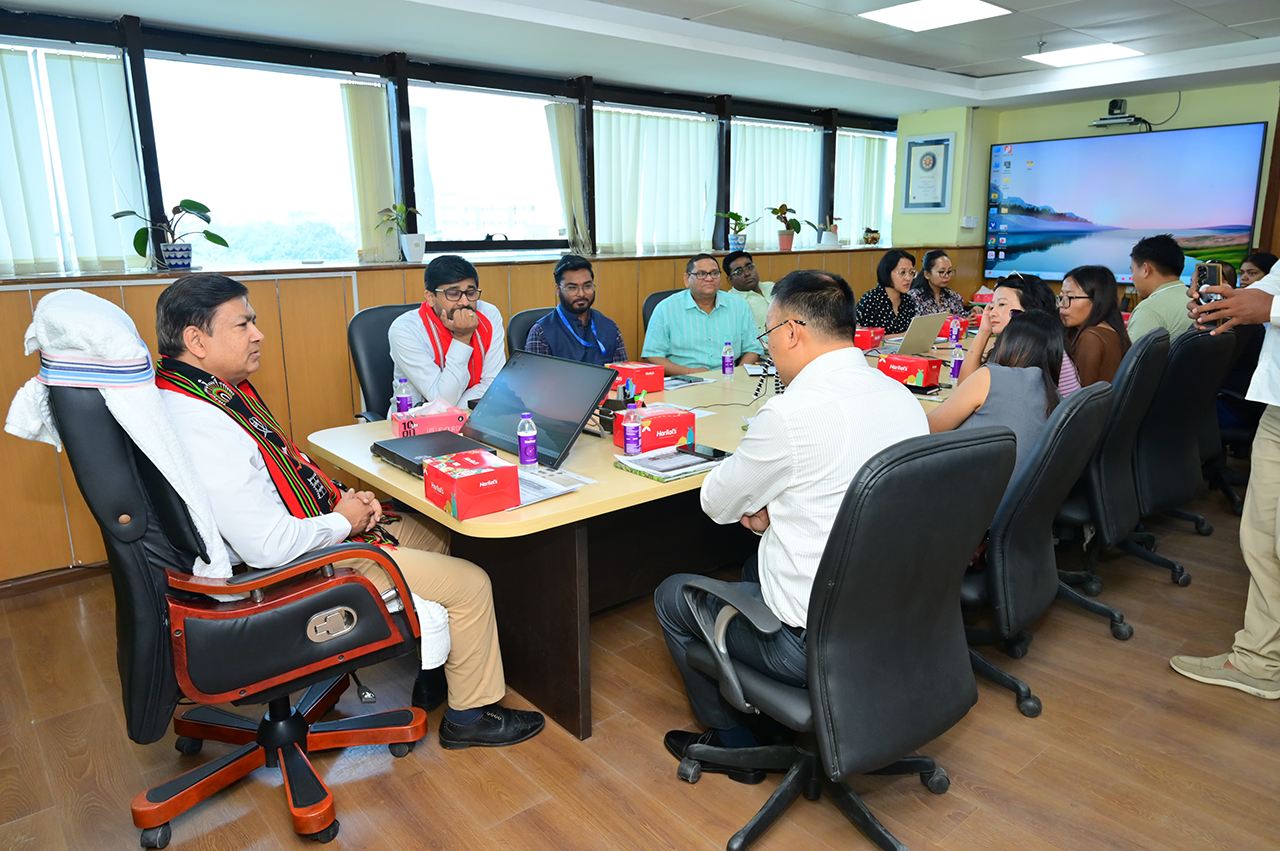
As part of the ongoing Press tour to Bihar, delegation of journalists from Nagaland interacted with the Minister of Agriculture, Ram Kripal Yadav, with discussions focusing on agricultural practices, particularly makhana cultivation.
During the session, officials highlighted that India contributes nearly 90% of the world’s makhana production, with Bihar accounting for about 85%, making it the largest producer globally. It was also informed that makhana from Bihar has received the Geographical Indication (GI) tag, recognising its unique origin and quality. A detailed PPT presentation by the Horticulture Department outlined cultivation methods, value chains, and its economic significance in the state.
The media team interacted with the Minister and departmental officials, raising queries on whether such cultivation practices could be replicated in Nagaland, considering the differences and similarities in agro-climatic conditions. Tokens of appreciation were presented to the visiting delegation by the Minister, and earlier by the Horticulture Department during the interaction. In a gesture of mutual appreciation, the Nagaland media delegation, led by P Sophie and Raushan Kumar (PIB), also presented traditional Naga items to the Minister and officials as a symbol of cultural exchange and goodwill.
Following the meeting, the team visited the Danapur–Bihta Elevated Corridor Project, being implemented under the National Highways Authority of India. During the site visit, the media delegation interacted with engineers and project officials, who briefed them on the construction process, technical aspects, and progress of the work. The project spans approximately 25 km and includes a four-lane elevated corridor, along with bridges, ramps, and service roads. Officials also shared insights on execution challenges and timelines, while the visiting media team observed on-ground developments.
Download Nagaland Tribune app on Google Play

At present, the journey between Danapur and Bihta can take 3 to 4 hours due to heavy congestion, but upon completion, the travel time is expected to be reduced to around 15 minutes, which will significantly improve daily commute and connectivity. The project, with an estimated cost of ₹1969.39 crore, is targeted for completion by August 2027. Notably, it is regarded as one of the longest elevated corridors in India and the longest in eastern India.
Later, the delegation visited the Central Bureau of Communication (CBC) Regional Office in Patna. Officials presented their communication strategies, noting that a significant portion of their outreach focuses on rural areas. Initiatives such as Integrated Communication and Outreach Programmes (ICOP), use of social media platforms, feedback mechanisms, and inter-agency collaboration were highlighted.
The team interacted with the officials of the Press Information Bureau (PIB) Patna. Discussions covered the bureau’s role in media coordination, dissemination of government information, and its fact-checking mechanism to address misinformation.
Officials stated that Press Information Bureau focuses on disseminating verified information with accessibility, and does not operate in the breaking news domain.
The engagements formed part of the broader media tour and gave the media delegation an opportunity to gain first-hand exposure to development initiatives, governance models, and communication frameworks in Bihar. The itinerary comprised visits to Krishi Bhawan, interactions with the Agriculture and Horticulture Departments, a site visit to the Danapur–Bihta Elevated Corridor Project, and sessions at CBC and Press Information Bureau offices in Patna, followed by departure to Nalanda.