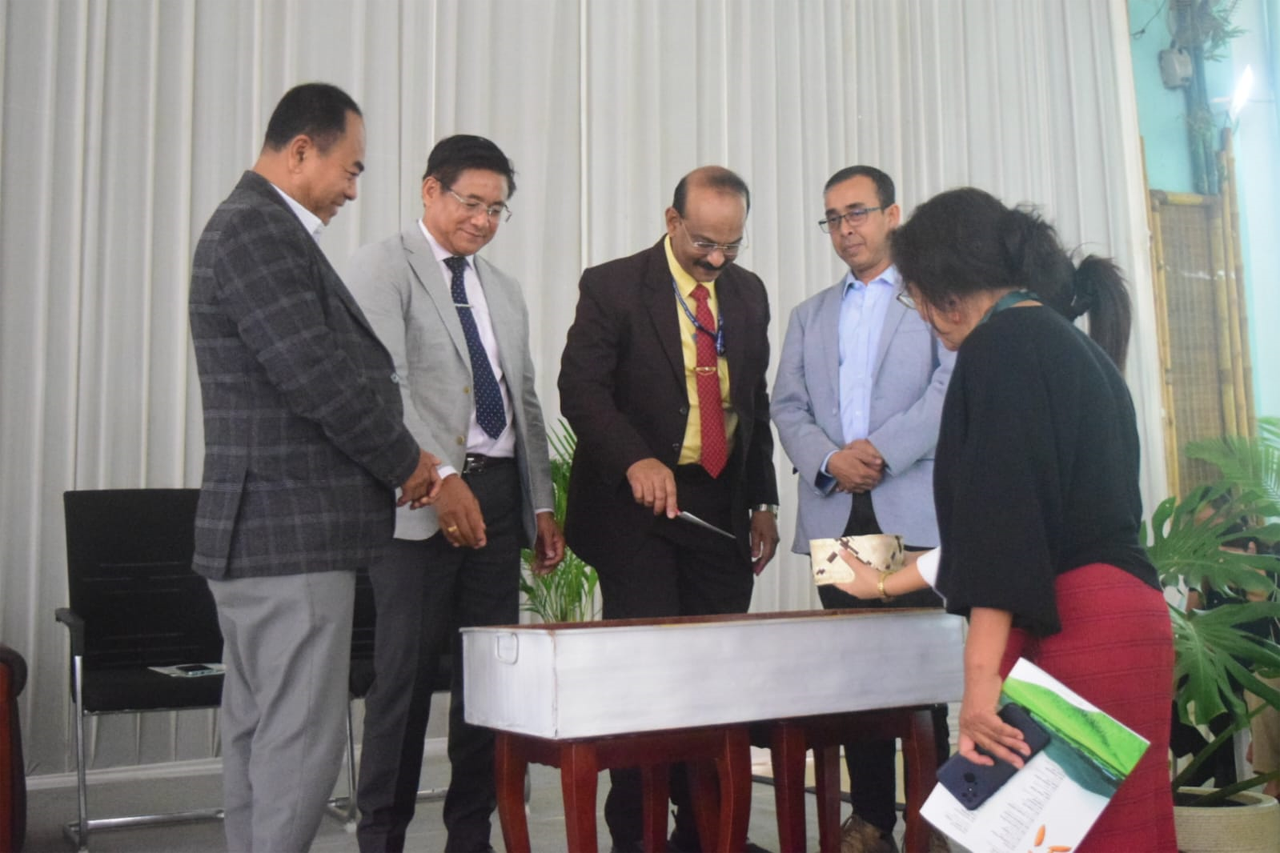
Advisor for Agriculture, Mhathung Yanthan on Thursday inaugurated the first-ever Northeast Festival of Rice – Grains of Heritage at Agri Expo, 4th Mile, Chümoukedima, describing the event as historic and deeply significant for the region.
Addressing a distinguished gathering that included HK Sema, Padma Shri awardee and Convener of the Indian National Trust for Art and Cultural Heritage (INTACH) Nagaland Chapter, along with scholars, scientists, farmers, artisans and representatives from all eight Northeastern states, Yanthan expressed gratitude to the organizers for conceptualizing the visionary initiative.
Yanthan remarked that although the festival focuses on a single crop, rice holds profound meaning for the people of the Northeast. “Rice is not just an agricultural commodity. Rice is life. Rice is culture. Rice is identity,” he said, emphasizing its presence in every stage of life—from birth rituals to harvest celebrations—and its deep roots in songs, folklore and oral traditions.
Referring to his recent participation in a Chang tribal festival marking the beginning of the agricultural calendar, he noted that rice cultivation, particularly under the traditional jhum farming system, remains spiritually and culturally central to agrarian life in Nagaland and the wider region. Agriculture in the Northeast, he said, has always been about harmony with nature, seasons, soil, water and community.
Highlighting the theme “Grains of Heritage”, Yanthan said the Northeast is probably recognized as a “hotspot of crop diversity”.
“Our region is home to an extraordinary range of indigenous and heirloom rice varieties, many of which are still carefully conserved by our farmers,” he said adding, Nagaland alone has more than 200 identified indigenous rice varieties, each adapted over generations to specific microclimates and terrains.
However, he cautioned that many traditional varieties are at risk of degeneration and called for intensive deliberation during the festival’s technical sessions.
While stressing the importance of conserving indigenous germplasm, Yanthan also underlined the need to adapt to changing realities. Climate change, he said, is severely affecting agriculture through erratic rainfall, floods, droughts, pest outbreaks and soil degradation.
He called for the development of climate-resilient, short-duration and high-yielding rice varieties to support farmers, citing examples of traditional varieties that take up to ten months from sowing to harvest, increasing management costs and risks.
“We must hold on to our traditions and germplasm, but we must also provide solutions—short-duration, climate-resilient varieties with higher productivity,” he said, urging scientists and researchers to work closely with farmers.
Download Nagaland Tribune app on Google Play

Yanthan emphasized that sustainability in the Northeast has historically been a way of life rather than a policy concept. Protecting rice cultivation, he added, also means protecting rural livelihoods—farmers, artisans, bamboo workers, weavers, millers, traders and food processors—who form part of a broader rice-based ecosystem.
Encouraging youth participation, he said that understanding seeds, soil and farmers as living relationships would help nurture responsible scientists, policymakers and custodians of the land.
The Advisor also informed the gathering that the state has framed a new Agriculture Policy 2026, which has received Cabinet approval and will soon be implemented. He called upon scientists, researchers and stakeholders to contribute recommendations from the festival’s deliberations to guide effective implementation of the policy.
Congratulating the INTACH Nagaland Chapter and partner institutions, Yanthan expressed hope that the Northeast Festival of Rice would become a regular platform, reinforcing the region’s role as a custodian of agricultural biodiversity and wisdom.
The festival has been organized by the INTACH Nagaland Chapter in collaboration with the Department of Agriculture, ICAR Research Complex for North Eastern Hill Region, both Umiam and Jharnapani centres and the North East Zone Cultural Centre (NEZCC).
Earlier, the welcome address was delivered by Sentila T Yanger, Padmashree and state Convenor of INTACH Nagaland Chapter, followed by a symbolic sowing of rice seeds, symbolizing renewal, prosperity and respect for the agrarian traditions of the Northeast.
The inaugural session was followed by seminar on the theme, “Bridging Tradition and Innovation: Enhancing Hill Rice Sustainability through Climate Resilient Technologies”.