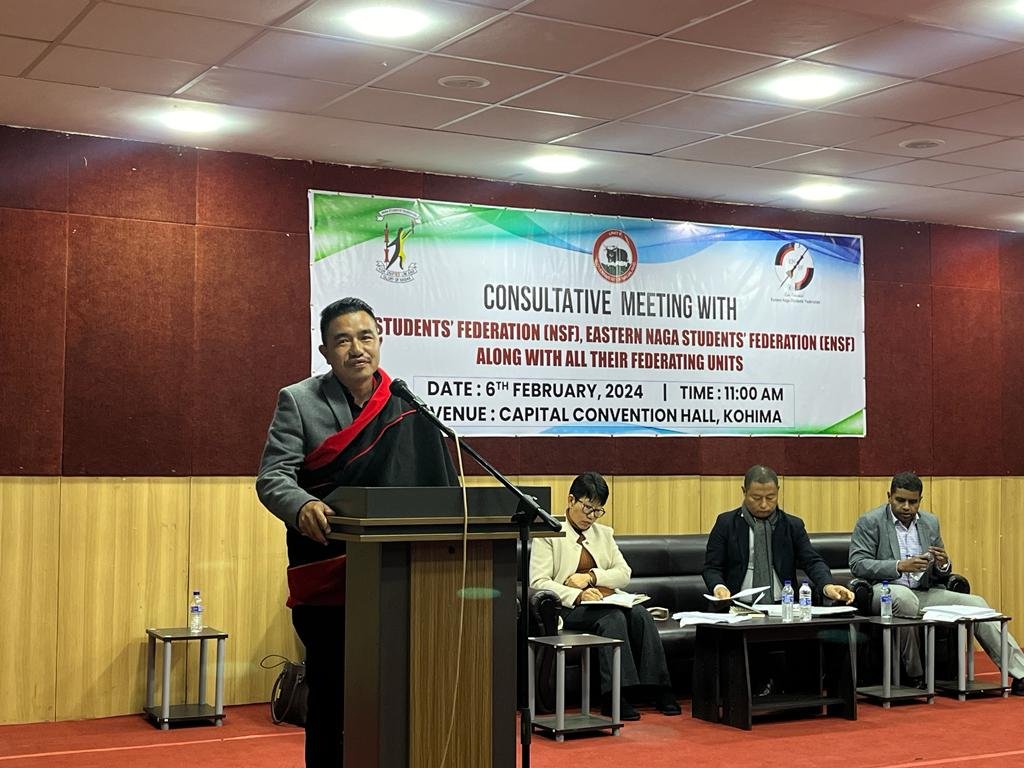
The Directorate of School Education held a consultative meeting with the Naga Students Federation (NSF), Eastern Naga Students Federation (ENSF), and their federating units at the Capital Convention Hall, Kohima on February 6.
Dr. Kekhrielhoulie Yhome, Advisor to School Education and SCERT, expressed satisfaction with the availability of comprehensive data, enabling a better understanding of existing challenges. As of January 2024, the education sector comprises 18,725 government teachers, categorized by district and constituency, and 12,338 private school teachers, totaling 31,063 educators. Government schools enroll 150,483 students, while private schools account for 259,480 students based on December 2023 data.
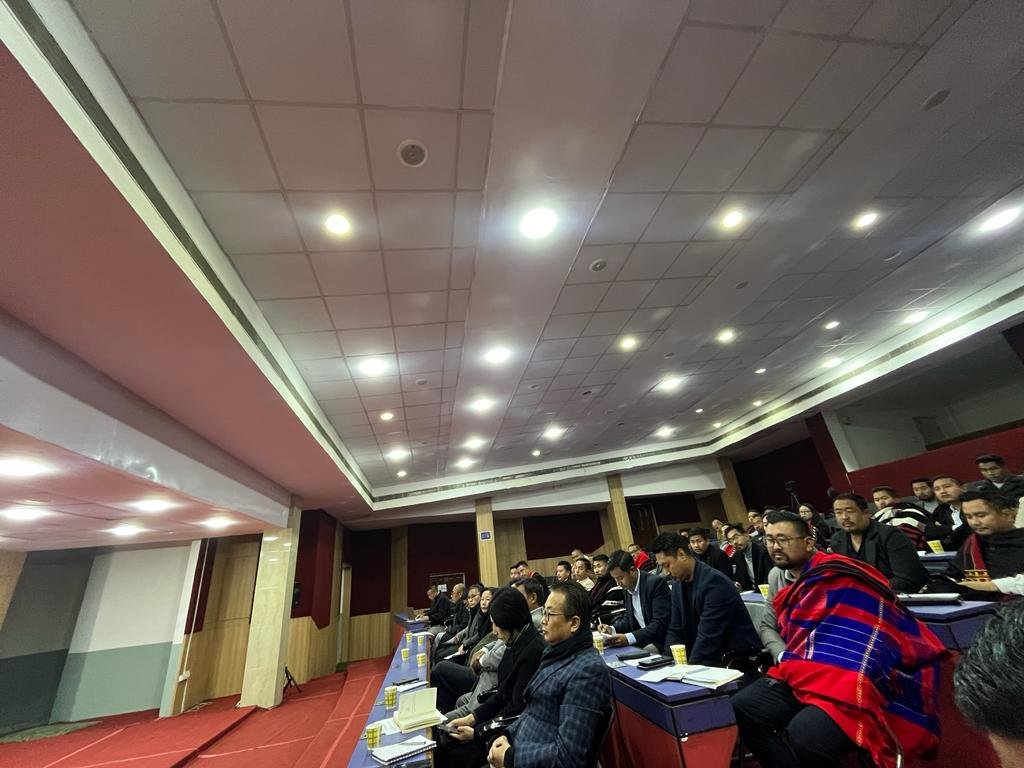
Dr. Yhome emphasized the precarious state of 60 percent of government schools and stressed the collective responsibility of addressing these challenges. He underscored the inadequacy of schools to independently manage their affairs and highlighted the necessity of collaborative efforts. Dr. Yhome emphasized the role of the education sector in teacher provision, infrastructure enhancement, and needs identification, but stressed the imperative of partnering with social and NGO organizations for comprehensive solutions. The urgency of concerted action in addressing the critical issues facing the education sector, was highlighted.
During the briefing, the Advisor highlighted Nagaland’s alarming dropout rates, attributing to linguistic barriers as a contributing factor. He also mentioned that there is no provision for transfer within the post or tribe teacher quota system. However, primary teachers are mandated to serve within their linguistic areas, leading to an oversupply in certain regions and tribes. In response, the advisor assured the audience of forthcoming measures to rationalize teacher distribution and adjust where shortages exist.
During the meeting, Advisor Yhome also acknowledged the the financial strain on parents, attributing it to the rising trend of borrowing funds for private school education, which has adversely impacted household incomes. He also highlighted the critical role of the council, church, community, and unions, appealing for the need for collective action to secure a brighter future for students.
Addressing the issue of teacher allocation, the Advisor clarified existing norms, highlighting the challenges posed by oversupply in certain regions and tribes. Assuring corrective measures, Yhome pledged to streamline teacher distribution to address shortages effectively.
Download Nagaland Tribune app on Google Play

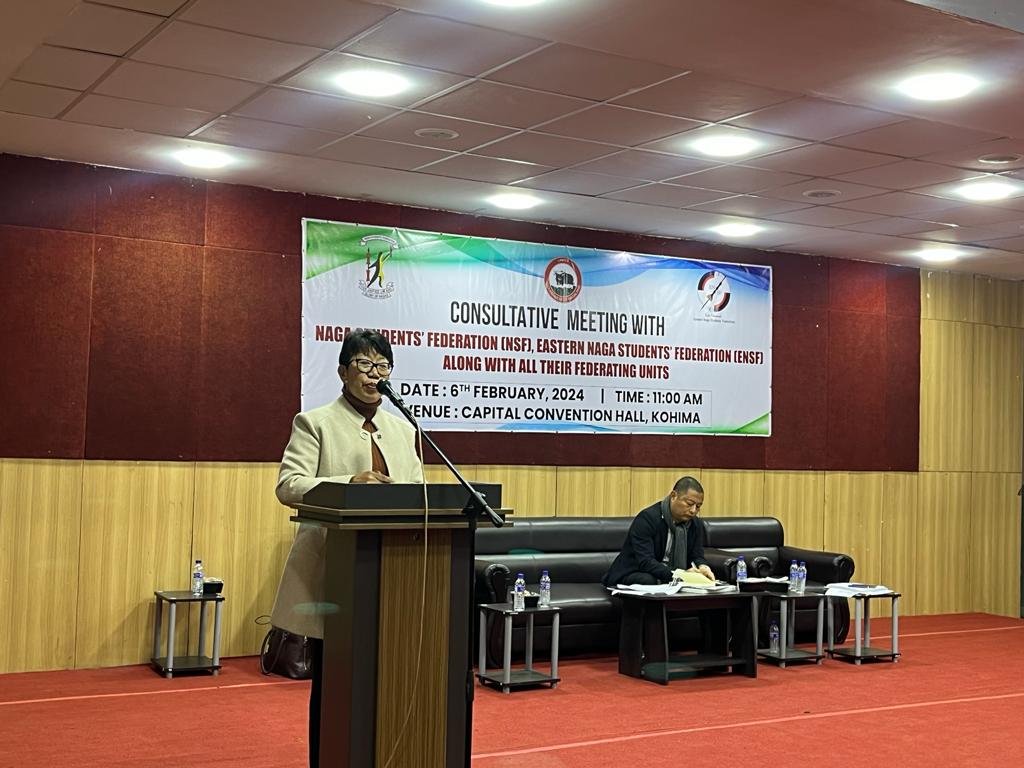
Kevilenuo Angami, Commissioner and Secretary of School Education and SCERT expressed the imperative of commencing a rationalization exercise to address pertinent issues in the education sector. Expressing optimism for long-term resolutions, Angami acknowledged the time-intensive nature of these challenges. The need to adhere to government regulations and procedural protocols was emphasised whetr Angami noted the constraints that hinder immediate redressal of pressing issues.
She acknowledged the concerns raised by the Students’ union, recognizing their advocacy for the welfare of students. While acknowledging the existing limitations, Angami expressed the hope that the forthcoming meeting will not only focus on alleviating the shortage of teachers in schools but also facilitate comprehensive discussions on various problems, issues, and concerns that directly impact the well-being of children.
During the meeting, other students representatives echoed concerns and raised pertinent issues, all of which were personally addressed by the head of the department. Assurances were provided regarding an expeditious examination of the matters and a commitment to timely resolution. Furthermore, a pledge was made to investigate the use of proxy teachers and to ensure the appointment of teachers exclusively through NPSC and NSSB channels.