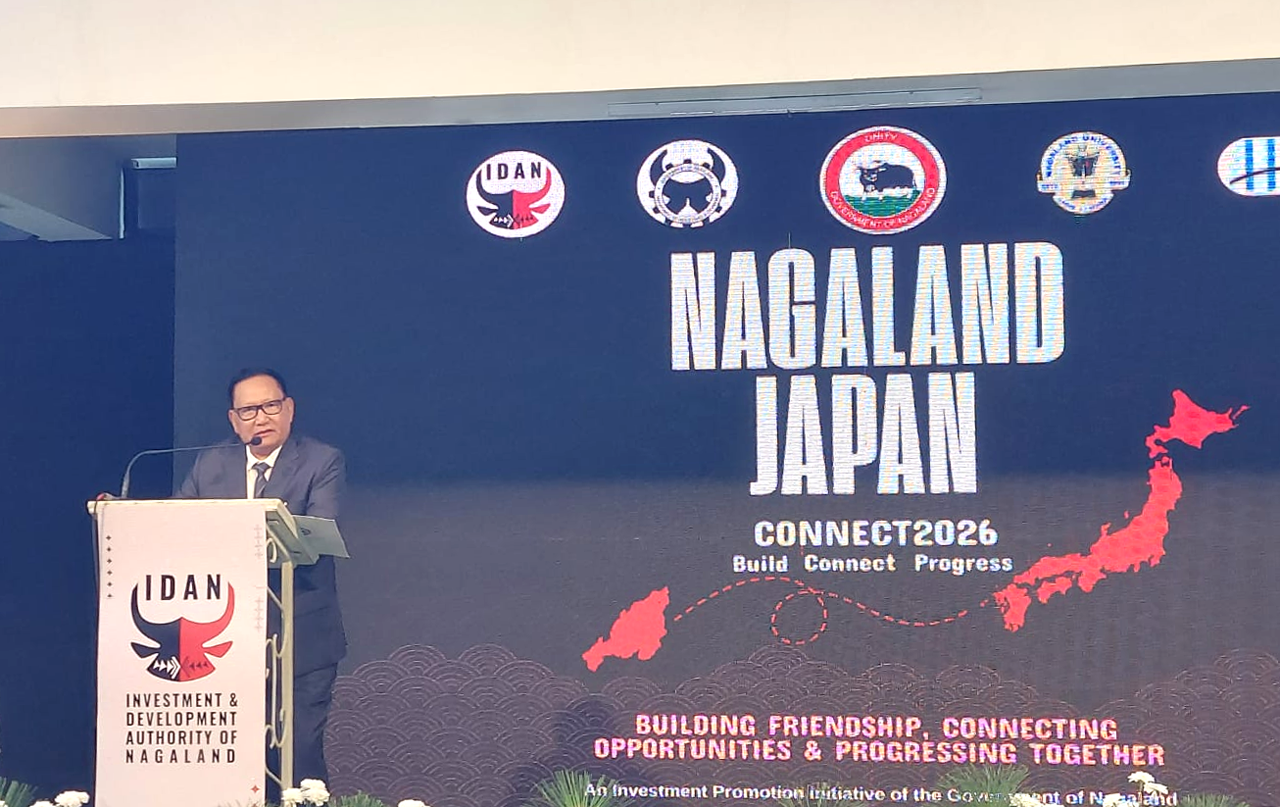
Deputy Chief Minister, TR Zeliang on Wednesday declared that the Nagaland–Japan Connect 2026 marks a new chapter in Nagaland’s global engagement, as the state deepens its partnership with Japan through shared values, mutual trust, and a common vision for sustainable progress.
Addressing a distinguished gathering of government officials, industry leaders, academicians, and Japanese delegates 2026 at the Integrated Business Hub & Innovation Centre (IBHIC), Dimapur, Zeliang said the theme “Build, Connect, Progress” reflects not only intent but a roadmap for Nagaland’s future.
Tracing the roots of the partnership, Zeliang recalled Japan’s early engagement with Nagaland beginning in 2014, when the Japan International Cooperation Agency (JICA) first explored collaboration with the state. This relationship matured into the Nagaland Forest Management Project, which today spans 185 villages across 22 forest ranges, restoring degraded forest ecosystems, rehabilitating jhum land, and strengthening rural livelihoods across all districts, he said.
Highlighting Japan’s continued confidence in Nagaland, the Deputy Chief Minister announced that an Official Development Assistance (ODA) loan of approximately Rs 564 crore has been extended for the establishment of a 400-bedded Medical College Hospital at Nagaland Institute of Medical Sciences and Research (NIMSR), Kohima. He said this significant investment underscores Japan’s strong commitment to strengthening healthcare infrastructure and medical education, thereby contributing to the broader goal of universal access to quality healthcare services.
Zeliang stressed that while infrastructure remains important, human capital is now the state’s most strategic asset, particularly its youth. He said initiatives such as the Centre of Excellence for Foreign Languages are creating structured pathways for Naga youth to access global employment opportunities, equipping them with language skills, cultural readiness, and professional discipline.
“By strengthening institutions and systems, we are building confidence both among our youth and among our international partners,” he said.
Calling the initiative a model of people-to-people diplomacy, Zeliang said Nagaland–Japan Connect has moved beyond agreements to deliver real outcomes. The Memorandum of Understanding with Kochi Prefecture, he said, has formalised government-to-government collaboration particularly in human resource exchange, skill development, and agricultural cooperation.
“These connections foster mutual understanding, shared responsibility, and long-term cooperation, values deeply respected both Nagaland and Japan,” he said.
The results, he said, are already visible: Naga youth employed in Japanese companies, steady income generation, remittances strengthening families back home and growing international confidence in Nagaland’s human resource potential. This, he said, is progress that is inclusive, sustainable and forward-looking.
Looking ahead, Zeliang said the government will scale up training, strengthen partnerships, and align skills with global demand, while ensuring transparency, dignity of labour and long-term career pathways. He invited Japanese investment in high-potential sectors, noting that Nagaland’s strategic location as a gateway to Southeast Asia, combined with Japanese precision and Naga resilience, holds immense potential to transform the state into a regional innovation hub.
He lauded the Investment & Development Authority of Nagaland (IDAN) and the Industries Department for translating policy into action under the leadership of Chief Minister Dr. Neiphiu Rio, stating that such initiatives are placing Nagaland firmly on the global map and opening new horizons for its youth.
Nagaland–Japan connect reflects shared history, youth aspiration and global vision: Abu Metha
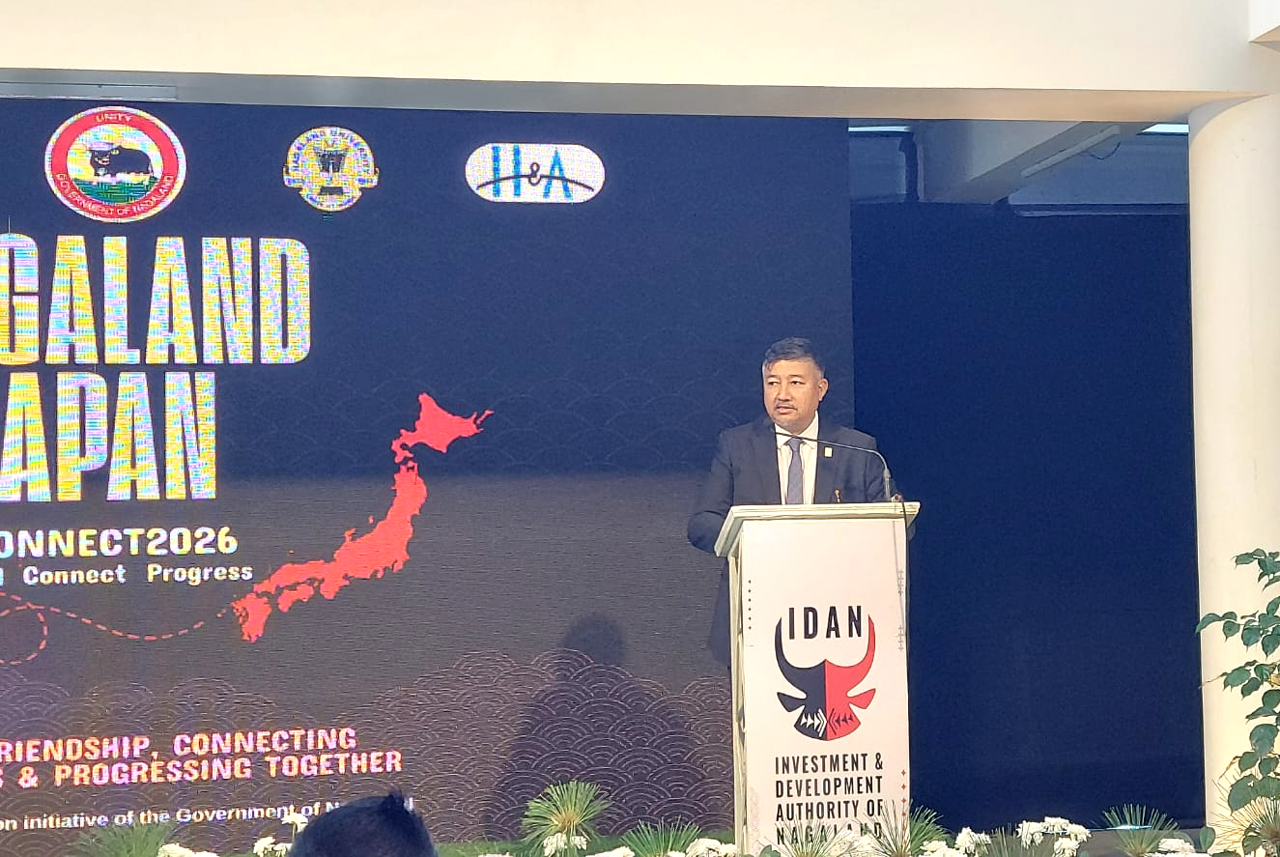
Chairman of the Investment and Development Authority of Nagaland (IDAN), Abu Metha said the Nagaland–Japan Connect platform represents not just an event but the realization of a vision rooted in shared history, mutual trust, and a collective commitment to global partnership and youth empowerment.
In his welcome address, Metha expressed deep appreciation to the Government of Kochi, Japan, for collaborating and partnering with Nagaland, calling the relationship a landmark step in the state’s international engagement. He noted that the programme was the result of nearly a year of relentless groundwork by state officials and departments, driven by the Chief Minister’s clear vision to create meaningful global opportunities for Naga youth.
Recalling the historic visit of the Nagaland Chief Minister, Neiphiu Rio to Japan, Metha said the high-level interactions with Japanese representatives and the Embassy of India laid the foundation for a new era of cooperation. The signing of a Memorandum of Understanding between the Government of Nagaland and the Government of Kochi marked a historic first, making Nagaland the first state to formalize such a comprehensive partnership with a foreign government for human resource exchange, technology sharing, and collaborative development.
Reflecting on the shared past between the Naga people and Japan, Metha acknowledged the complex legacy of the Second World War but said history has now come full circle, transforming painful memories into a platform for peace, unity, and cooperation. Today, he said, Nagaland and Japan are partners not only in development but in contributing to the greater good of humanity, with collaboration spanning multiple sectors.
Turning to the youth, Metha said that a new generation of Naga youth has emerged—bold, courageous, and willing to step beyond comfort zones. He said their dreams are meant to be realized, and it is the responsibility of the government to create pathways that allow young people to succeed not just locally or nationally, but globally.
“Your success is the success of Nagaland,” he said, urging youth to work hard, aim high, and embrace discipline and perseverance. He encouraged them to go out into the world, learn, absorb global best practices, and return to build a stronger, better Nagaland. He described Naga youth as the new ambassadors of the state, tasked with telling new stories and reshaping global perceptions of Nagaland through excellence and integrity.
Metha reaffirmed that the Government of Nagaland remains fully committed to supporting youth aspirations through guidance, opportunity creation, and institutional backing, adding that the future of Nagaland depends on the success of its young people.
Download Nagaland Tribune app on Google Play

‘A beginning, not an end’
Advisor, Industries & Commerce, Hekani Jakhalu, in her special address, highlighted the importance of youth stepping beyond traditional boundaries. “With more than ten lakh job seekers, the challenge before us is to create sustainable livelihoods. This initiative is about expanding horizons and enabling our youth to compete globally.”
She said Japan choosing Nagaland reflects the credibility and commitment of people of Nagaland and Government, adding that the programme marks “a beginning, not an end.”
Representing Kochi Prefecture, Japan, Kunitoshi Hojo emphasized the growing demand for skilled youth from Nagaland. “Japan is facing a rapidly ageing population, and Kochi Prefecture is actively seeking motivated and disciplined young workers. From zero workers from Nagaland just two years ago, we now have 19, and we expect many more success stories to follow,” he said, reaffirming Kochi’s commitment to strengthening cooperation with Nagaland.
Speaking on industry collaboration, Kaushik Choudhury, Partner, Konnekt Asia LLP, India highlighted the economic and cultural potential of the partnership. “This initiative allows us to present Nagaland to Japan not just as a workforce, but as a place of quality products, culture, and innovation. From introducing Nagaland coffee to developing elderly living villages and cultural centres, this partnership opens new possibilities for inclusive growth,” he stated.
Dr. Pangersenla Walling, Centre of Excellence for Foreign Languages, Nagaland University highlighted the academic and language-training backbone of the programme. “Language is the gateway to opportunity. Our certificate programmes are designed to make students job-ready, culturally prepared, and globally competitive, with targeted subsidies ensuring access for deserving candidates,” she said.
The inaugural session witnessed key Memorandum of Understanding (MoUs) were exchanged to institutionalise cooperation in vocational training, internships, international placements, and investment facilitation.
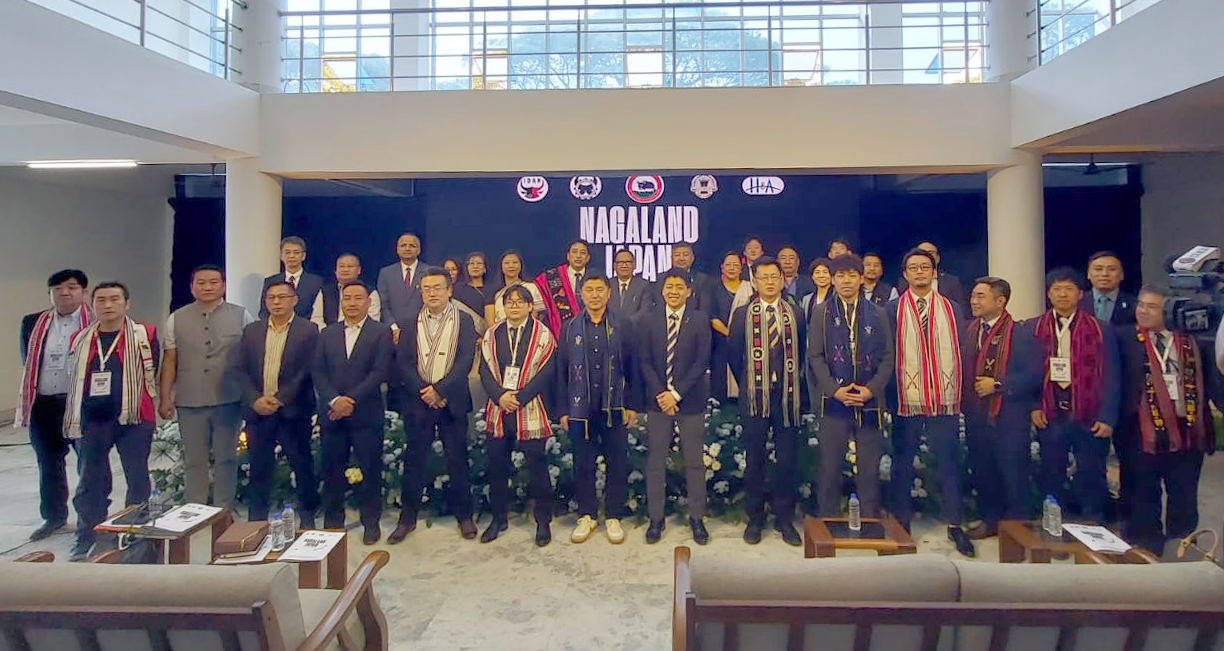
A dedicated Technical Session was organised to prepare participants for overseas employment, focusing on Japanese working culture, workplace ethics, discipline, and expectations, along with a clear roadmap for employment in Japan, covering language proficiency, skill standards, recruitment procedures, and long-term career pathways.
Japanese companies and cooperative associations participating in the programme made detailed presentations on their company profiles, sectors, job roles, working conditions, and growth prospects, enabling candidates to gain first-hand understanding of employment opportunities and living conditions in Japan.
The event recorded over 450 student registrations and featured direct job interviews and interactions with Japanese employers across agriculture, healthcare, manufacturing, electronics, hospitality, and heavy machinery sectors. The interview process allowed employers to assess candidates’ language abilities, technical skills, and cultural readiness, while providing youth with practical exposure to Japanese recruitment and workplace standards.