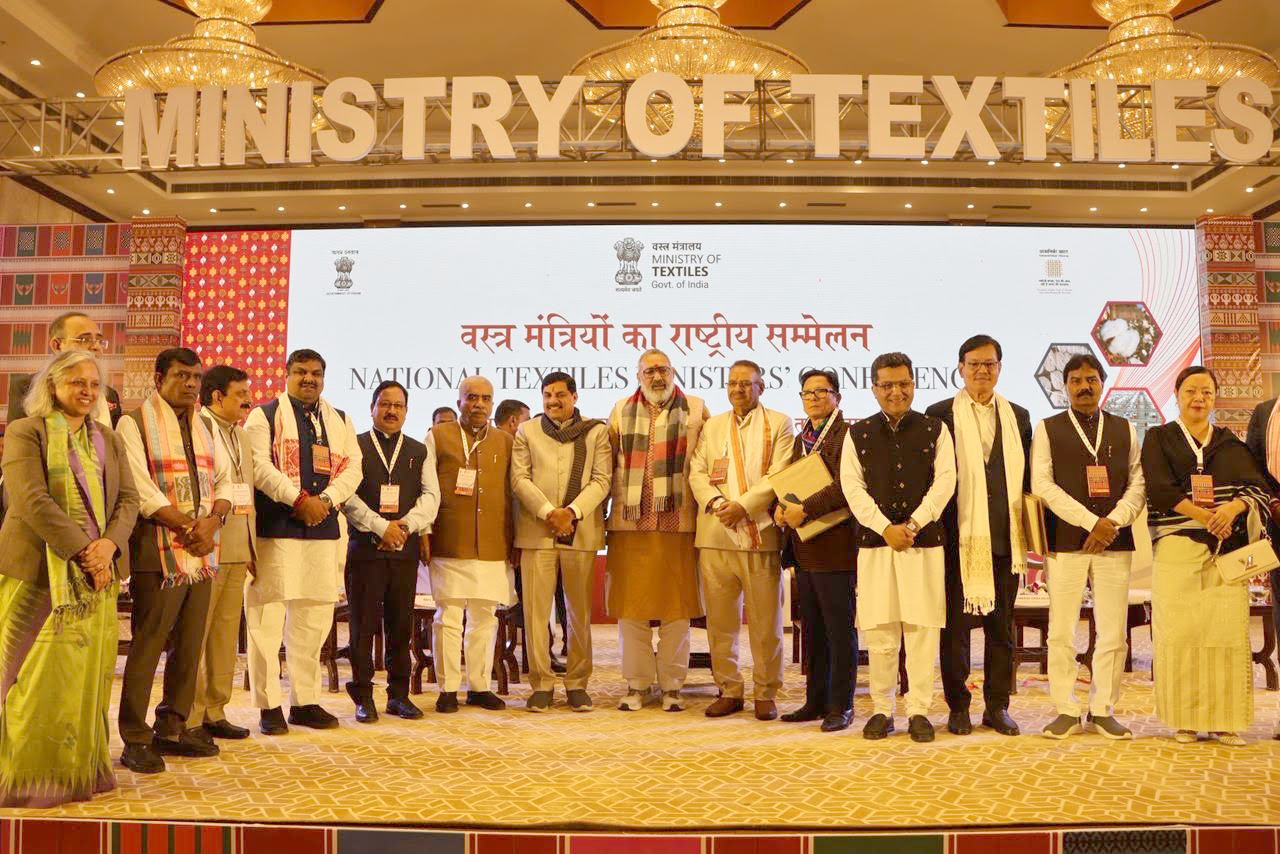
Minister of Women Resource Development of Nagaland, Salhoutuonuo Kruse on Thursday underscored the vast but untapped potentials of Nagaland textile sector, which is deeply rooted in traditional handlooms and handicrafts.
Speaking at the two-day National Textiles Ministers’ conferences in Guwahati, organized by the Ministry of Textiles, Government of India at Guwahati on the theme, “India’s Textiles: Weaving Growth, Heritage & Innovation”, Kruse said that Nagaland’s artisans, particularly from tribal communities, produce unique, eco-friendly weaves using natural fibres like cotton, bamboo and nettle, which align perfectly with global sustainability demands.
However, she lamented that this sector faces significant challenges due to absence of modern infrastructure, limiting the ability to scale production and access winder markets.
In this regard, she urged the Ministry of Textiles to prioritize the establishment of an Integrated Textile Park (ISTP) in Nagaland under the Scheme for Integrated Textile Parks (SITP).
“With no such park currently sanctioned in our state—unlike the 59 parks approved nationwide, including 22 completed ones—Nagaland remains underserved,” she said adding, “An ISTP in Dimapur or Kohima could integrate our handloom clusters with world-class facilities for weaving, dyeing, and finishing, fostering employment for our artisans, mostly women, and attracting high value investments which will be attractive for the Act East Policy and the Asian Markets and beyond which borders our states.”
Affirming that this intervention would drive inclusive growth in the Northeast, she said it would also align with the national goal of enhancing textile exports to $3.10 billion as seen in recent surges.
On infrastructure and investment in this sector, the Minister admitted that Nagaland’s textile sector, which, despite its cultural richness lags in industrial scaling.
“Our handloom output, valued for its artisanal quality, contributes to the Northeast’s emerging hub status as noted in the Rising Northeast 2025 report, but we lack the processing and investment backbone to match national growth projections of 9-10% for textiles in FY26,” she said.
To bridge this gap, Kruse said Nagaland requires focused investments under the PLI Scheme, where its potential in technical textiles from bamboo and natural dyes remains underutilized.
With MoUs signed for Rs. 27,434 crore nationally in 2025, she advocated for ring-fencing funds for Northeast states, enabling Nagaland to attract Rs. 500 crore in private investments for integrated units.
She also requested a joint Ministry of Textiles and Nagaland state task force to map opportunities, fast-track approvals, and pilot sustainable hubs by FY26-27.
This will strengthen resilient supply chains, empower women artisans, and position Nagaland as a model for green textiles in India, she added.
During the second session under the topic of Raw materials – Fibres – Silk, Cotton, Jute, Wool, MMF, the minister highlighted the key strengths of Nagaland such as rich biodiversity supporting natural fibre production, strong women-led artisanal ecosystem, and growing sericulture initiatives promoting employment and sustainability.
She also suggested to enhance support for cotton, Eri – Muga seed production, other indigenous natural fibre plants, host plant cultivation which has tremendous potential for the niche market and modern reeling/processing techniques.
She further urged for promotion of natural dyes in Nagaland with its rich indigenous tradition and bio diversity, eco friendly and sustainable advantage, market demand and premium position of the product.
Suggesting for promotion of value addition, marketing, and GI protection for Nagaland’s natural fibres and silk handlooms, the Minister also encouraged sustainable sourcing and blending of natural fibres to boost economic viability while preserving cultural identity.
She said this would will provide excellent opportunity to Nagaland’s unique contributions to India’s natural fibre landscape and seek targeted interventions for growth.
The Minister was accompanied by Additional Director, Industries & commerce, EE Industries & Commerce, Assistant Director WRD.
Download Nagaland Tribune app on Google Play

Earlier, speaking at the inaugural session, Union Minister for Textiles, Giriraj Singh said that the Union Government is working in a steady and balanced manner to harmonize production, exports, and sustainability in the textile sector. He said that the National Textiles Ministers’ Conference aims to encourage brainstorming, innovation, and idea sharing to help build a strong roadmap for strengthening India’s textile industry.
The Union Minister urged the textile ministers of various states and UTs to formulate investor friendly policies and emphasized the need to attract greater investment in the textile sector at the state level. He expressed hope that the two-day deliberations at the conference would help pave the way forward. Speaking about the Northeastern region, Singh said that the Prime Minister has given the highest priority to the growth and development of the regions and the Government is working tirelessly to strengthen basic infrastructure and accelerate overall development in the Northeast.
The inaugural session was attended by Assam Chief Minister, Himanta Biswa Sarma, and Minister of State for Textiles, Pabitra Margherita, along with other dignitaries.
It also also featured the opening of an Exhibition and Pavilion, showcasing India’s textile strength, innovation, and rich heritage. A report; India’s Textile Atlas: State Compendium 2025, was also released today.
During the day, multiple sessions were held focusing on Infrastructure, Investments Raw materials and fibres including cotton, silk, jute, wool, Technical Textiles and New Age Fibres
Ministers and officials from various States & UTS shared best practices, investment opportunities, challenges and policy suggestions to further strengthen the sector.
The Conference will continue tomorrow with further deliberations on various topics including Exports, Branding, Handlooms and Handicrafts.