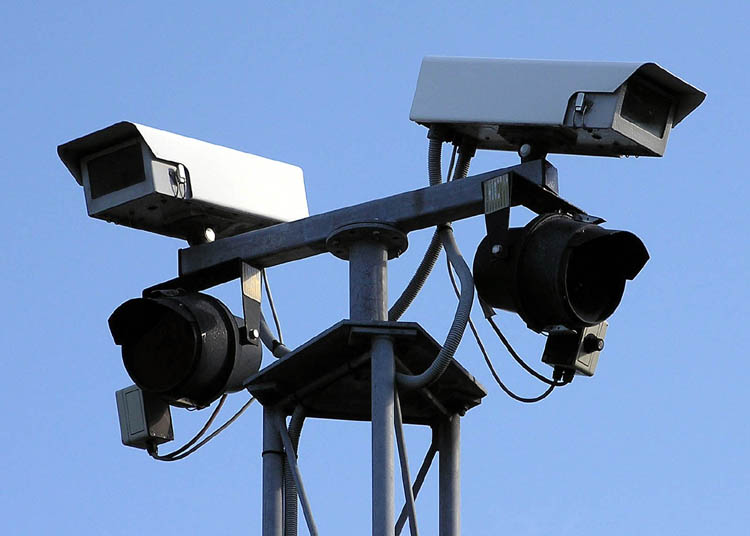
In a major push to strengthen law enforcement and surveillance, Nagaland Director General of Police (DGP) Rupin Sharma on Friday disclosed that the Government of India has approved funding for the installation of a comprehensive CCTV and Automatic Number Plate Recognition (ANPR) camera network across Dimapur and Kohima. The project, initiated at the request of the Nagaland government, is aimed at preventing crime and ensuring swift identification of criminals.
Addressing the media, the DGP said the initiative was taken following a joint request by the Chief Minister, Deputy Chief Minister, the Home Department, and the Police Headquarters (PHQ). He informed that the project would create an almost “carpet network” of surveillance cameras in the two major urban centres of the state.
“We hope that these measures in the next, maybe upcoming 4 to 6 months,” the DGP said, adding this network would significantly help in preventing crimes or at least in catching criminals without any problems.
Responding to concerns about sustainability, Sharma admitted that maintaining such a project would be challenging but said it was a crucial beginning. He appealed to the public to extend cooperation, stating that even small contributions such as providing a power connection or a small space for equipment would go a long way in making the project successful.
“We shall try. ‘Try’ is what we can do. This is a beginning,” the DGP said.
Replying to queries about similar CCTV projects launched earlier in 2016-17 that later became defunct, the DGP explained that the earlier initiative failed due to technical limitations. He said the previous cameras were isolated, lacked a centralized feed, and were not connected to a control room. In contrast, the new project is being developed as an integrated system from the ground up, with centralized control rooms and 24/7 monitoring.
“This time, it is a full-fledged project. We will have proper control rooms with at least 20 to 30 personnel monitoring the system round the clock. Manpower and space are not a problem. The biggest challenge is the running cost,” the DGP said.
Download Nagaland Tribune app on Google Play

To address this, Sharma revealed that the Government of India has agreed to provide internet connectivity for the first year at no cost. He added that discussions are underway with both the state and central governments to support annual running costs, including internet charges, to ensure the project’s long-term sustainability.
Highlighting the advanced features of the system, Sharma said the network would be AI-enabled and could also be used for traffic enforcement through e-challans. He explained that revenue generated from traffic fines could be utilized for maintenance and operational expenses, making the system financially sustainable in the long run.
On the delay in introducing the e-challan system, the DGP said the police department was ready to implement it immediately but was awaiting formal approval from the state government. He disclosed that Nagaland Police had already tied up with a bank that had agreed to provide POS (Point of Sale) machines free of cost, but the project had not moved forward due to administrative delays.
“I am more interested than anyone else in starting the e-challan system because it will help the state generate revenue,” Sharma said, adding that he would once again take up the matter with the government.