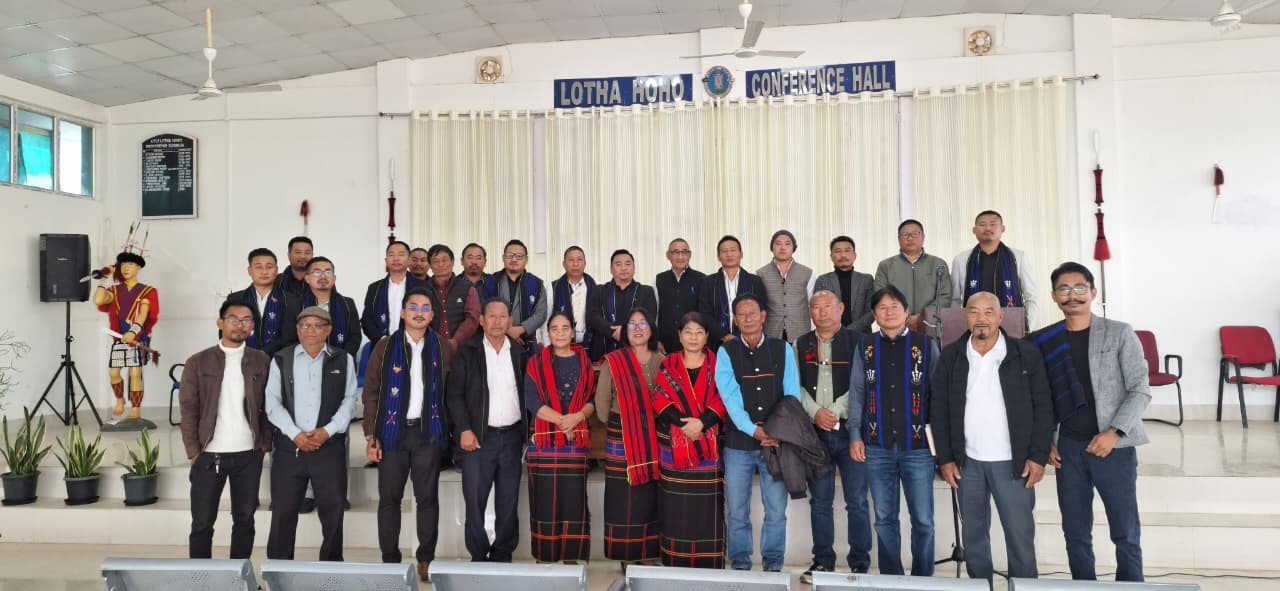
The Naga Students’ Federation (NSF) held a high-level coordination meeting with the Lotha Hoho and its frontal organisations on November 29 at Lotha Hoho Headquarters, Wokha, to discuss strengthening the Inner Line Regulations (ILR) and related concerns.
The meeting laid focus on pressing issues relating to immigration control, safeguarding indigenous identity, and the socio-economic future of Naga youth.
Delivering the keynote address, NSF president Mteisuding Heraang underscored the escalating threat posed by unchecked illegal immigration, warning that continued negligence would endanger opportunities for future Naga generations. He also expressed serious concern over random issuance of Inner Line Permit (ILP), Permanent Residential Certificate (PRC), and trade licences to non-locals, calling it a harmful trend that weakens indigenous rights.
He further encouraged youths to explore business and entrepreneurship in light of limited government job absorption and reminded the federation of its obligation to defend Naga identity, culture, and traditions.
Download Nagaland Tribune app on Google Play

NSF Inner Line Regulation Commission (NSF-ILRC) chairman Sechumo NSN Lotha reaffirmed the need for collective action to safeguard the rights of indigenous citizens. Giving a detailed presentation on ILR sensitization, he reiterated the urgent need for the state government to take serious cognizance of the recommendation submitted by the NSF. Some of the recommendations including establishment of ILP checkpoints at Dimapur Airport and Dimapur Railway Station, which remained major entry points for non-indigenous individual entering the state.
Lotha Hoho president Mhondamo Ovung in his address stressed that poor enforcement and inadequate monitoring have intensified illegal immigration. He urged authorities to reflect on why outsiders continue to enter the state and questioned whether the local workforce is fully utilizing opportunities in trade and labour. He also cautioned that railway connectivity may accelerate immigrant inflow if proper mechanisms are not put in place.
Lotha Eloe Hoho president Thungbeni Ngullie pledged full support to the NSF and ILRC movement, emphasizing that women’s participation is crucial for long-term community awareness. She urged the district administration to collaborate closely with civil society and proposed a dedicated sensitization programme for women.
A serious concern was highlighted by Lotha Youth Hoho president Limhathung Yanthan revealing that nearly 70–80% of business establishments in Wokha are operated by non-locals. Yanthan, expressed unwavering support for the NSF-led campaign and warned against the misuse of “local guarantors,” which has now become a commercial practice and poses severe risks to Naga society.
President Lotha Students’ Union (LSU) Lirhonthung Kithan assured full cooperation in enforcement activities and reiterated their commitment to assisting the federation. The LSU leaders pointed out that non-locals often enter Nagaland without prior ILP due to the absence of border checkpoints, later obtaining ILP from district offices—an unsafe and improper practice. They recommended establishing ILP counters at all major entry points and noted that some outsiders acquire ILP passes in bulk to exploit the system.
The LSU reported that during recent ILP checking, several individuals were turned back for lacking valid ILP, yet the same persons later re-entered through Dimapur with illegally obtained pass—revealing serious gaps in enforcement and coordination.
All organizations present reaffirmed their shared responsibility to protect Naga identity and ensure a secure future for the younger generation. The meeting resolved to intensify cooperation, pursue stronger enforcement mechanisms, and uphold the dignity, culture, and rights of the Naga people.
Senior leaders including NESO secretary general and former president NSF Mutsikhoyo Yhobu, and former NSF president Ninoto Awomi also joined the deliberation, adding their insight and experience.