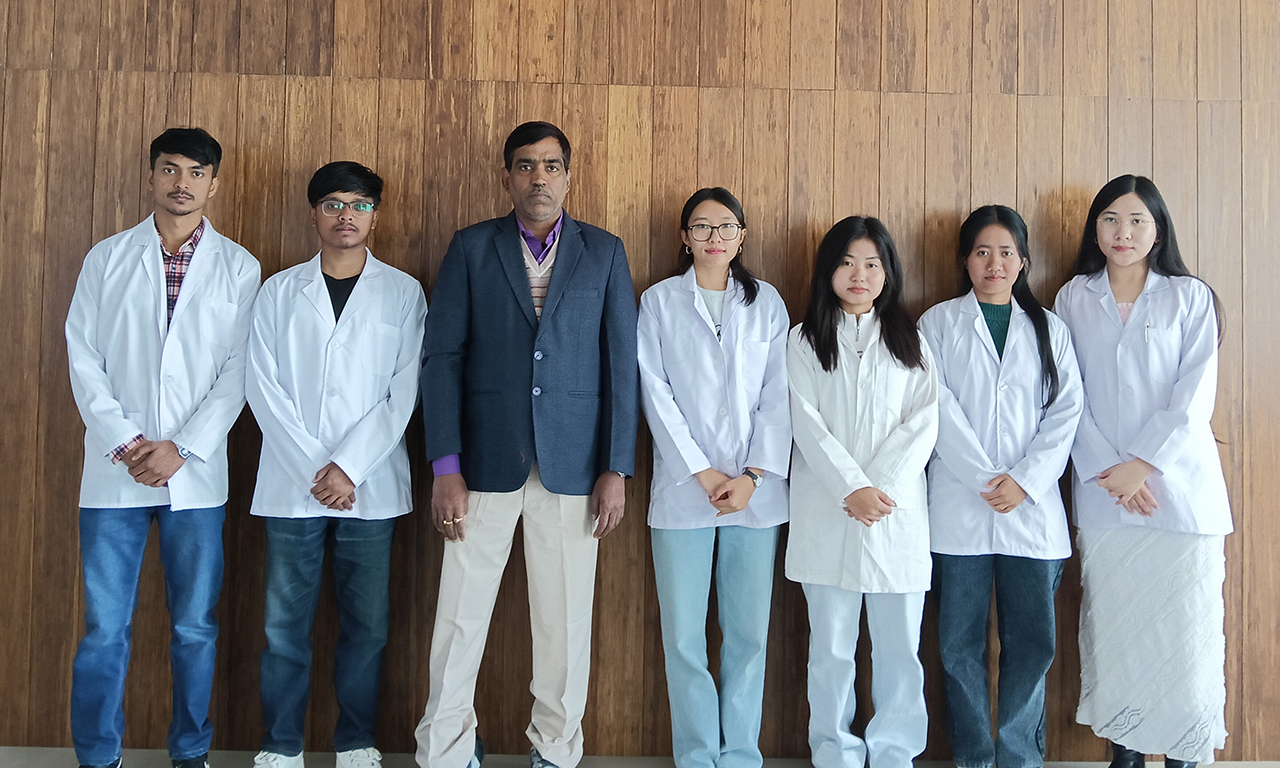
A research team lead by Nagaland University along with leading National research institutions, have published an in-depth review paper analysing the role of the tumour microenvironment in breast cancer initiation and metastasis. The review placed a special emphasis on immune cell behaviour and therapeutic implications.
Breast cancer continues to be the most frequently diagnosed cancer among women globally and contributes to nearly 15% of cancer-related deaths in females, underscoring the urgent need for improved mechanistic understanding and more effective therapeutic strategies.
The study focused on tumour microenvironment, a dynamic cellular ecosystem that plays a decisive role in cancer progression. In particular, researchers examined tumor-associated macrophages, key immune cells that can either suppress or promote tumour growth depending on micro-environmental cues.
While macrophages typically function in immune surveillance and phagocytosis, the study highlights how their polarization toward the M2 phenotype can facilitate tumour survival, angiogenesis, tissue remodelling, invasion, and distant metastasis.
The study was lead under Prof Ranjit Kumar and Dr Pranay Punj Pankaj, Department of Zoology, Nagaland University and Alisha Sinha, Department of Biotechnology, Banasthali University. The Research Team published a review paper in Breast Global Journal (DOI: 10.4103/bgj.bgj_22_24), an international, peer-reviewed platform that publishes cutting-edge research and clinical insights to advance breast health, oncology, and multidisciplinary care worldwide.
Lauding the research team for studying a public health issue of vital importance, Vice Chancellor, Nagaland University, Prof Jagadish Kumar Patnaik said the achievement reflects the growing research strength of the University and their commitment to impactful, interdisciplinary scholarship.
He expressed delight to note that researchers from Nagaland University, in collaboration with Banasthali University, have co-authored an international review on immune-driven pathways in breast cancer metastasis. Such work not only enhances our global academic presence but also contributes meaningfully to advancing knowledge in cancer biology and public health, he added.
By systematically evaluating existing global literature, the study explains how invasive breast cancer cells manipulate macrophage behaviour through cytokine and chemokine signalling pathways, including colony-stimulating factor-mediated activation.
Elaborating on the technical aspects of this research, Alisha Sinha, Department of Biotechnology, Banasthali University said, “This signalling cascade promotes M2 macrophage differentiation, leading to reduced tumour cell clearance and enhanced tumour-supportive functions. The review identifies these immune-modulatory pathways as critical intervention points for future therapeutic development.”
The publication reinforces Nagaland University’s commitment to impactful, application-oriented biomedical research and its growing role in advancing collaborative cancer research of national and global significance
Prof Ranjit Kumar, Department of Zoology, Nagaland University highlighted the practical applications of this study and said, “The findings have strong end-application potential. The downregulation or reprogramming of M2 macrophage differentiation could emerge as a viable strategy for reducing breast cancer progression and metastasis”.
Such approaches may support the development of targeted immunotherapies that complement existing treatment modalities, offering more precise and less toxic options for patients,” he added.
Dr Pranay Punj Pankaj, also from the Department of Zoology, Nagaland University, added, “Our study also outlines future research directions aimed at translating these biological insights into clinical solutions. These include identifying molecular markers for macrophage polarization, developing therapeutic agents that inhibit tumour-promoting immune signals, and designing diagnostic tools to assess tumour microenvironment profiles for personalised treatment planning.”
Beyond this study, the collaborative research team is actively engaged in broader cancer research initiatives, including the identification of cancer risk factors and causative agents, and the development of cervical cancer biomarkers. Ongoing work spans dietary carcinogens, environmental toxicants, hormonal dysregulation, circadian rhythm disturbances, gut microbiota modulation, and gene expression alterations.
The team employs integrated in vitro cell culture studies, in vivo animal models, and epidemiological approaches to strengthen translational relevance and support the development of economical and accessible cancer therapeutics.