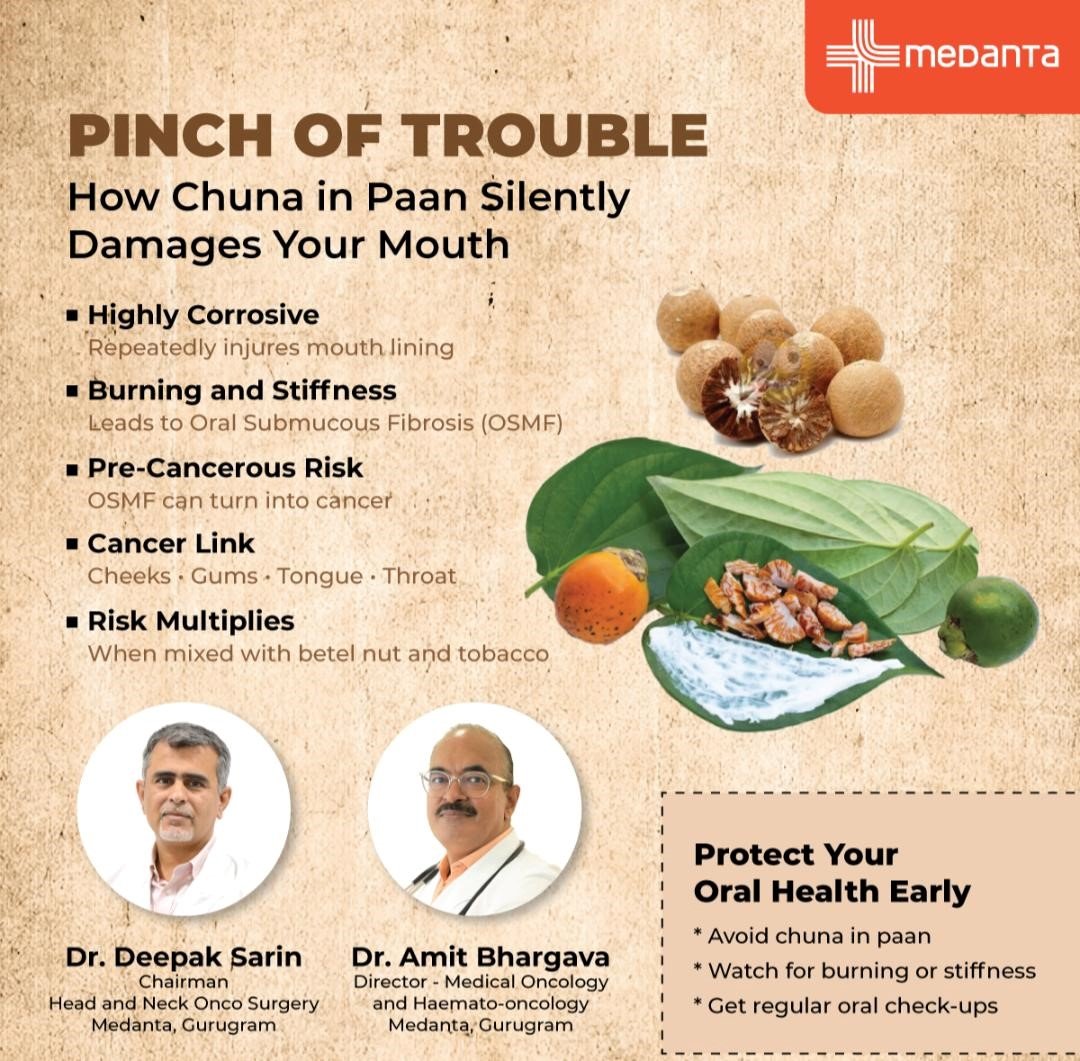
In Nagaland, chewing paan mixed with chuna (slaked lime) is a common and culturally accepted habit. However, it carries serious health risks that are often underestimated.
Chuna is highly alkaline, meaning it is very harsh and corrosive. When used daily, it repeatedly injures the soft lining inside the mouth, leading to repeated small cuts inside the mouth. Once the lining is damaged, harmful substances can enter more easily, and over time, this repeated damage weakens the mouth’s natural protection, increasing the risk of disease, including cancer.
This is especially worrying given Nagaland’s cancer burden. Tobacco use is linked to more than one-third of all cancers among men and over one in ten cancers among women in the state. When chuna is used along with betel nut and sometimes tobacco, the risk rises sharply. This combination can lead to a constant burning sensation in the mouth. Many people also find it hard to open their mouth, and struggle with eating, speaking, or even swallowing food properly – all symptoms of a condition called oral submucous fibrosis, or OSMF, in which the tissues inside the mouth slowly become stiff and tight. OSMF cannot be cured and worsens over time. Importantly, OSMF is a pre-cancerous condition, meaning it can later turn into mouth cancer.
Betel nut itself is a major health hazard. Classified as a Group 1 carcinogen, the nut (also known as areca nut) contains chemicals that irritate and damage the mouth from the inside. With regular chewing, the mouth becomes repeatedly inflamed, and the tissues slowly harden and lose flexibility, and can lead to OSMF.
Download Nagaland Tribune app on Google Play

In addition, betel nut over time can also damage the body’s DNA, which further increases the risk of cancer. When betel nut is mixed with chuna, the damage becomes even worse because chuna allows these harmful chemicals to penetrate deeper into already injured tissues.
Long-term use of paan with chuna is linked to cancers of the cheeks, gums, tongue, and throat. These cancers are often detected late because early warning signs are ignored or not recognized. Other common problems include gradual damage of teeth, along with gum disease and mouth ulcers. Most people start chuna early in life – usually adolescence – and its daily use compounds these harms over years, silently increasing lifelong health risks.
From a medical point of view, paan with chuna is not a harmless habit. Cutting down or stopping chuna use, preventing children and adolescents from starting early, and encouraging regular mouth check-ups can help prevent a large number of avoidable illnesses and cancers.
Dr. Deepak Sarin, Chairman, Head & Neck Cancer, Medanta
Dr. Amit Bhargava, Director, Medical Oncology, Cancer Care at Medanta