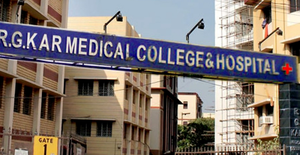
The Enforcement Directorate (ED), on Friday, filed its chargesheet at a special court of the Prevention of Money Laundering Act (PMLA) in Kolkata on the multi-crore financial irregularities case at state-run R.G. Kar Medical College and Hospital in Kolkata, infamous over the ghastly rape and murder of a junior woman doctor on the hospital premises.
The ED and Central Bureau of Investigation (CBI) had been conducting parallel probes in the R.G. Kar financial irregularities case. The CBI also conducted a parallel probe into the “larger conspiracy” behind the rape and murder case.
While CBI had already filed its chargesheet in the financial irregularities case earlier, the ED had filed its first chargesheet on Friday.
Like CBI, the ED had also named the former and controversial principal of R.G. Kar, Sandip Ghosh, as the main accused in the financial irregularities.
Download Nagaland Tribune app on Google Play

In its chargesheet, the ED also named two private vendors, namely Biplab Sinha and Suman Hazra, as the accused beneficiaries in the case.
At the same time, Hazra Medical, the agency supplying medicines and medical equipment to R.G. Kar, had also been named in the chargesheet from ED, the investigation arm of the Union Ministry of Finance.
The main charges in the financial irregularities case at R.G. Kar include manipulation of the tendering process, awarding infrastructure contracts to private agencies while bypassing the state Public Works Department, and selling organs from unidentified bodies meant for autopsy.
In the CBI chargesheet filed earlier, the central investigating agency officials highlighted a significant and rapid increase in the assets and properties of the accused, particularly Ghosh, following his appointment as principal of R.G. Kar Medical College. CBI also identified him as the mastermind behind the alleged scam.
In its chargesheet, CBI gave the details of how Ghosh benefited financially from selling organs from unidentified bodies coming to the R.G. Kar morgue for autopsy. Investigators found that from 2021, an average of 60 bodies per financial year had gone unaccounted for.
Even the West Bengal Human Rights Commission (WBHRC) described this offence as one of the most quirky crimes.