
The National Informatics Centre (NIC), Kohima organized a district-level Awareness Campaign on the occasion of Safer Internet Day at the Conference Hall of the Deputy Commissioner’s Office, Kohima. The programme was organized on the theme “Smart Tech, Safe Choices – Exploring Safe and Responsible Use of AI.”
In her address, EAC Kohima, Imtiyenla K stated that Safer Internet Day is celebrated globally on the second Tuesday of February and highlighted the importance of the internet as a powerful tool that bridges communication enables access to information, education, healthcare and entrepreneurship.
She cautioned that while the internet offers immense opportunities, it also harbours risks such as cyberbullying, misinformation, deepfakes and online fraud. She stressed that digital illiteracy remains a major challenge and underscored the need for proper training and responsible use of technology, especially artificial intelligence in daily life.
District Informatics Officer, NIC Kohima District Centre, Temsunaro, welcomed the participants and highlighted the growing number of cyber fraud cases, stating that scammers often exploit human greed and lack of awareness. She emphasized that the key focus of the campaign was to create awareness on safe, smart and responsible use of the internet and emerging technologies.
A detailed presentation was delivered by Sozenlo Tep, Network Field Engineer, NIC, who explained that Safer Internet Day is observed worldwide to sensitise users on safe and responsible use of the internet and AI, promote cyber hygiene practices, and educate users about major cyber threats and their mitigation. He informed that the Ministry of Electronics and Information Technology (MeitY) is observing a nationwide awareness campaign on 10th February 2026 under the aegis of the Information Security Education and Awareness (ISEA) Project, in collaboration with NIC and other agencies.
During the presentation, participants were briefed on the concept of the internet, its role in daily life, advantages and associated risks such as addiction, mental health issues, cyber bullying, misinformation, online scams and privacy concerns. Various cyber threats including phishing, OTP and UPI fraud, fake customer care scams, malware and spyware attacks, remote access scams, deepfake and AI voice frauds, social media account hacking, online shopping scams and digital arrest scams were explained in detail.
The resource person emphasized that no government agency arrests or investigates individuals through video or voice calls or demands money online, and urged participants not to panic and to verify information before acting. He highlighted the importance of cyber hygiene, use of strong and unique passwords, two-factor authentication, cautious use of public Wi-Fi, and installation of apps only from trusted sources.
The session also highlighted the positive role of artificial intelligence in healthcare, education, safety, efficiency, environment monitoring and digital services, while cautioning against misuse, privacy concerns, misinformation and bias. Participants were advised on fact-checking AI-generated content and responsible sharing of information online.
The programme concluded with information on reporting cybercrimes through the National Cyber Crime Helpline number 1930 or by filing complaints on the National Cyber Crime Reporting Portal at cybercrime.gov.in, or at the nearest police station.
Dimapur:
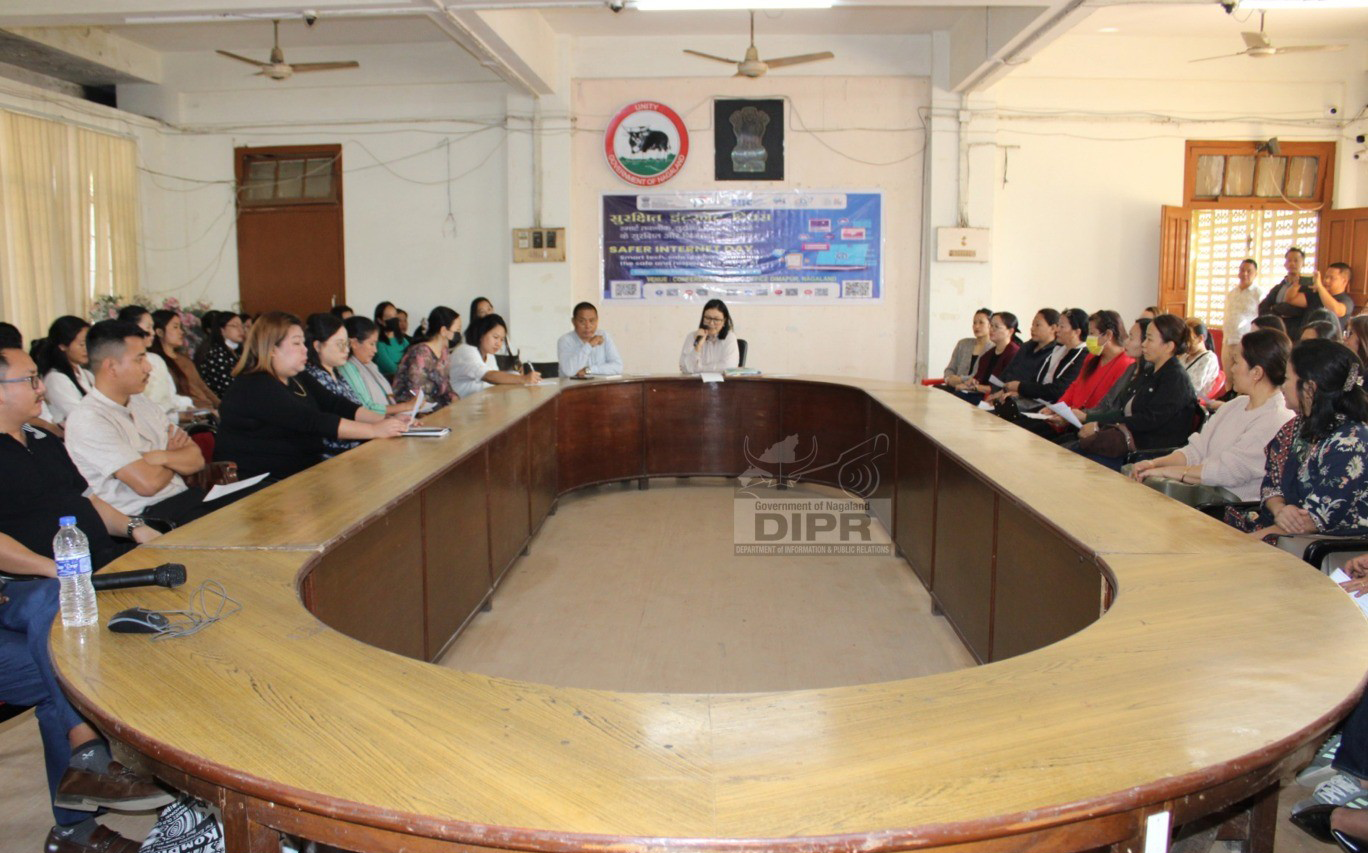
With the observance of Safer Internet Day 2026, the Office of the Deputy Commissioner, Dimapur organized a district-level awareness programme and workshop focusing on the safe and responsible use of the internet and Artificial Intelligence (AI) on February 10 at DC’s Conference Hall, Dimapur.
The programme was organized in line with the initiative of the Ministry of Electronics and Information Technology (MeitY), Government of India on the theme “Smart Tech, Safe Choices – Exploring the Safe and Responsible Use of AI.” Safer Internet Day is observed globally on the second Tuesday of February every year to raise awareness on safe and responsible internet use, particularly among children, women, and young people. The campaign aims to educate users on safe online practices, cyber hygiene, major cyber threats, and mitigation strategies, while promoting responsible use of internet and AI technologies.
ADIO (NIC), Dimapur, Kamal Chetri in his introductory remarks said that under the theme “Smart Technology, Safe Choices”, the programme aimed at promoting the safe and responsible use of Artificial Intelligence (AI). He stated that AI has become an integral part of daily life, influencing activities such as online shopping, video recommendations, advertisements and learning platforms.
He informed that Internet Day is observed every year in February on the first Tuesday, with this year’s observance focusing on women, youth and workplaces. While highlighting the benefits of AI, he cautioned about the growing risks of misuse, noting that AI-generated fake videos and voice calls have made it difficult to distinguish between real and fake content. Emphasizing ethical use, he urged participants to protect personal data and stressed that despite technological advancements, human judgment remains essential.
EAC (Dev), Dimapur, Imlijungla Lemtur, in her keynote address said that under the theme “Smart Technology, Safe Choices”, the programme focused on promoting the safe, confident, and responsible use of Artificial Intelligence (AI). She highlighted that AI, under the sphere of electronics and information technology, has rapidly become an integral part of everyday life and is now present in almost every aspect of human activity. While pointing out the immense benefits of AI, she cautioned that the risks associated with its misuse are equally significant.
Download Nagaland Tribune app on Google Play

She noted that it has become increasingly difficult to distinguish between real and fake content, including videos and voice calls, as AI can now replicate human voices and create highly realistic fake media. She also mentioned that even music and tunes are now being generated using AI technology.
Lemtur stressed the need to leverage AI responsibly, stating that basic knowledge of AI tools can help improve efficiency and save time in the workplace. However, she cautioned against replacing human judgment and critical thinking with technology. She urged participants to remain mindful of the personal and sensitive data they share online, reiterating that technology must always be guided by ethical and responsible use. She concluded by emphasizing that despite technological advancements, human judgment remains crucial.
PowerPoint presentation was presented by ADIO (NIC), Chumoukedima, Vicky Kumar Sharma, & DIA (NIC), Dimapur, T Thongtsali Sangtam, where they highlighted various aspects of exploring the safe and responsible use of safer tech. The session focused on phishing attempts carried out through SMS, email and WhatsApp, warning users against fake messages that appear official and urge recipients to click on suspicious links. The participants were informed that the primary objective of phishing attacks is to steal sensitive information such as passwords, banking credentials and card details.
Common warning signs highlighted included urgent or threatening language, unfamiliar links and spelling or grammatical errors in messages. Citizens were advised to verify information only through official websites or applications and avoid clicking on unknown links.
During the presentation, it also showcased the Government of India’s Sanchar Saathi portal, a citizen-centric platform offering services such as reporting suspected fraud communications, blocking lost or stolen mobile phones, verifying mobile connections, and checking international incoming calls with Indian numbers. Participants were further informed about the mechanisms available to report cybercrime. Victims or suspected cases can register complaints by calling the national cybercrime helpline number 1930, filing complaints online through www.cybercrime.gov.in, or approaching the nearest police station.
The program concluded with a pledge and an awareness initiative emphasizing the importance of digital vigilance, encouraging citizens to stay informed and proactive to protect themselves against cyber threats.
Zunheboto:
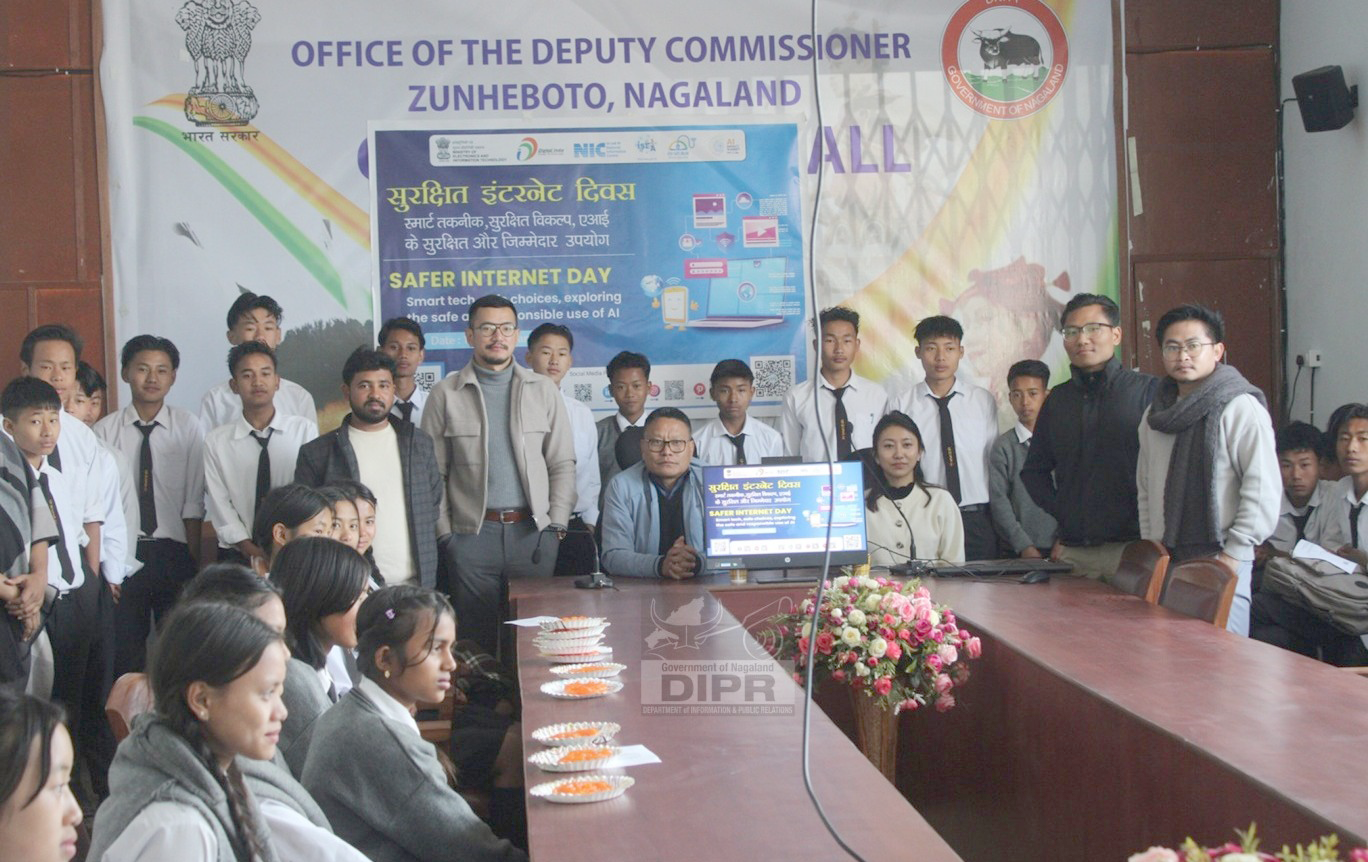
Zunheboto observed Safer Internet Day 2026 on February 10 at DC’s Conference Hall, with a focus on promoting safe, responsible, and informed use of digital technologies and artificial intelligence.
The programme was held on the theme “Smart Tech, Safe Choices: Exploring the Safe and Responsible Use of AI.” The event aims to raise awareness on digital safety, ethical use of technology, and cyber responsibility among stakeholders.
The programme began with welcome address by the Chairperson, Dr L Chuchong Noklang, EAC followed by an address by the Chief Guest.
Additional Deputy Commissioner, Zunheboto, Tiameren Chang shared insights on the importance of internet safety and responsible digital practices. Addressing the programme on the observance of Safer Internet Day, ADC also stated that the event is observed every year to create awareness on the safe and responsible use of the internet and emerging technologies.
Highlighting that society is now living in the era of Artificial Intelligence, the ADC emphasized that people should use AI wisely rather than be controlled or misled by it. He cautioned participants not to depend blindly on AI and reminded them that human judgment and responsibility must always remain paramount.
Speaking on the impact of the internet, Chang noted that Naga society was once unfamiliar with many external influences, but with the advent of the internet, both positive and negative effects have emerged. While the internet has opened doors to knowledge and connectivity, it has also brought challenges and risks.
He stressed the importance of understanding how to use the internet responsibly, urging citizens especially the younger generation not to misuse digital platforms and artificial intelligence. He called for ethical and mindful use of technology to ensure that it contributes positively to society rather than causing harm.
A presentation on Safer Internet Day was delivered by DIO, NIC, Zunheboto, Himanshu Ranjan, who highlighted the key aspects of online safety and the evolving role of artificial intelligence. The programme concluded with a vote of thanks by Octoli Chischi, DRM, NIC, Zunheboto.
The observance is expected to encourage greater awareness and dialogue on creating a safer and more responsible digital environment in the district.