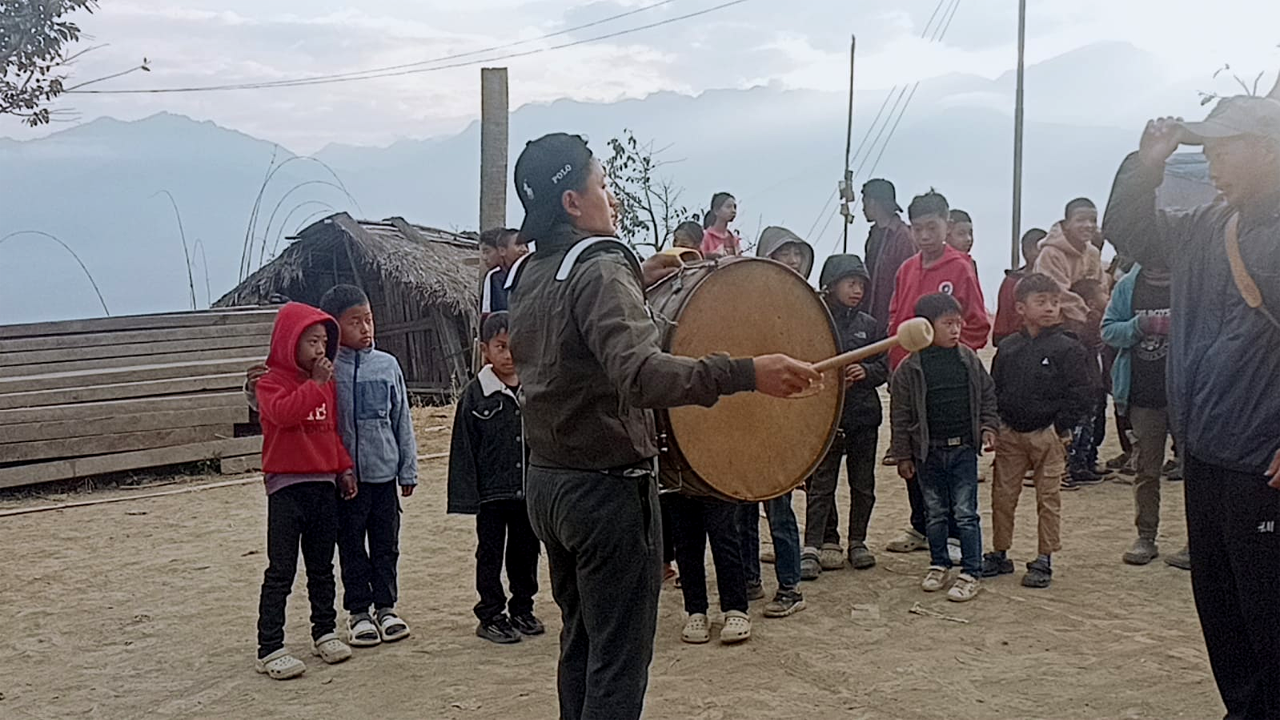
On Christmas morning, as early as the cock crows, the beat of drums rises from the church compound, echoing through every nook and corner of the village. In the stillness of the cold morning, the sound stirs children from their sleep. Barely washing their faces, they rush to the church premises, hearts filled with joy and excitement. The choir master, along with the youths, begins singing Christmas hymns as they wait for the children to gather—all set to go around for carol.
Baptist Church Thang, Noklak Village, continues the practice of caroling every Christmas igniting the living spirit of Christmas in the hearts of the people. With drums beating and voices raised in Christmas hymns, the carol group moves from doorstep to doorstep, proclaiming to every household: “Christ is born, Merry Christmas!” A long line of youths and children follows the procession.
As the spirit of carol rings through the village, people step out of their homes to watch. Many cheerful givers offer whatever they can—cash, grains, vegetables, fruits— much like the Magi bringing gifts to Christ at His birth in Bethlehem.
Acknowledging the givers, they continue to express their joy,” Hip Hip-Hurrey!!”
Download Nagaland Tribune app on Google Play

After completing the rounds, the carol group returns to the church for thanksgiving. Everything received is offered as a Christmas offering to the church, symbolizing gratitude, sharing, and unity.
Carol is not merely about going around singing out of excitement or tradition. Its true meaning lies in proclaiming the birth of Jesus Christ and sharing a message of hope, peace, and joy through song.
Looking back, caroling was once practiced in every village and town. For various reasons, it has now become as rare as it can be. Today, it often survives only as stories told by elders to their children—memories of Christmas nights filled with song and togetherness. Their baskets would be filled with edibles from the field harvest. Cash was rare, they say.
In a world growing increasingly individualistic, caroling reminds communities of togetherness, generosity, and shared faith. It connects generations—children learning from elders, youths leading with responsibility, and families opening their doors in joy. More than a tradition, caroling is a living proclamation of the Gospel, reminding people that Christmas is not about celebration alone, but about Christ, whose birth brought hope to the world. Preserving carol is preserving a heritage of faith, unity, and love that future generations deserve to experience—not just hear about.
To the reader, Should Carol be brought back?