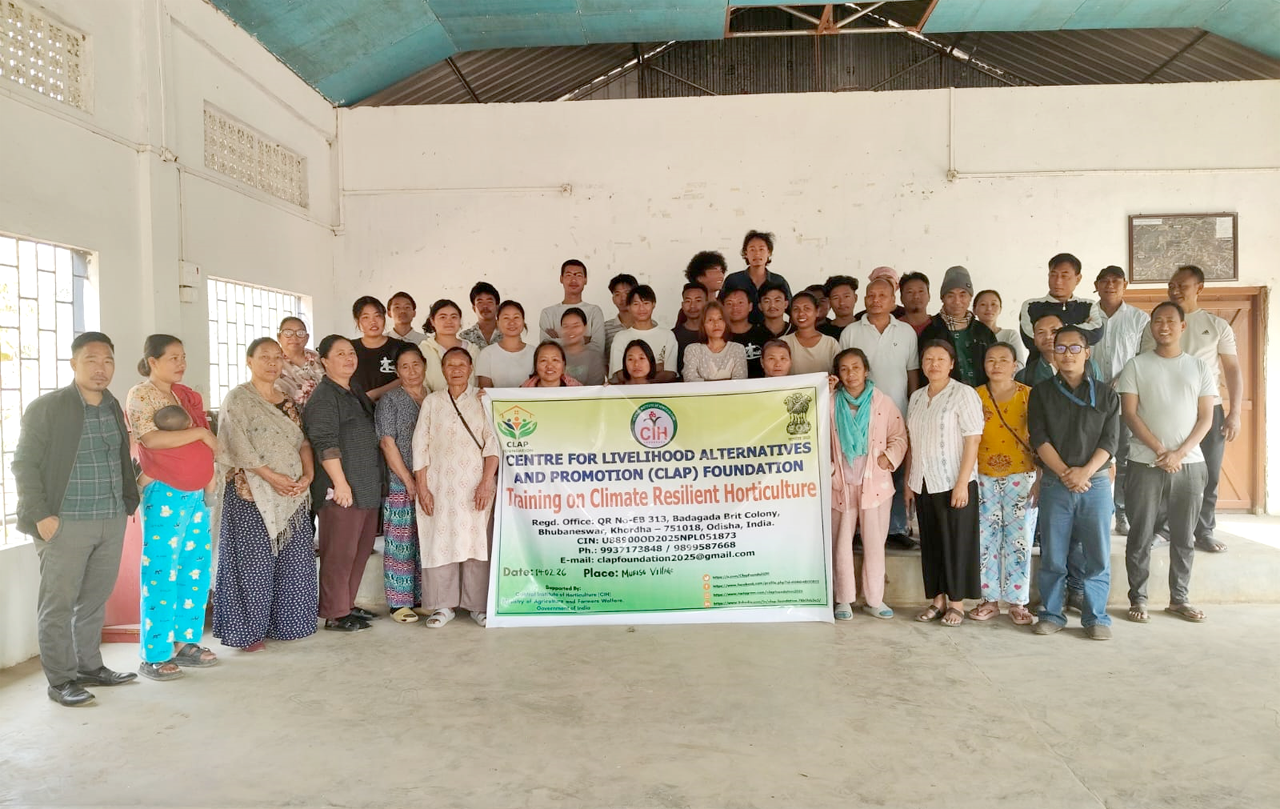
The Centre for Livelihood Alternatives and Promotion Foundation (CLAP Foundation), a national-level organization, is working with the mission to promote sustainable climate- resilient agriculture, diversified livelihoods and entrepreneurship. The CLAP Foundation provides technical support, promotes digitalization, strengthens market linkages and works towards empowering community institutions and local governance systems.
A one-day training programme on “Climate Resilient Horticulture (CRH) in Nagaland” was successfully organized on February 14 at Murise Village, Dhansiripar RD Block, Dimapur District, Nagaland. The programme is supported by the Central Institute of Horticulture (CIH), Dimapur, Nagaland with the objective of enhancing farmers’ capacity to adapt horticultural practices on view of changing climatic conditions.
The training focused on practical approaches to climate-resilient horticulture including improved crop management practices, efficient water use, soil health management and the adoption of climate-smart technologies to minimize risks posed by erratic rainfall, temperature variations and extreme weather conditions. Special emphasis was given to the effects of climate change on horticulture crops, mitigation mechanisms, changes in package of practices and crop diversification as adaptive strategies. A total of 50 farmers from Dhansiripar Block participated in the programme. Local farmers actively engaged in discussions and shared their field-level experiences, making the session highly interactive and relevant.
Download Nagaland Tribune app on Google Play

The sessions were facilitated by experienced resource persons, Samsing Taro, Officer in-Charge, Spice Board of India, Dimapur and Ariba Anar, State Co-ordinator, NERAC, Ministry of DoNER, North-Eastern Council. They shared valuable field-based experiences, successful case studies, and practical insights to support the effective implementation of CRH models.
The training programme contributed on building awareness and practical skills among farmers, enabling them to enhance productivity, strengthen resilience and improve livelihood security in the face of climate change.