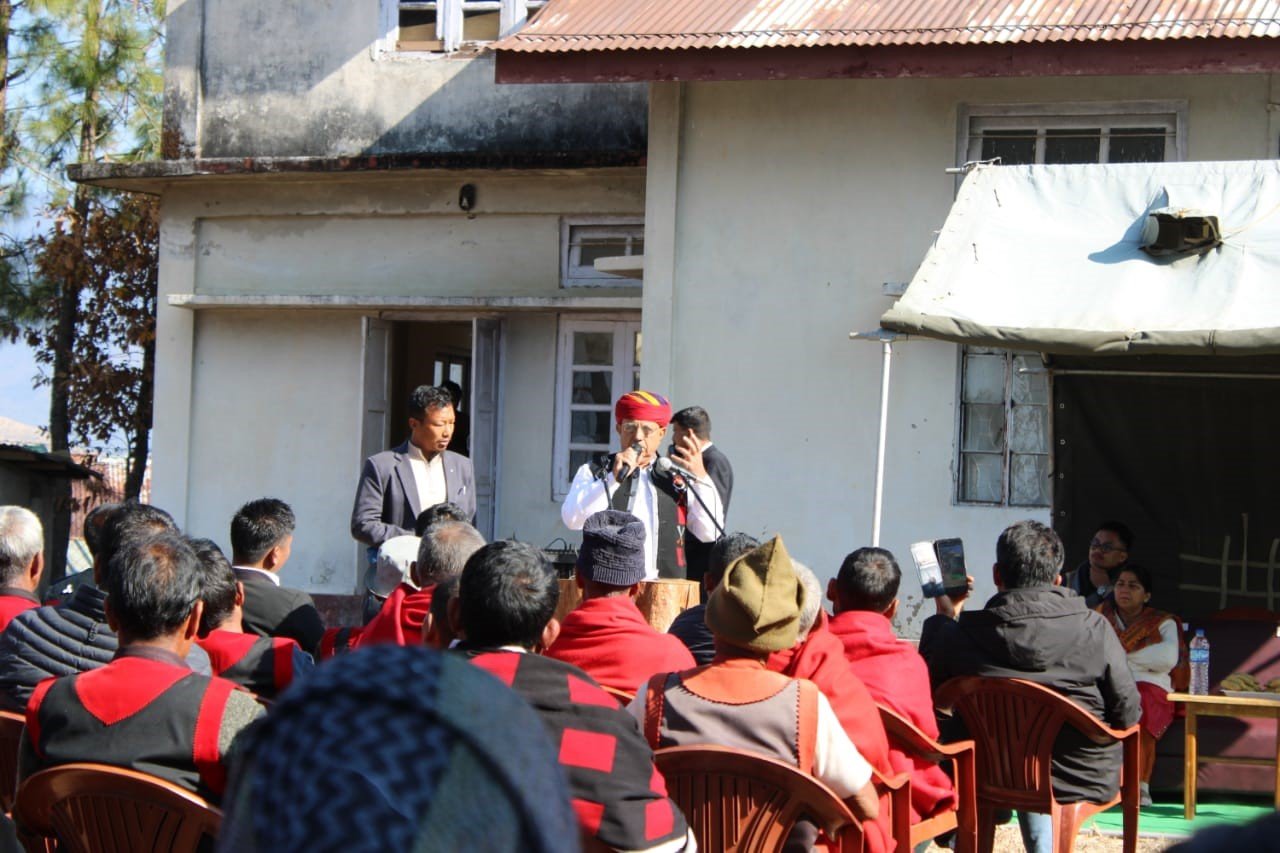
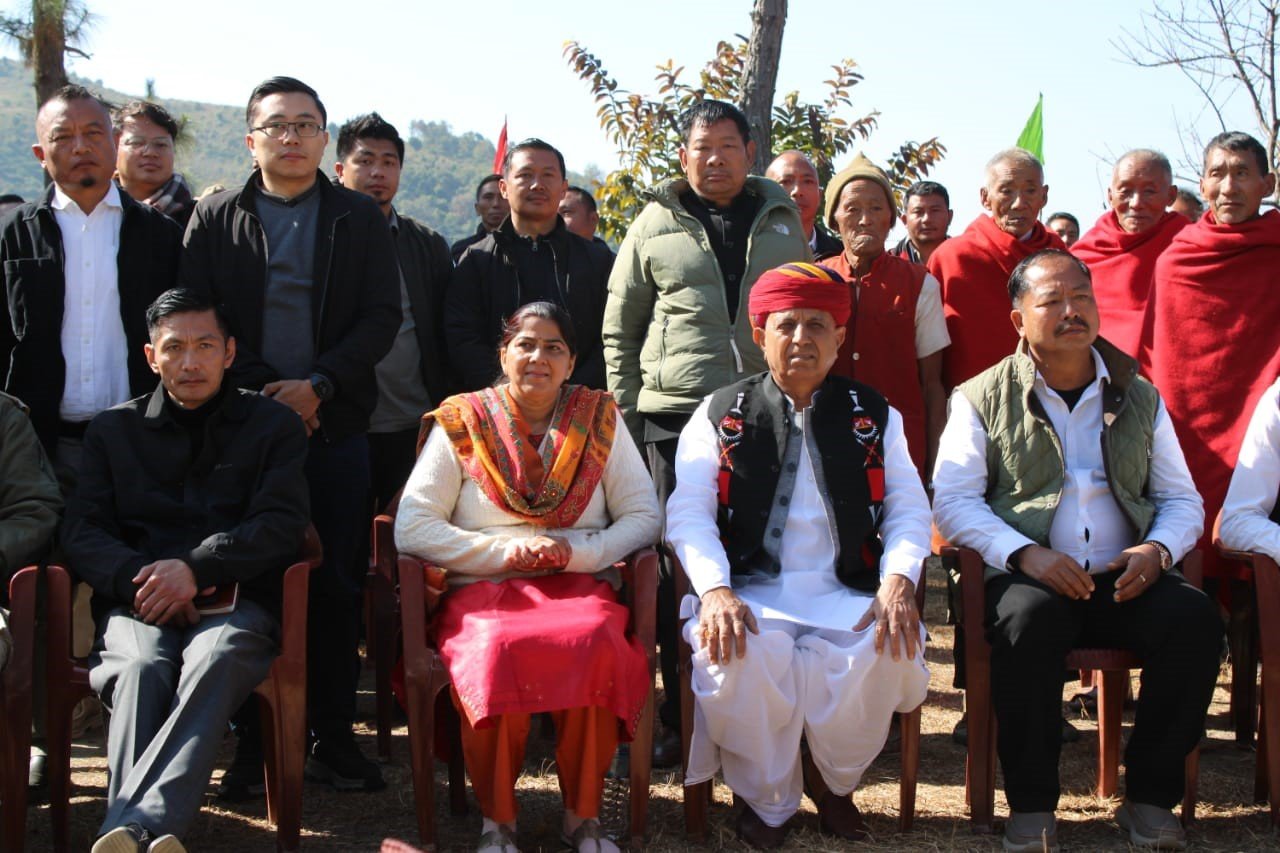
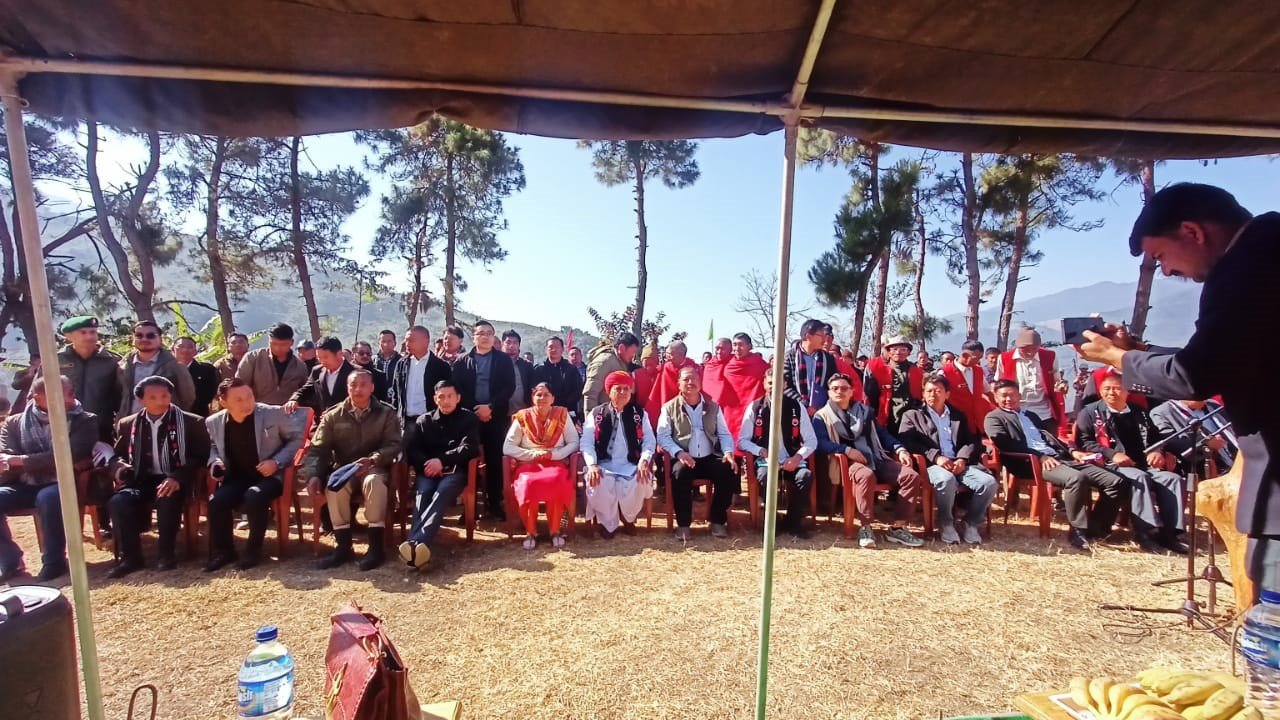
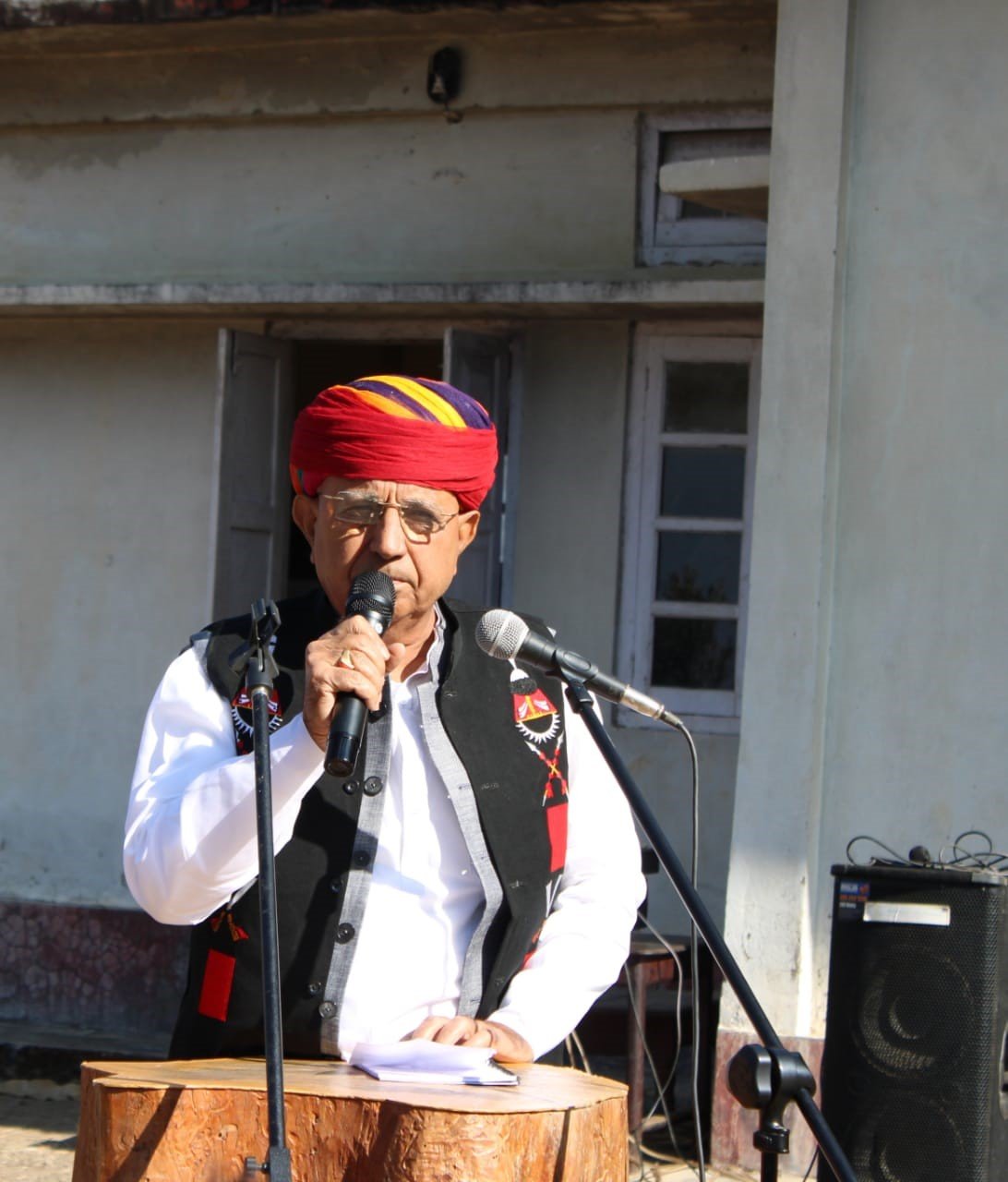
Union Minister of State for Agriculture and Farmers’ Welfare, Bhagirath Choudhary, visited New Pangsha village on January 18 as part of the fortnightly visit of Union Ministers to the North Eastern Region.
During the visit, representatives of the Pangsha Public Organisation highlighted the historical courage and loyalty of the Pangsha community towards the Indian Union. They recalled that in 1957, during a period of unrest, the Pangsha people extended significant cooperation in the interest of national unity. In recognition of their bravery and self-sacrifice, the Pangsha community was honoured with the Ashoka Chakra Award, India’s highest peacetime gallantry award, presented on March 24, 1965, by the then Home Secretary Vaidya Kuntibia.
The organisation informed that following this recognition, the Village Guard system was established in Nagaland, with members of the Pangsha community serving with dedication over the years. Despite performing duties comparable to other uniformed personnel, village guards continue to receive meagre honorariums. The organisation urged the Central Government to enhance their honorarium in line with their responsibilities and sacrifices.
Download Nagaland Tribune app on Google Play

The representatives also raised concerns regarding agricultural challenges, stating that the majority of the population depends on farming for livelihood. Poor road connectivity, lack of developmental support, and absence of modern agricultural machinery have resulted in low productivity, with cultivation still largely dependent on traditional methods. They appealed for improved connectivity, agricultural infrastructure, and access to modern farming equipment.
Addressing Indo-Myanmar border concerns, the Pangsha Public Organisation stated that the Pangsha people share ancestral, cultural, and blood ties with Naga communities across the border.
They claimed that nearly 3,500 hectares of ancestral Pangsha land currently falls under Myanmar due to boundary demarcation carried out in the early 1970s without the consent of the native people. The organisation opposed any move to construct border fencing across their ancestral land, stating that it would divide land, disrupt livelihoods, and fracture traditional bonds. They appealed to the Government of India to respect their sentiments, customary rights, and ancestral identity to ensure peace and unity in the region.