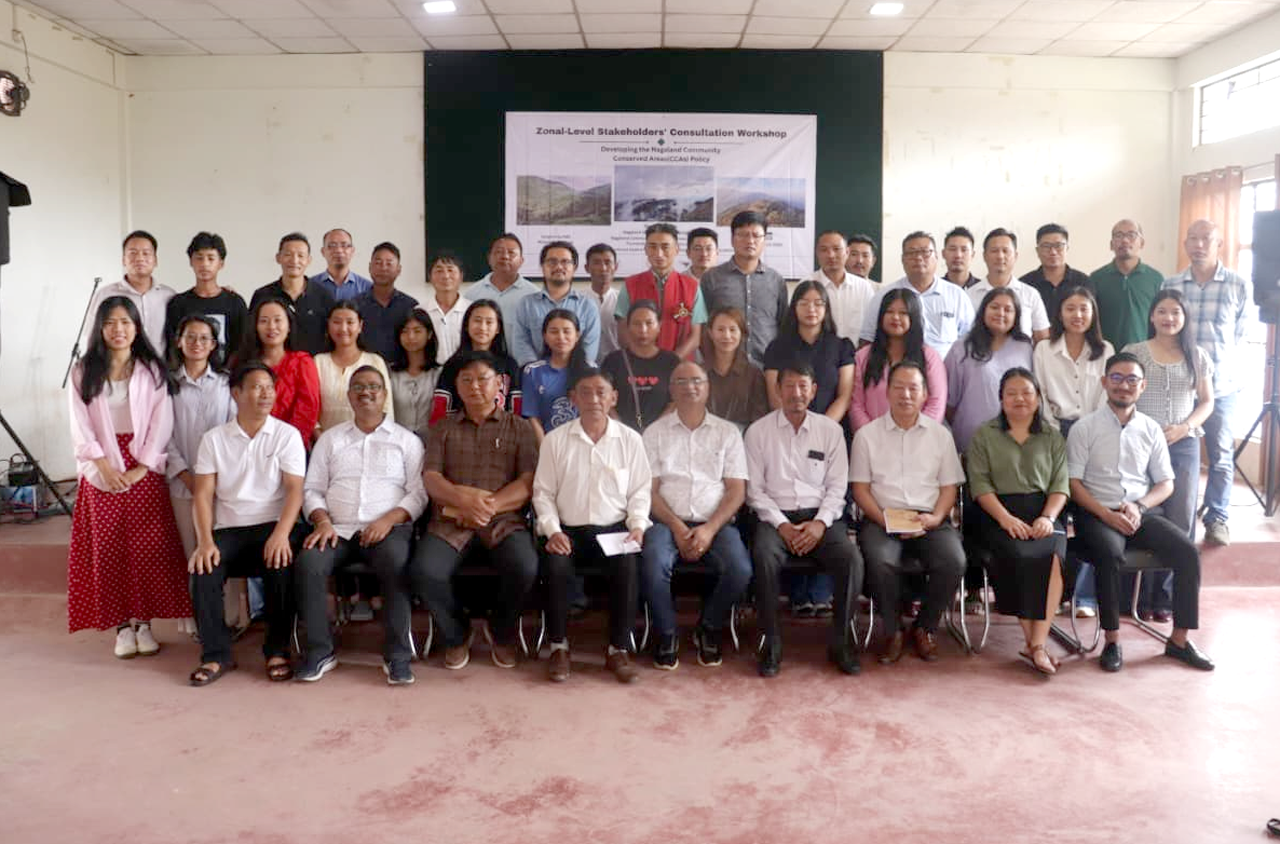
The process of framing Nagaland’s first Community Conserved Areas (CCA) Policy gained momentum with the successful completion of two zonal-level stakeholder consultation workshops held in Tuensang and Mokokchung, bringing together community leaders, conservationists and government officials to shape a policy rooted in indigenous stewardship and customary governance.
The consultations, organised by the Foundation for Ecological Security (FES) in collaboration with the Nagaland State Biodiversity Board (NSBB), the Nagaland Community Conserved Areas Forum (NCCAF) and the International Centre for Integrated Mountain Development (ICIMOD), were held at Tuensang on July 28 and Mokokchung on July 29.
The workshops form part of a statewide participatory process to develop a policy that formally recognises and strengthens community-led conservation while safeguarding customary ownership and traditional governance systems.
The Tuensang consultation, held at the Chang Baptist Lashong Thangyen (CBLT), brought together representatives of Community Conserved Areas from Tuensang, Shamator, Noklak, Kiphire and Mon districts, along with Village Council members, CCA Management Committees and officials of the Forest Department.
The Mokokchung consultation, hosted at Sangtemla Union Hall, was attended by representatives from Community Conserved Areas in Mokokchung and Zunheboto districts as well as Forest Department officials.
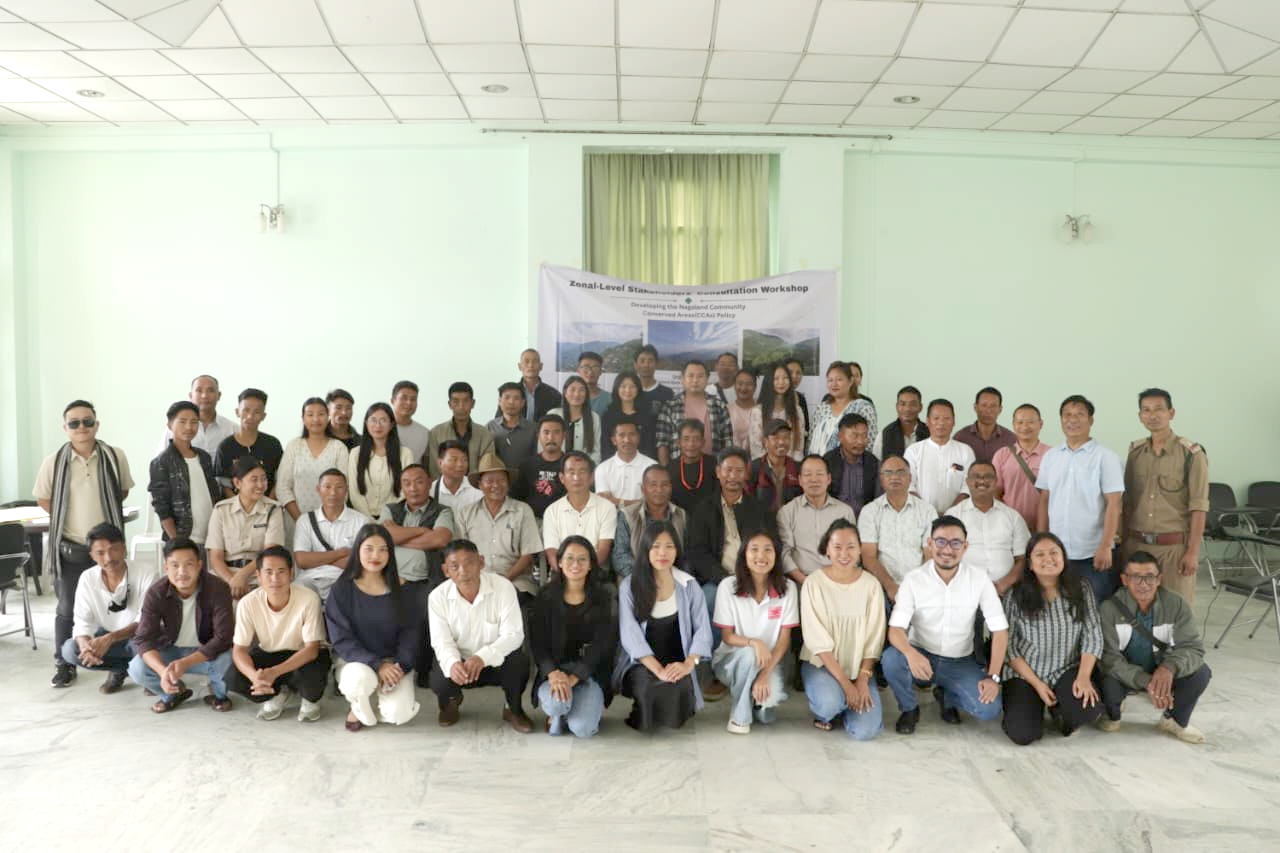
The Tuensang workshop began with a welcome address by Heirang Lungalang, Chairman of the Nagaland Community Conserved Areas Forum, followed by introductory remarks from Sanjay Sharma, Regional Head of the Foundation for Ecological Security. At Mokokchung, the introductory address was delivered by Imliyanger Jamir, Chairman of Tzula (Dikhu) Green Zone CCA.
Participants were briefed on the objectives of the consultation, the rationale behind the proposed state-level policy, the policy formulation process and its expected outcomes. Organisers emphasised that the proposed policy seeks to create an enabling framework that recognises Community Conserved Areas while protecting customary ownership, strengthening local institutions and promoting the long-term conservation of biodiversity and ecosystem services.
The consultations were conducted through thematic group discussions, allowing participants to share experiences and recommendations based on local realities.
Download Nagaland Tribune app on Google Play


Discussions focused on the criteria for recognising Community Conserved Areas, governance and management structures, the proposed recognition process and the support mechanisms required to ensure effective and sustainable management.
Participants stressed that Community Conserved Areas should continue to be voluntarily managed under customary governance systems, supported by clearly defined community institutions and a shared commitment to conserving biodiversity, water sources and culturally significant landscapes.
The consultations also highlighted the importance of strengthening the role of Village Councils and CCA Management Committees, ensuring meaningful participation of women and youth, adopting transparent recognition processes based on the principle of Free, Prior and Informed Consent (FPIC), and providing sustained technical, institutional and financial support without undermining community ownership and decision-making.
During the concluding session, participants unanimously emphasised that the proposed Nagaland Community Conserved Areas Policy should build upon and strengthen existing customary conservation systems rather than replace them. They also called for a policy that empowers local communities, promotes inclusive governance and ensures the long-term sustainability of Community Conserved Areas across the State.
The recommendations emerging from the Tuensang and Mokokchung consultations will be incorporated into the draft policy, ensuring it reflects the diverse ecological landscapes, customary governance traditions and conservation practices of communities across Nagaland.