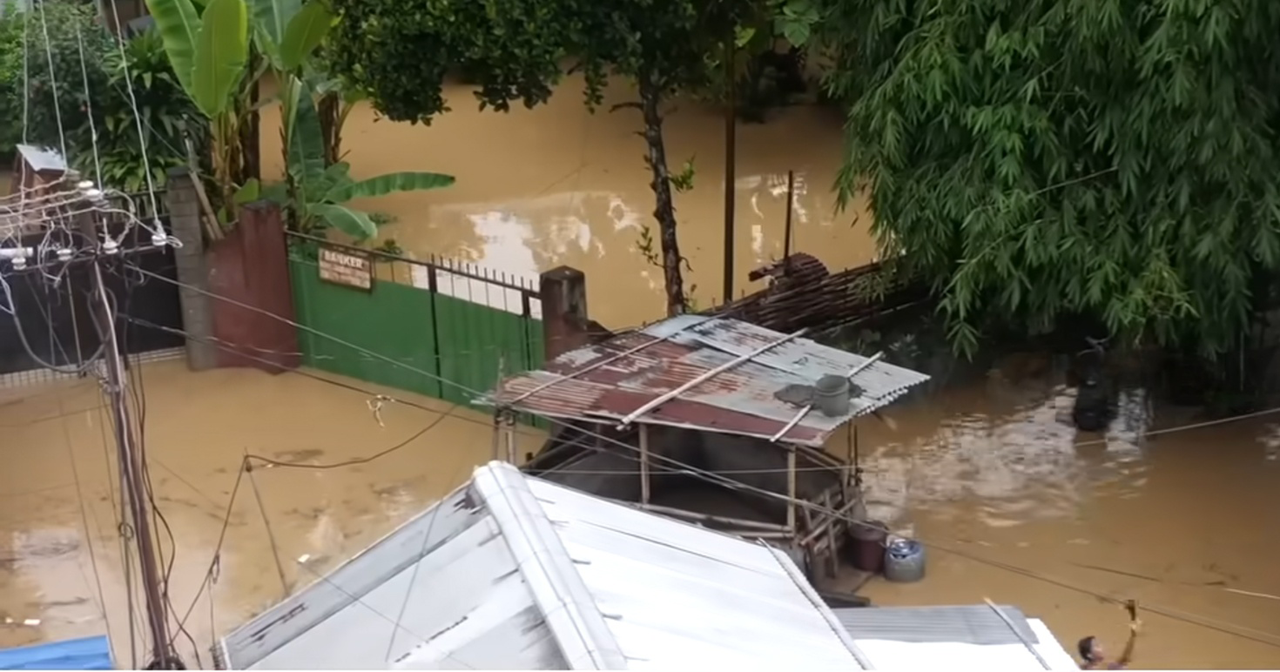
Incessant rainfall since around 1 a.m. on August 8 triggered waterlogging and localised flooding in several parts of Dimapur district, prompting the District Disaster Management Authority (DDMA) to intensify monitoring of flood-prone and low-lying areas.
A field assessment conducted by the DDMA on Saturday, led by the SDO (Civil), DPA-in-Charge, Dimapur, along with officials from the DC Office, Dobashis and DDMA field staff, identified several vulnerable localities, including River Belt Colony, Holy Cross School area, SM Colony, Vilhume Colony, K Sachu Colony, Zeliangrong Colony, Purana Bazar-B, Kuda Village Road, NST Colony, Industrial Estate Colony, Public Ground Colony, Nepali Basti, Niu Colony, Veterinary Colony, Rainbow Colony, Namgalong Colony, Ragialing Colony, Nesitauo Colony and Medical Colony.
According to the DDMA, recent drainage clearance works have improved the flow and discharge capacity of several drainage channels. However, the exceptionally high volume of surface runoff from upstream and hill catchment areas has placed considerable pressure on Dimapur’s downstream drainage network.
Heavy inflow and rising water levels in interconnected drainage systems, including Hospital Nallah, Sugarmill Nallah and Lengri Nallah, have contributed to temporary waterlogging in several low-lying areas.
Meanwhile, the State Disaster Response Force (SDRF) rescued and evacuated nine persons, including two children and an elderly person. Four hostelers were rescued from a hostel in River Belt Colony, while five persons stranded in the Holy Cross School area were safely evacuated to a secure location.
The District Administration, DDMA and SDRF remained on alert and coordinated with Colony Councils and local residents. Councils in vulnerable areas were directed to immediately alert the authorities if evacuation, relief camps or other emergency measures become necessary.
Nagaland Tribune app on Google Play


Residents in some affected areas reported that water levels rose rapidly, with certain localities becoming inundated within two to three hours. The exact number of affected households and population could not be immediately ascertained due to restricted access. A detailed assessment will be carried out once conditions improve.
The DDMA attributed the situation mainly to continuous rainfall and substantial surface runoff from upstream and hill catchment areas. It warned that continued rainfall and heavy upstream inflow could further increase pressure on the drainage system.
The public, particularly those living in low-lying and flood-prone areas, have been advised to remain vigilant and avoid unnecessary movement through waterlogged areas. Residents have also been cautioned to stay away from electrical poles, wires, transformers, inverters and other electrical installations in or near flooded areas to avoid the risk of electrocution.