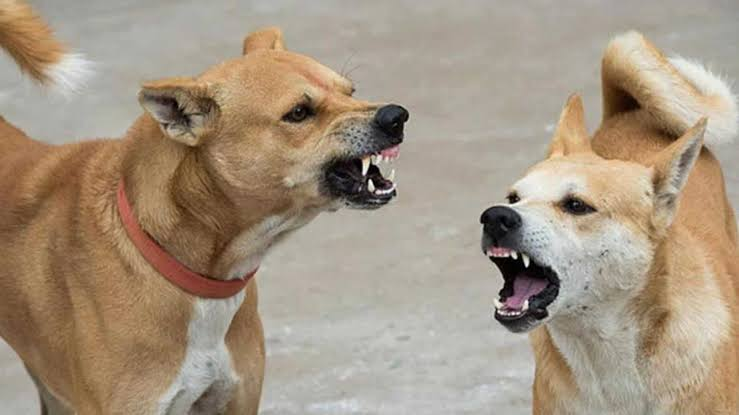
The Association of Kohima Municipal Wards Council (AKMWC) has called upon the district administration and Kohima Municipal Council (KMC) to take “effective and urgent” measures against unleashed and dangerous dogs, warning that repeated attacks pose a serious threat to public safety.
In a statement, the AKMWC said residents across Kohima continue to face problems caused by unleashed dogs, including soiling of public pathways, intimidation of women and children and attacks resulting in injuries.
The Association said various ward and colony councils had previously introduced rules and regulations to address the menace within their respective localities. However, it pointed out that the District Administration in January 2025 and KMC in October 2024 had issued directives prohibiting such local action and instead assumed responsibility for addressing the issue under applicable laws.
The AKMWC noted that the authorities had cited provisions including the Prevention of Cruelty to Animals Act, 1960, the Animal Birth Control Rules, 2023, and directions relating to child safety.
It also pointed out that KMC had established a Dog Pound in September 2017 and framed rules for impounding unleashed dogs, imposing penalties and facilitating their disposal to suitable homes.
According to a statement issued by Thejao Sekhose, President, Neizokhotuo Belho, Press Secretary, and Hukato Chishi, General Secretary, AKMWC, measures outlined by the authorities include centralised reporting and managed intervention, under which residents and local councils are required to report cases to the authorities for capture and care of dogs in coordination with the Veterinary Office. Other measures include school and public protection, responsible pet ownership, mandatory leashing and containment, vaccination, impoundment and fines.
However, the AKMWC said the problem has continued unabated.
“The frustration of Ward and Colony Councils is understandable. They are answerable to their residents when incidents occur, yet having been directed not to take local action, they are left with no effective means to respond,” it said.
The Association highlighted repeated reports of dog-bite incidents of varying severity in Kohima. It recalled the attack on a three-year-old child at PWD Lower Colony on March 15, 2025, following which the AKMWC had submitted representations and issued a public statement seeking urgent intervention.
It said another serious incident occurred on the afternoon of August 4, 2026, at Ward No. 1 High School, Kohima, where a young woman was allegedly attacked by an unleashed dog kept by an owner in the locality.
According to the AKMWC, the dog was described as an “American Bully XL”. The association said the victim was hospitalised with multiple deep puncture wounds, extensive bruising and serious injuries involving torn skin and underlying tissue.
The Association said the nature and severity of the injuries demonstrated the potential danger posed by powerful and aggressive dogs when they are inadequately controlled in densely populated urban residential areas.
Download Nagaland Tribune app on Google Play


The AKMWC warned that the situation could eventually result in fatalities if effective measures were not taken to regulate the identification, ownership and control of dangerous dogs.
“The status quo cannot be allowed to continue,” the Association said, urging the authorities to act within 30 days on a series of measures.
Among its key demands, the AKMWC called for the establishment of a dedicated WhatsApp helpline, supported by wide publicity, through which residents could submit photographs and GPS-tagged locations of unleashed or dangerous dogs for prompt municipal intervention and capture.
It also demanded mandatory identification tags for all owned dogs, containing details such as the dog’s name and the owner’s name and contact information, so that responsibility could be established in the event of an incident.
The Association further sought appropriate restrictions on aggressive and powerful dogs and their crossbreeds, including regulations governing their licensing, import, breeding, sale and ownership. It cited regulatory initiatives adopted or proposed by urban local bodies in places including Chandigarh, Dehradun and Lucknow as examples for consideration.
The AKMWC also appealed to residents to practise responsible dog ownership by ensuring that pets are properly leashed and contained.
It stressed that Kohima is a densely populated urban centre where inadequately controlled aggressive or powerful dogs could endanger residents, relatives, neighbours, visitors and children.
“The protection of residents cannot remain on paper. The authorities can no longer remain inactive,” the Association stated.