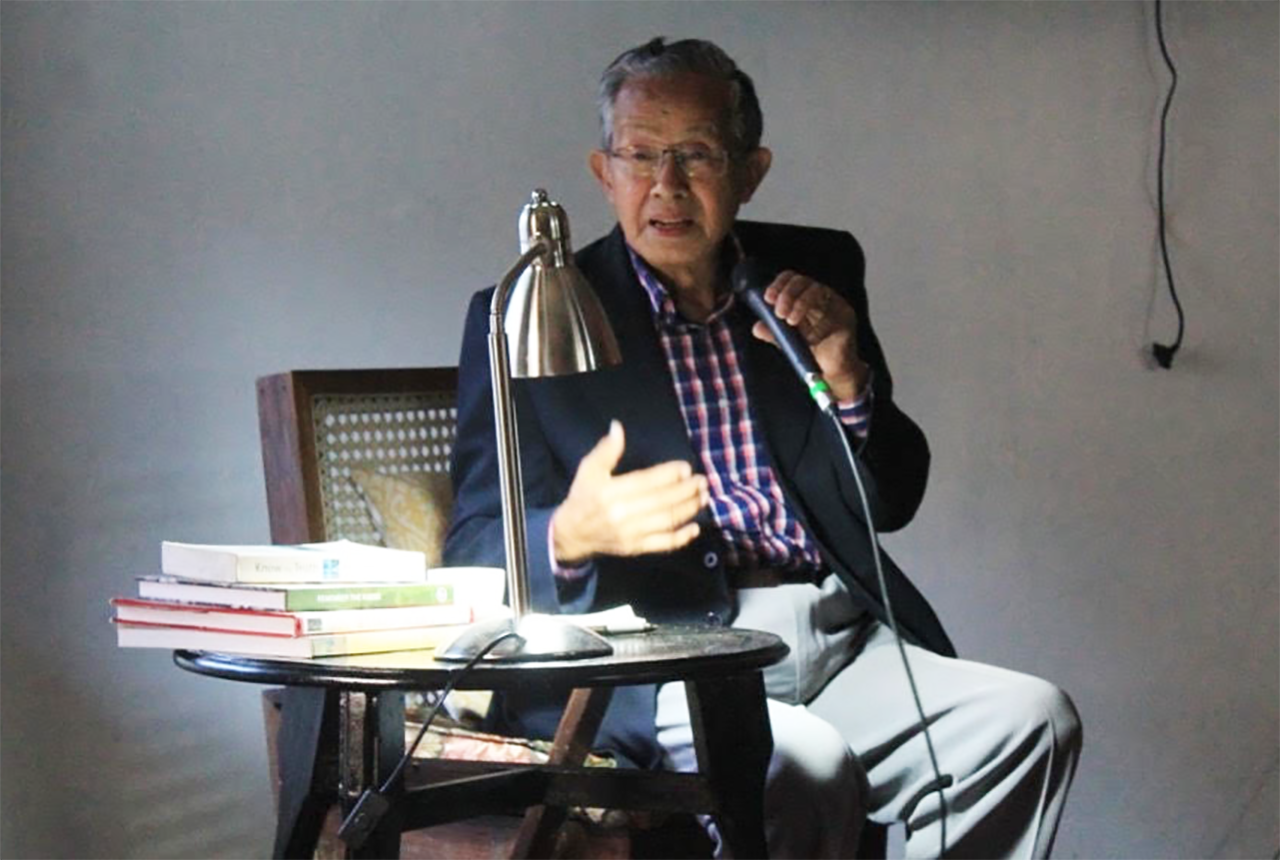
Renowned Naga peace builder and reconciliation advocate Niketu Iralu passed away on Tuesday evening at BLK Hospital in New Delhi following a cardiac arrest. He was 91.
According to sources, Iralu had been unwell and was undergoing treatment at the hospital before his death.
Born in 1935 to Dr Sevilie Iralu, the third Naga to become a doctor, and Vituno Iralu, elder sister of Naga national leader A Z Phizo, Niketu was one of 13 children.
After completing his Pre-University education in Shillong, Iralu pursued higher studies at Madras Christian College. During his time there, he came into contact with the Moral Re-Armament (MRA), now known as Initiatives of Change (IofC). He remained associated with the organisation for around 65 years.
Iralu served as the former Director of Asia Plateau, the Initiatives of Change India centre in Panchgani, Maharashtra, and worked extensively with the organisation at the international level.
A prominent advocate of peace, reconciliation and non-violence, Iralu dedicated much of his life to promoting trust and dialogue among communities, particularly in the context of the Naga political issue.
In 2004, the Naga Hoho and the Nagaland Christian Forum, representing various Christian denominations, appointed a seven-member Naga National Reconciliation Commission, with Iralu as its chairman. He subsequently played a significant role in efforts to foster reconciliation and dialogue among divided Naga political groups and became a leading voice of the Forum for Naga Reconciliation (FNR).
Download Nagaland Tribune app on Google Play


His lifelong contributions to peacebuilding and trust-building earned him several honours. These included the Lifetime Achievement Award from Initiatives of Change International in 2025, the Rotary Peace Award from the Rotary Club of Kohima in 2018, the Lokapriya Gopinath Bordoloi Award for National Integration in 2005, the UN Brahma Foundation’s “Soldier of Humanity” Award in 2011, and the Bhupen Hazarika Integration Award for 2023.
Iralu’s philosophy of peace was rooted in personal transformation, truth-telling and inner integrity. He consistently maintained that meaningful social change must begin with individuals examining their own lives and values.
Together with his wife, Christine Iralu, he made Kerünyü Ki — House of Listening at Sechü Zubza — a place of reflection, dialogue and fellowship. Over the years, the home became a space where many people sought meaning, purpose and reconciliation.
With his passing, Nagaland has lost one of its most enduring voices for peace, reconciliation and non-violence.